

Every few months a new eating trend sweeps through Singapore, promising to melt fat, reset your gut, or fix your energy in two weeks. Friends try it, influencers swear by it, and it fills your feed. So what is the honest truth about fad diets in Singapore, and why do so many of them fizzle out? This is general information, not medical or nutrition advice, and it is written to help you think clearly rather than to shame anyone who has tried one. If you are considering a big change to how you eat, especially with a health condition, please speak to a doctor or a dietitian first.
What Actually Makes a Diet a Fad
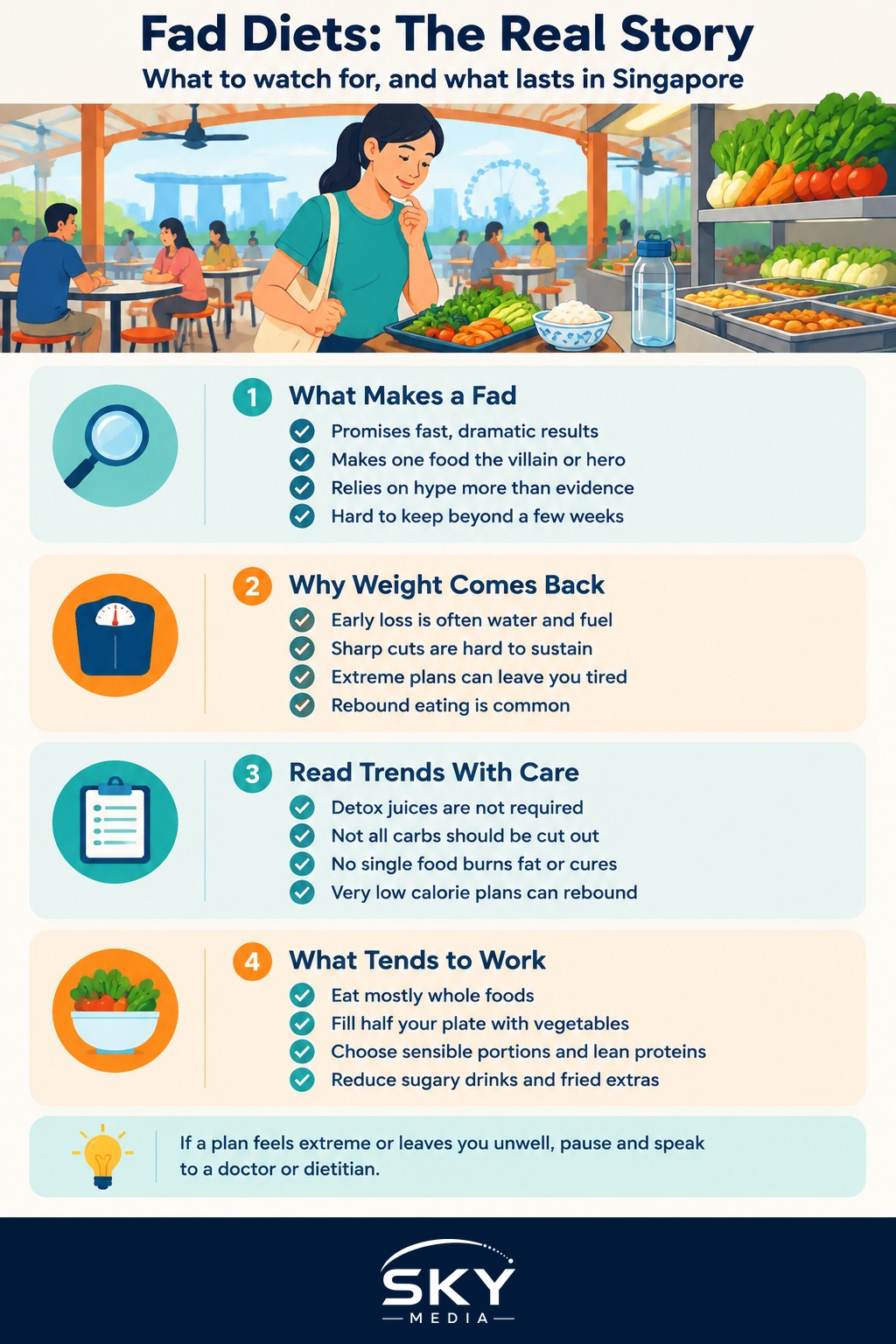
A fad diet is not simply a diet you have not heard of. It is usually a plan that promises fast, dramatic results, singles out one food or food group as a villain or a miracle, and leans on hype rather than steady evidence. Think of the very low calorie plans, the “detox” juices, the cut-out-entire-food-groups rules, and the trends that ask you to eat only at odd hours or only certain “cleansing” foods.
The tell-tale signs are consistent. A fad diet tends to sound too good to be true, feels hard to keep up beyond a few weeks, and often costs money for special products, powders, or supplements. It rarely fits around normal life in Singapore, where much of our eating happens at hawker centres, void deck coffee shops, family dinners, and office lunches. Anything that cannot survive a chicken rice stall or a Chinese New Year reunion is unlikely to last.
Why the Weight Often Comes Back
Many fad diets do produce quick results on the scale, and that is exactly what keeps them popular. The catch is what that early drop usually is. When you cut carbohydrates or calories sharply, your body sheds water weight and stored fuel first, which is why the number moves fast in the first week. That is not the same as steady, lasting fat loss, and it is why the weight so often returns once normal eating resumes.
Very restrictive eating is also hard to sustain, and not because you lack willpower. Extreme plans can leave you tired, irritable, and preoccupied with food, which makes rebound eating almost predictable. For some people, repeated cycles of strict dieting and regaining can affect their relationship with food and their mood. Slow and boring often wins, because it is the version you can still be doing a year from now.
Common Trends, Read Honestly
You do not need to fear every popular idea, but it helps to read each one calmly. Some contain a sensible kernel wrapped in overblown claims.
| Popular trend | The kernel of truth | The overblown part |
|---|---|---|
| “Detox” juices and cleanses | More fruit and vegetables is generally good | Your liver and kidneys already detox; juice cleanses are not required |
| Cutting out all carbs | Reducing refined sugar and white rice portions can help many people | Whole grains and fibre are valuable, and total bans are hard to keep |
| Very low calorie plans | Eating less than before can reduce weight short term | Too little food can be unsafe and usually rebounds |
| “Superfood” or single-food fixes | Some foods are nutritious | No one food burns fat or cures anything on its own |
Notice the pattern. The reasonable middle, eating more vegetables, less added sugar, and sensible portions, gets stretched into an extreme, all-or-nothing rule that is neither necessary nor easy to sustain.
How to Judge a Diet Before You Try It
Before you commit money, time, or hope to the next trend, run it through a few plain questions. This keeps you curious without being gullible.
- Does it promise fast or dramatic results? Real change is usually gradual.
- Does it ban whole food groups or call one food magic? Balance beats extremes.
- Does it require you to buy special products, powders, or memberships? Follow the money.
- Could you keep this up for a year, around hawker meals and family dinners? If not, it is a short-term stunt.
- Is the “proof” a testimonial or before-and-after photo rather than solid evidence? Anecdotes are not data.
- Does it tell you to ignore hunger, fatigue, or your doctor? That is a warning sign, not a badge of discipline.
If a plan fails several of these, it is probably a fad. That does not mean you have to eat perfectly. It means you can spend your energy on habits that actually stick.
What Tends to Work Instead
The unglamorous truth is that the basics still win. Most people do well by eating mostly whole foods, filling half the plate with vegetables, choosing wholegrains and lean proteins, watching portion sizes, and cutting down on sugary drinks and deep-fried extras. In Singapore that can be as simple as asking for less rice, choosing steamed or soup options at the hawker stall, swapping the bubble tea for water or teh kosong, and adding a vegetable dish you actually enjoy. HealthPub and HPB resources on HealthHub offer practical, local guidance on balanced eating and portions without any hype.
Sustainable change also means being kind to yourself. Aim for consistency, not perfection. A single indulgent meal does not undo your week, and you do not need to “earn” food or “punish” a slip with a crash diet. Small, repeatable habits, a little more movement, and better sleep tend to do more over a year than any two-week challenge.
When to See a Doctor or Dietitian
Please get professional guidance before starting any extreme or very low calorie plan, particularly if you are pregnant or breastfeeding, are older, are still growing, have diabetes, kidney issues, an eating disorder history, or take regular medication. A GP, polyclinic doctor, or an accredited dietitian can tailor advice to your body and give you numbers that are right for you rather than ones from the internet.
Seek help promptly if a diet leaves you dizzy, faint, very fatigued, or unwell, if you notice a pattern of bingeing and restricting, or if your relationship with food is causing distress. For any sudden severe symptoms such as chest pain or fainting, call 995 or go to A&E. Choosing not to chase the next fad is not giving up. It is often the calmer, healthier decision.
Explore more
If you are untangling nutrition myths, read our take on understanding intermittent fasting in Singapore for another popular trend read honestly. For the everyday basics that actually last, see how to cut down on sugar and eating more fibre for better health.
Frequently Asked Questions
Is keto or a low-carb diet a fad or a legitimate approach? It sits in between, since cutting refined carbs can help some people, but strict bans are hard to keep up and not right for everyone. Anyone with diabetes, kidney problems or on medication should see a doctor first. A dietitian can tell you whether it suits you.
Are meal replacement shakes and detox teas worth buying? For most healthy people they are not necessary, because regular meals with vegetables, protein and wholegrains do the job. Special products also cost money and rarely teach lasting habits. If you are unsure about a product, ask a pharmacist or dietitian before buying.
How can I tell if diet advice online is trustworthy? Look for who is giving it and what they are selling. Advice from registered dietitians, doctors and bodies such as HealthHub or the Health Promotion Board is more reliable than testimonials or before-and-after photos. Be wary of anyone promising dramatic results quickly.
What should I do after regaining weight from a crash diet? Do not blame yourself, since regaining after extreme restriction is very common. Return to regular balanced meals, add vegetables and gentle movement, and aim for slow, steady habits instead of another crash plan. A dietitian can help if you feel stuck.
Is it fine to follow a fad diet for just a short while? A short, mild trial is unlikely to harm most healthy adults, but extreme plans can leave you tired and prone to rebound eating. Pregnant women, teens, older adults and people with health conditions should avoid them without medical advice. Gentle changes are the safer route.
Official sources: Health Promotion Board
Further reading: The Truth About the 10000 Steps Goal · The Truth About Superfoods · Understanding Diet Trends: Keto, Paleo and More