
Chinese New Year in Singapore is a marathon of eating. There is the reunion dinner, the lo hei, the open plates of pineapple tarts at every home you visit, the bak kwa, the love letters and the steamboat that seems to happen every other night. It is a joyful part of the season, and nobody wants to be the guest who refuses everything. The good news is that healthy Chinese New Year eating is not about saying no. It is about knowing roughly what you are eating, making a few easy swaps, and keeping your body moving between visits.
This guide looks at the approximate energy content of common festive goodies, practical portion swaps and simple ways to stay active. It is general information, not medical advice. If you have diabetes, heart disease, high blood pressure or another condition, speak to your doctor or dietitian about your festive diet.
Why Festive Snacking Adds Up So Quickly
The individual snacks are small, which is exactly the problem. A single pineapple tart feels harmless, but on a typical visiting day you might go to four or five homes, and at each one a host offers you a plate. Add a few sweet drinks, a heavy lunch and a steamboat dinner, and a day’s intake can climb well beyond what your body needs.
Most CNY goodies are rich in butter, sugar, flour, oil or salt. Many are deep-fried or baked with generous amounts of fat. Festive drinks such as canned soft drinks and packet juices add more sugar on top.
Rough Energy Content of Common CNY Goodies
The figures below are approximate ballpark values that are widely quoted for typical home-style or commercial versions. Actual values vary a lot with size, recipe and brand, so treat these as a guide only. For more detailed information, check product labels and the Health Promotion Board (HPB) resources on HealthHub.
| Goodie | Rough energy per piece | A lighter approach |
|---|---|---|
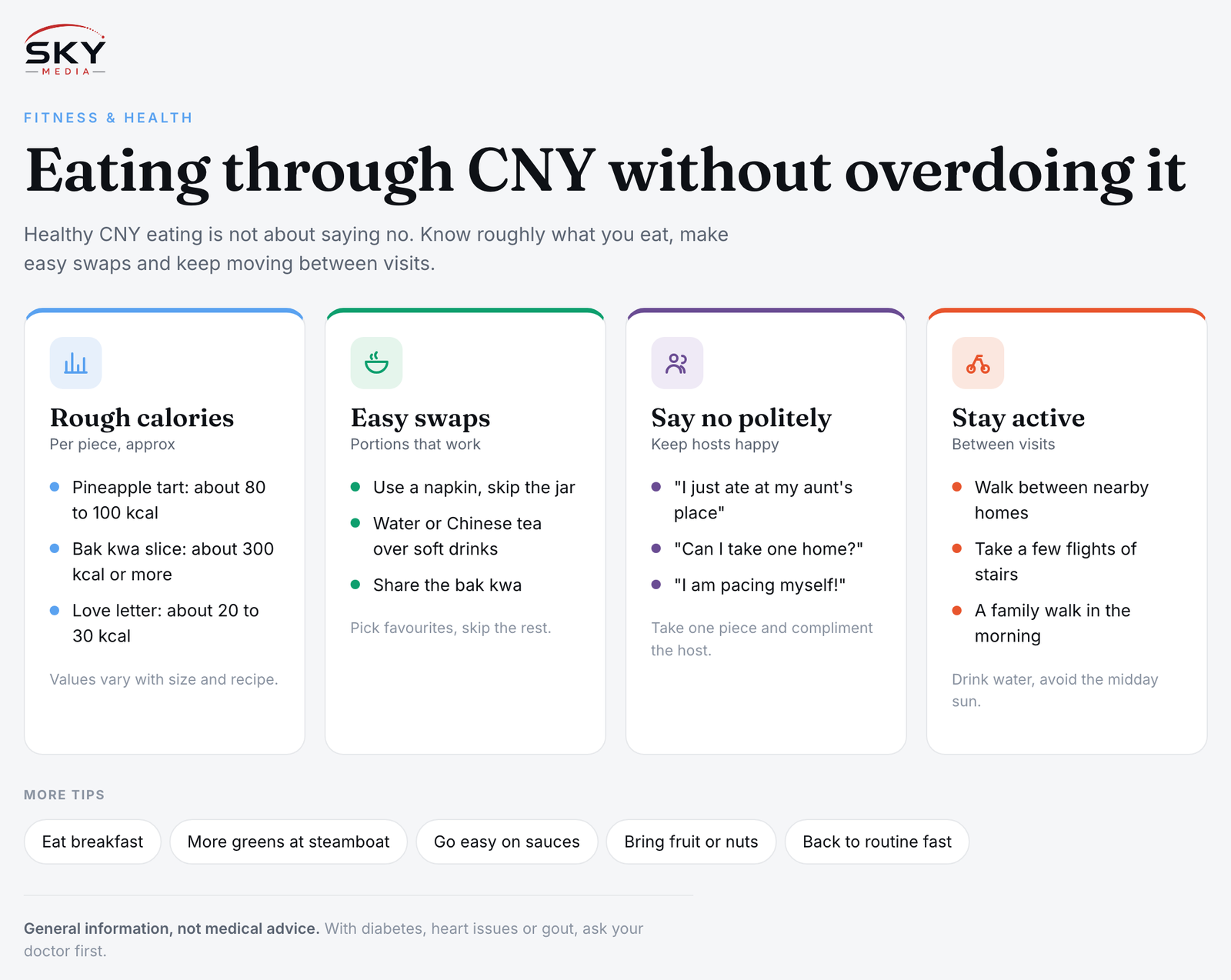
| Pineapple tart | About 80 to 100 kcal | Choose one or two, savour slowly, skip the extra plate |
| Bak kwa (one full square slice) | About 300 kcal or more | Share a slice, or cut it into small pieces for the table |
| Love letter (one roll) | About 20 to 30 kcal | Stop at a few, they disappear quickly by the handful |
| Kueh bangkit (one small piece) | About 20 to 30 kcal | Enjoy a few, then move on to fruit |
| Mandarin orange | About 40 to 60 kcal | A good choice, though still a source of natural sugar |
As a rough comparison, eating five pineapple tarts and a slice of bak kwa can add up to as much energy as a full plate of hawker food. That does not make them forbidden. It just helps to know.
Portion Swaps That Actually Work
Small, realistic changes are easier to keep up across 15 days of celebrations than strict rules.
- Use a small plate or a napkin. Pick what you want, put it on a napkin, and do not go back to the container. It is easy to lose count when eating straight from the jar.
- Pick your favourites. If you love pineapple tarts but feel lukewarm about prawn rolls, skip the prawn rolls entirely.
- Swap sweet drinks for plain water or Chinese tea. Hosts usually offer canned drinks, but asking for water or tea is perfectly polite. Unsweetened tea also suits the festive table.
- Share the rich items. Split a slice of bak kwa with your partner, or share a single serving of nian gao.
- Fill up on vegetables and lean protein at meals. At steamboat, load up on leafy greens, tofu, fish and mushrooms, and go easy on processed balls, fried items and the soup, which can be salty.
- Watch the sauces. Lo hei plum sauce and oil, braising liquids and steamboat dips can add a surprising amount of sugar, fat and salt.
- Eat a proper breakfast. Starting the day with nothing makes it more likely you will graze heavily at the first house.
- Bring a healthier contribution. If you are expected to bring goodies, consider fresh fruit, nuts or reduced-sugar options alongside the traditional ones.
For general habits that last beyond the festive season, our guide on how to build lasting healthy eating habits is a good next read.
Saying No Politely
Elderly relatives sometimes press food on guests as a sign of affection. A few gentle responses help:
- “I just ate at my aunt’s place, but I will take one to try.”
- “These look amazing, can I take one home for later?”
- “I am pacing myself, it is only the first house!”
Accepting one piece and complimenting the host is usually enough to keep everyone happy.
Staying Active Through Visiting Days
Movement does not have to stop during the holidays. A little activity each day helps balance the extra eating and keeps energy levels up.
- Walk between nearby homes. If relatives live in the same estate or a short distance apart, walk instead of driving.
- Take the stairs. In HDB blocks, climbing a few floors before taking the lift is an easy win, if your knees and fitness allow.
- Plan a family walk. A morning stroll in a park or along a park connector before visiting starts is a pleasant tradition to begin.
- Keep a short home workout routine. Ten to fifteen minutes of bodyweight exercises or stretching before you head out keeps the habit alive.
- Play with the children. Running around with nieces and nephews counts as activity.
- Get back to your routine quickly. Return to your regular exercise schedule as soon as the public holidays end.
Remember that Singapore can be hot and humid, so drink water regularly and avoid strenuous exercise in the midday sun.
Special Considerations for Health Conditions
Festive eating can be harder to manage for people with certain conditions:
- Diabetes: Sugary goodies, drinks and sweet fruits can affect blood sugar. Follow your doctor’s advice on meal timing and medication, and spread out treats rather than eating many at once.
- High blood pressure or heart conditions: Bak kwa, preserved meats, salted snacks and steamboat soup can be high in salt. Our guide on eating for a healthy heart in Singapore has more general tips.
- Gout: Rich seafood, organ meats and alcohol may be a concern for some people. Ask your doctor what to watch.
If in doubt, speak to your family doctor or polyclinic before the festive season begins.
Making Peace With Festive Food
The aim is not to feel guilty. Chinese New Year is about family, reunion and abundance, and food is a big part of that. Enjoy the dishes that matter most to you, pace yourself, keep moving, and return to your normal routine afterwards. A few days of richer eating is part of life. It is the habits you keep the rest of the year that make the biggest difference.
Frequently Asked Questions
How can I bounce back after a week of heavy CNY eating? Go back to your normal meal times, drink water or plain tea and resume your usual exercise once the holidays end. Skip crash diets or skipping meals, which tend to backfire. A few days of rich food rarely undoes your habits, so steady routines in the following weeks matter far more.
Is lo hei healthy, or should I skip it? Lo hei is not a bad choice, since it is mostly shredded vegetables and raw fish. The plum sauce, oil and crispy crackers are where sugar and fat creep in. Take a modest portion, go easy on the sauce and crackers, and enjoy the toss without guilt.
What should I eat at a steamboat dinner to keep it lighter? Build your bowl around leafy greens, tofu, mushrooms, fish and lean meat, and treat processed balls, fried items and dips as extras. The soup absorbs flavour and salt as it simmers, so sip it sparingly rather than finishing the pot. A bowl of rice or noodles can be smaller than usual.
Can children enjoy CNY goodies without too much sugar? Yes, children can join in, but a small portion on a plate works better than free access to the whole jar. Offer fruit, plain water and unsweetened tea between visits, and have a proper meal before heading out. Try to keep sugary drinks as the occasional treat rather than the default.
Is bak kwa a bad choice compared with pineapple tarts? Neither is forbidden, but they pull in different directions. A full slice of bak kwa is bigger, saltier and sweetly glazed, while a tart is smaller and easier to over-eat. Sharing a slice or sticking to one or two tarts works for most people, and anyone with a health condition should ask their doctor.
Official sources: Health Promotion Board
Further reading: A Gentle Post-CNY Reset for Eating and Exercise