
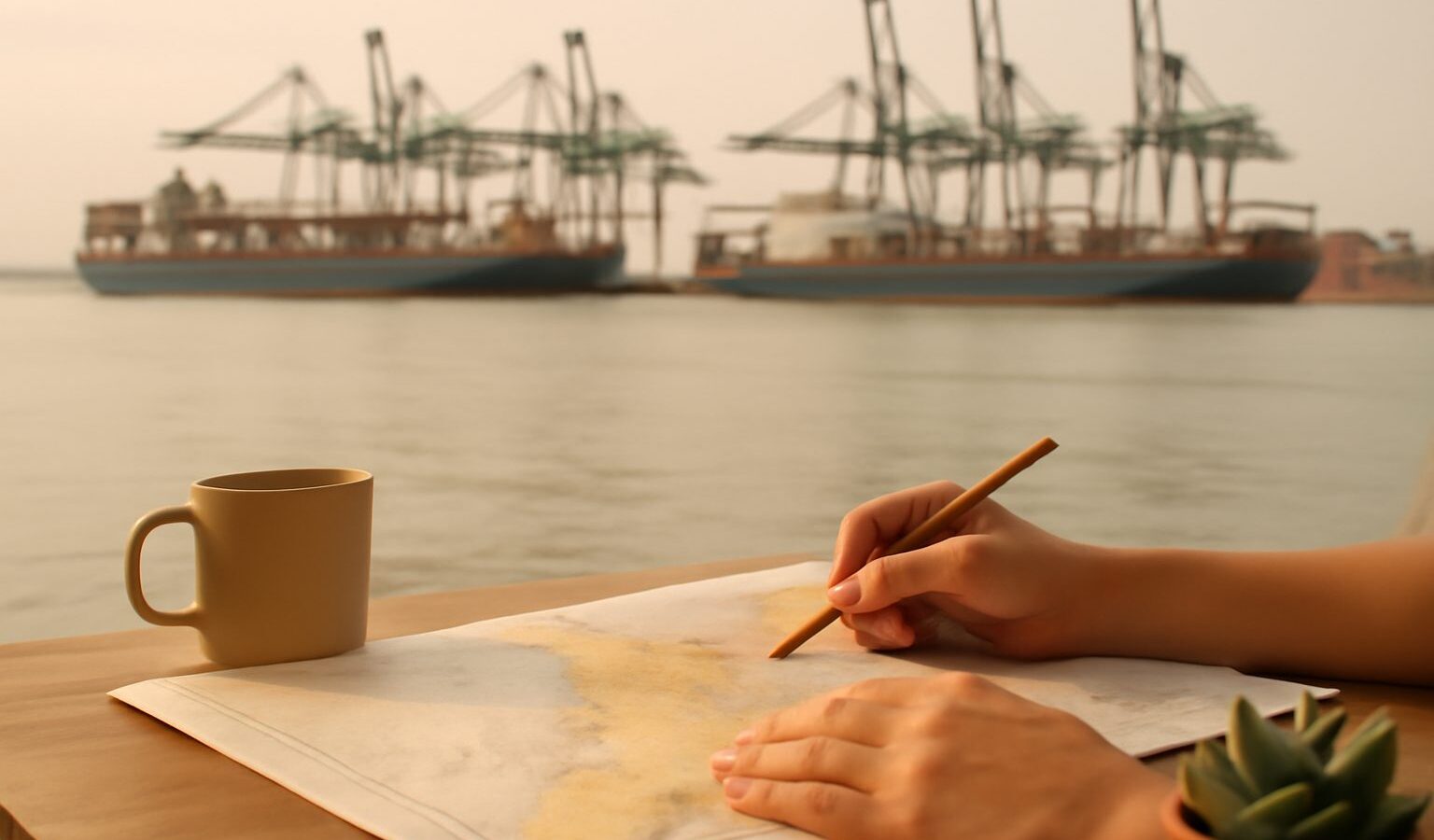
Singapore is one of the world’s busiest ports, and the way it handles containers is changing in a big way. The Tuas mega port Singapore is building will bring the country’s container operations together at one location in the west, replacing several older terminals over time. It is one of the largest infrastructure projects in the nation’s history, designed to keep Singapore competitive as a global shipping hub for decades. This guide explains what the port is, why it is being built, how automation fits in, and what it means for the wider economy. For exact capacity figures, phases and timelines, check the latest from the Maritime and Port Authority of Singapore, or MPA.
Why Singapore Is Consolidating Its Container Ports
For much of its history, Singapore handled containers across several city terminals, including those at Tanjong Pagar, Keppel and Brani in the south, along with a large facility at Pasir Panjang. These sites served the country well, but they were spread out and hemmed in by the city around them. Space to grow was limited, and land close to the city centre is valuable for other uses such as housing and commercial development.
The plan is to move container handling to Tuas, in the far west, and consolidate operations there in phases. Bringing everything to a single, purpose-built location allows for a more efficient layout, shorter internal transfers, and room to expand as trade volumes grow. It also frees up the southern waterfront for long-term redevelopment. The overall vision has been described by the government and MPA as a next-generation port designed for the future of shipping.
What Makes Tuas A Next-Generation Port
The Tuas facility is being built on reclaimed land and is designed from the ground up as an integrated container port rather than a patchwork of older sites. A single large port allows ships and cargo to move through one connected system, which reduces the need to shuttle boxes between separate terminals. That matters for a transhipment hub, where a large share of containers arrive on one vessel and leave on another rather than entering the country.
Because it is planned as one project, the port can standardise its equipment, roads and systems. Deep berths are intended to serve the largest container vessels, and the layout is meant to support smooth flows between the quay, the yard and landside connections. The scale is significant, and MPA has said Tuas is intended to become one of the world’s largest fully consolidated container terminals once fully complete. For the current design details, refer to MPA and the terminal operator, PSA Singapore.
How Automation And Technology Fit In
A defining feature of the Tuas port is its heavy use of automation. Rather than relying mainly on manually driven equipment, the port is designed around automated and remotely operated systems that move containers around the yard and to and from ships. This includes automated guided vehicles that transport boxes across the terminal and automated cranes that stack and retrieve them.
Automation is meant to deliver several benefits:
- Consistency: machines can operate around the clock with steady performance.
- Safety: fewer people working alongside heavy moving equipment can reduce risk.
- Efficiency: coordinated systems can plan container moves to cut wasted trips.
- Data: digital control allows the port to monitor and optimise operations in real time.
Automation also changes the nature of port work. Roles shift toward planning, monitoring, engineering and systems management rather than manual handling. Training and workforce transition are part of the plan, and the specifics are handled by MPA, PSA and industry partners.
What The Port Means For Trade And The Economy
Singapore’s position as a maritime hub depends on being reliable, efficient and well connected. A large share of the containers passing through are transhipment cargo, meaning goods that pass through on their way elsewhere. Handling that volume smoothly is what keeps shipping lines choosing Singapore as a hub, which in turn supports jobs in logistics, finance, insurance, ship services and related industries.
By consolidating and modernising, the port aims to raise capacity and efficiency so it can grow with global trade rather than being constrained by older infrastructure. The maritime sector is a meaningful part of the economy, and a competitive port supports the broader ecosystem of businesses that rely on it. As with any long-term forecast, the exact economic contribution and future volumes should be confirmed through official reports rather than assumed.
Here is a simplified comparison of the older city terminals and the consolidated Tuas approach.
| Feature | Older city terminals | Consolidated Tuas port |
|---|---|---|
| Location | Spread across southern sites and Pasir Panjang | Single site in the west on reclaimed land |
| Layout | Separate terminals developed over time | Purpose-built integrated design |
| Operations | Mix of manual and automated equipment | Extensive automation from the start |
| Long-term room to grow | Constrained by surrounding city | Planned in phases with room to expand |
Timeline, Phases And Where To Check Updates
The Tuas port is being delivered over several phases across many years, with terminals opening progressively as construction and reclamation proceed. Because it is a very large, long-running project, the precise opening dates, phase boundaries, berth counts and final capacity are set out by the authorities and can be updated as the project advances.
Rather than rely on figures that may age quickly, treat the specifics as something to verify. The most reliable sources are the Maritime and Port Authority of Singapore for policy and progress, PSA Singapore as the operator, and official government channels such as gov.sg for announcements. If you are researching for study, work or business planning, these are the places to confirm the current status.
The Tuas mega port represents a long-term bet on Singapore’s future as a shipping hub, bringing container operations into one modern, automated location built to grow with world trade. Understanding the reasons behind it, the role of technology, and where it fits in the economy helps make sense of a project that will shape the country’s western coastline for a generation. For the current details, always defer to MPA and official sources.
Explore more
Tuas is one of several major projects shaping the country. Read about air travel in our explainer on Changi Airport Terminal 5, and about rail expansion in our guides to the Cross Island Line and the JB to Singapore RTS Link.