
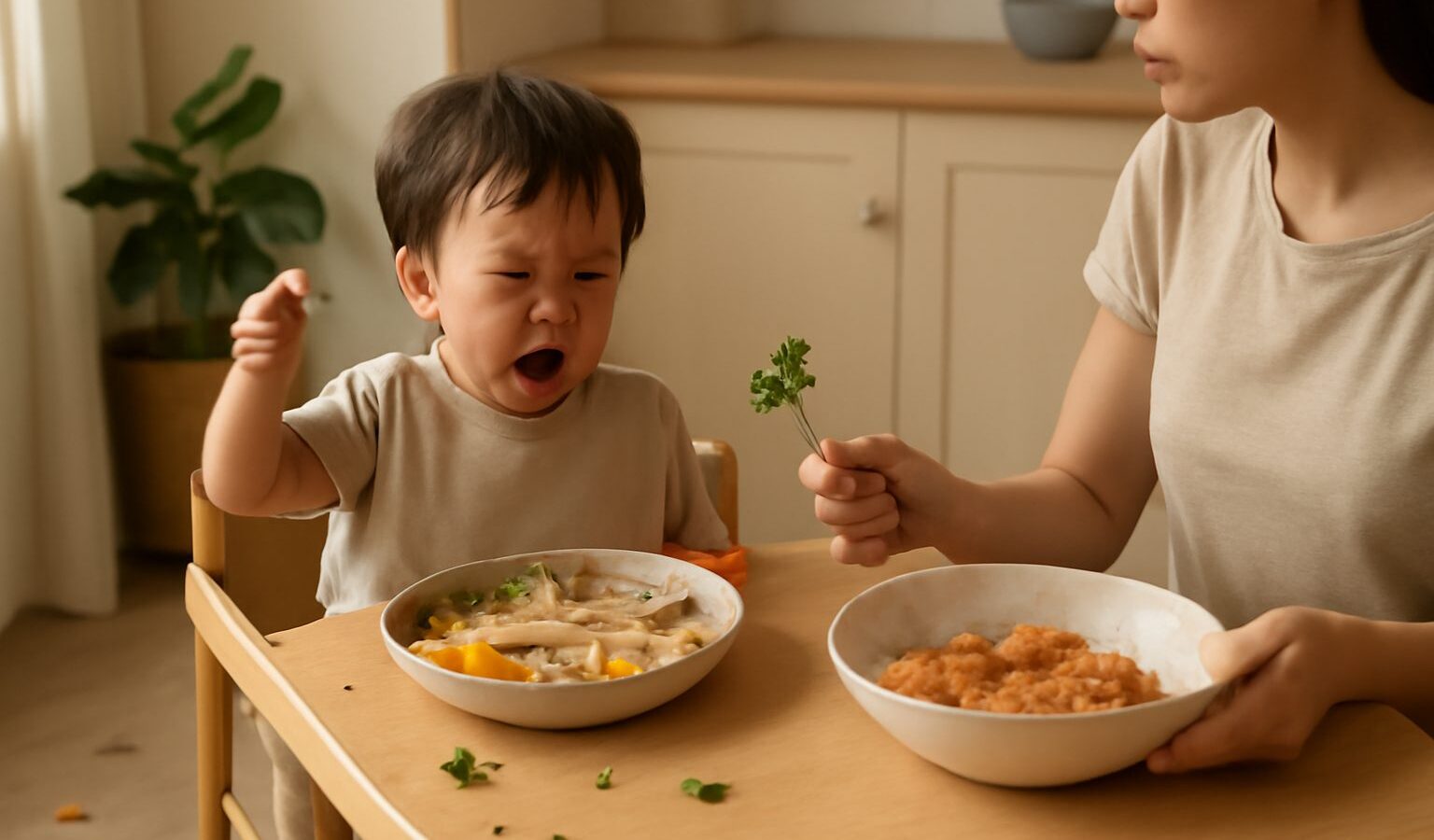
If dinner in your home has turned into a nightly standoff, with rice on the floor and a toddler refusing every spoonful, take a deep breath. You are not alone, and you are not doing anything wrong. Toddler mealtime battles in Singapore are one of the most common frustrations parents share, whether you are feeding in a small HDB kitchen, at a condo dining table, or at grandma’s place. The good news is that most of this is a normal phase, and calmer meals are within reach.
Why Toddlers Throw Food and Refuse Meals
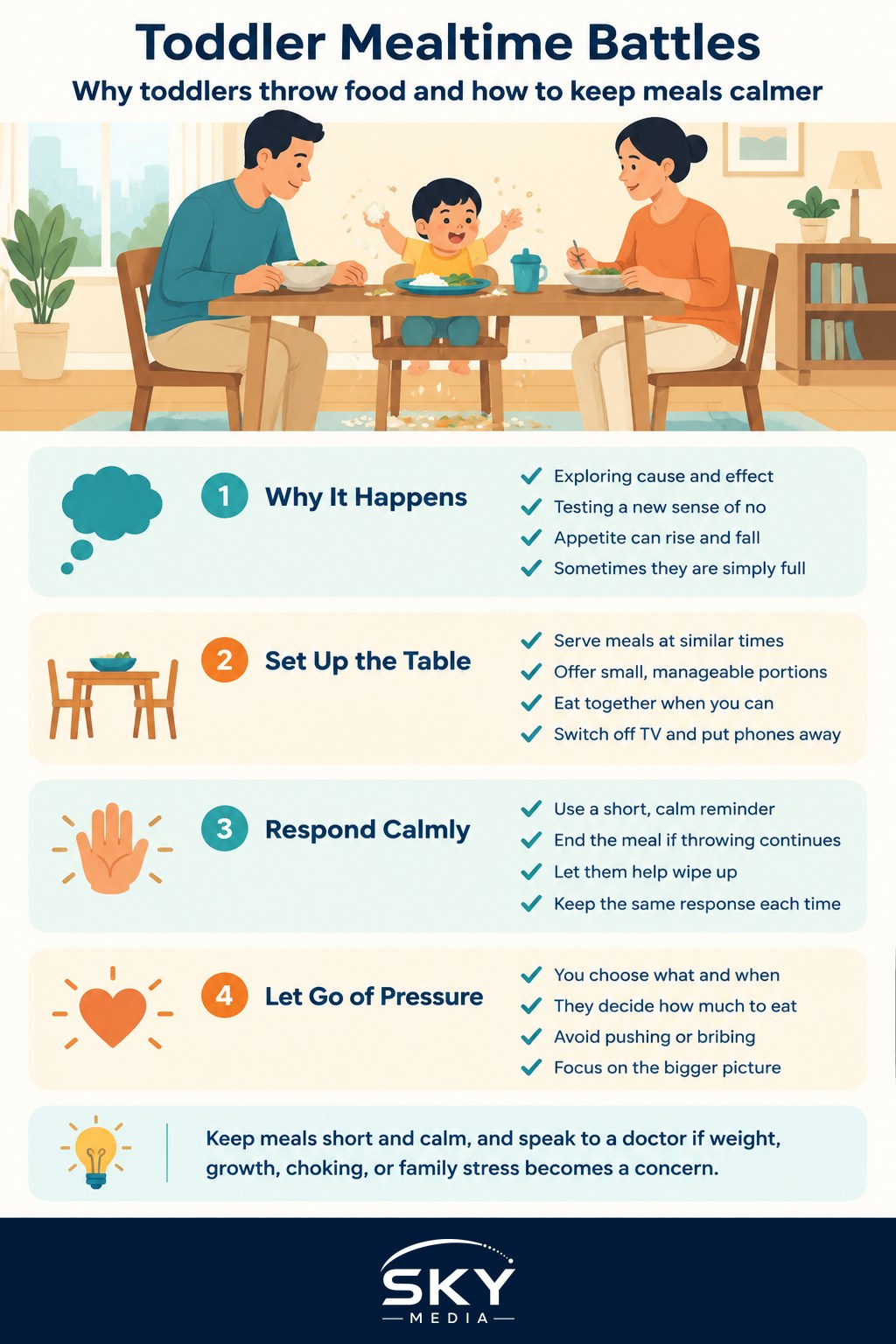
First, it helps to understand what is really going on. When a toddler throws food, they are usually not being naughty. Often they are exploring cause and effect, learning that when they drop something it falls and someone reacts. Sometimes they throw because they are full, distracted, or simply done. And refusing food is frequently about a toddler discovering that they can say no, which is a huge and exciting new power for them.
Appetite at this age is also naturally up and down. A toddler might eat heartily one day and barely touch anything the next, and both can be completely normal. Growth slows compared with the baby year, so they simply need less than you might expect. Once you see mealtime behaviour as exploration and independence rather than defiance, it becomes easier to respond calmly.
Setting the Scene for Calmer Meals
A few gentle changes to the environment can make a big difference. Try to serve meals at roughly the same times each day, so your toddler comes to the table genuinely hungry rather than filled up on snacks or milk. In our climate it is easy to offer drinks and treats throughout the day, but too many in between nibbles can dull the appetite for proper meals.
Seat your toddler securely at the table with the family where you can. Toddlers learn to eat by watching others, so sharing a meal, even a quick one, teaches more than any amount of coaxing. Keep portions small and unintimidating, because a huge plate can overwhelm a little one. You can always offer more. Turn off the television and put phones away, since a distracted toddler is far more likely to fidget, wander, and toss food around.
Keep the mood light and unhurried. Toddlers pick up on tension quickly, and a stressed table makes everyone dig in their heels. If you are also dealing with a fussy eater who rejects whole food groups, this guide on dealing with a picky eater offers more gentle strategies that work alongside these ideas.
Responding to Food Throwing
When food starts flying, the calmer you stay, the faster it fades. Big reactions, whether laughing or scolding, often make the throwing more fun and more frequent. Instead, respond quietly and consistently.
Here are some approaches many parents find helpful.
- Give a short, calm message such as, food stays on the table, and gently guide the hand down.
- If throwing continues, it usually means the meal is over for now. Calmly say, looks like you are all done, and end the meal without drama.
- Offer a small cloth and invite your toddler to help wipe up, so tidying becomes part of the routine rather than a punishment.
- Avoid turning it into a battle of wills. Ending the meal calmly teaches more than a long lecture ever could.
Consistency is your best friend. If the response is the same each time, your toddler learns what to expect, and the behaviour usually settles. This same calm, steady approach helps across toddlerhood, and you can read more in this guide to toddler tantrums and behaviour.
Letting Go of the Clean Plate
One of the kindest things you can do, for your toddler and for yourself, is to let go of the idea that they must finish everything. A helpful principle is that you decide what food is offered and when, and your toddler decides how much of it to eat. Pushing, bribing, or spoon chasing around the living room tends to backfire and can turn eating into something stressful.
Trust your toddler to listen to their own hunger. If they eat little at one meal, they will usually make up for it at the next. Offer a balance of foods over the week rather than worrying about a single plate. Grandparents and helpers sometimes feel a strong urge to make sure the child eats more, so it helps to gently get everyone in the home on the same page, focusing on a relaxed table rather than a full tummy at any cost.
When to Seek Advice
Most mealtime battles are a passing phase that eases as your toddler grows. But do speak to a doctor if your child is losing weight, seems unwell, gags or chokes often, or is not growing as expected, or if mealtimes are causing real distress in your family. Getting advice early brings peace of mind.
For now, keep meals short, calm, and pressure free. Celebrate the small wins, forgive the messy days, and remember that this stage does pass. There is no single perfect way to feed a toddler, only a loving, patient one, and you are already doing that.
Frequently Asked Questions
Why does my toddler throw food even when I stay calm? Often they are exploring cause and effect, learning that dropped things fall and someone reacts. Sometimes they are full, distracted or simply done. Staying calm and consistent usually makes the behaviour fade faster than big reactions, which can make throwing more fun.
Should I make my toddler finish everything on the plate? No. A helpful principle is that you decide what food is offered and when, and your toddler decides how much to eat. Pushing, bribing or spoon chasing tends to backfire and can make eating stressful. If they eat little now, they usually make up for it later.
How do I deal with grandparents who keep urging the child to eat more? Gently get everyone in the home on the same page, focusing on a relaxed table rather than a full tummy at any cost. Grandparents and helpers sometimes feel a strong urge to make sure the child eats more, so explaining your approach kindly helps.
Do too many snacks and drinks spoil my toddler’s appetite? They can. Serving meals at roughly the same times each day helps your toddler arrive genuinely hungry rather than filled up on snacks or milk. Too many in between nibbles can dull the appetite for proper meals.
When should I see a doctor about my toddler’s eating? Speak to a doctor if your child is losing weight, seems unwell, gags or chokes often, is not growing as expected, or if mealtimes are causing real distress in your family. Getting advice early brings peace of mind.
Further reading: Establishing Family Mealtimes