
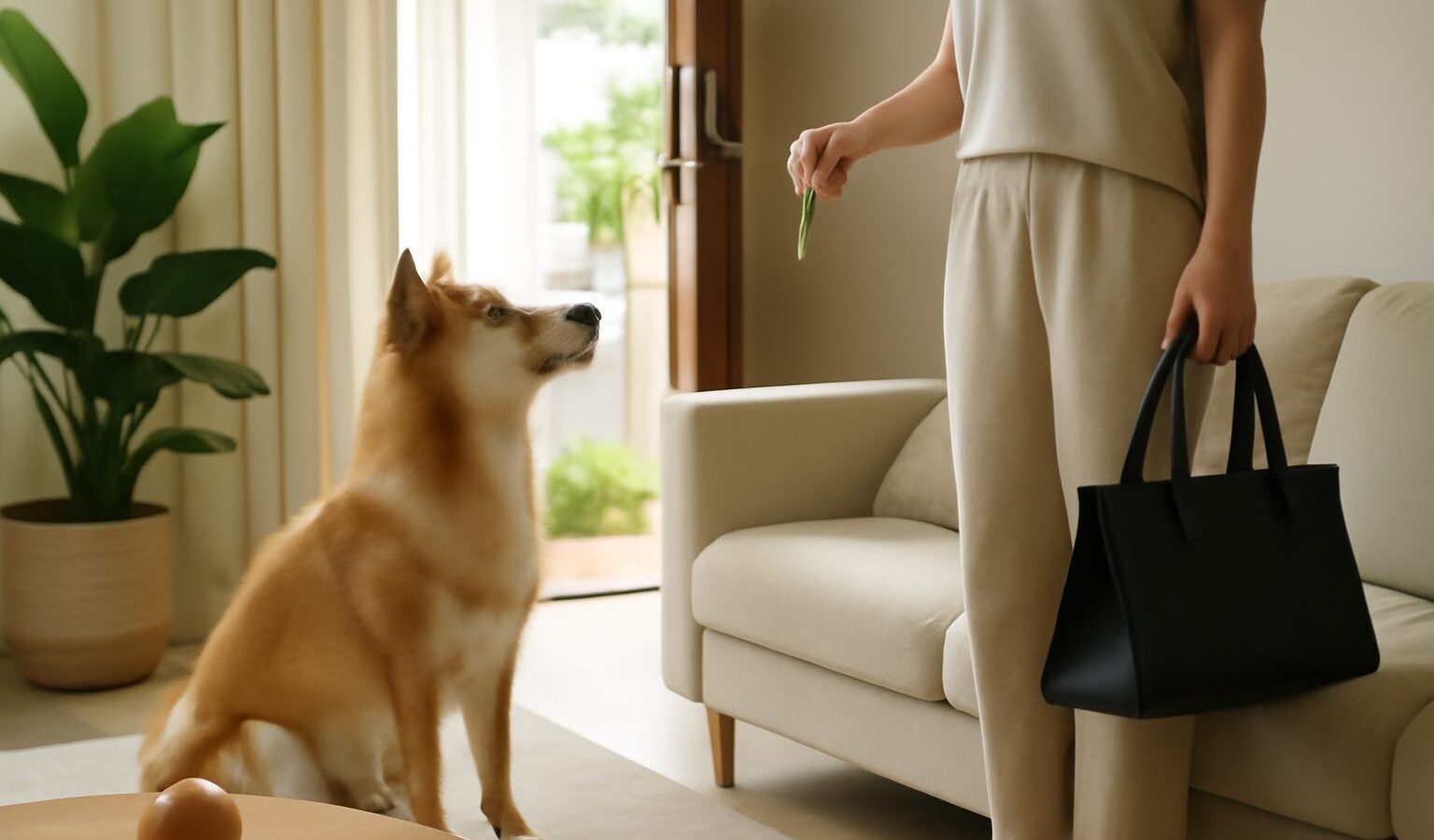
Most of us cannot be with our dogs every hour of the day. Work, errands, and life mean our dogs need to cope calmly on their own, whether that is in an HDB flat or a condo. Teaching a dog home alone in Singapore is a skill you build gently over time, not something a dog simply knows how to do. Done well, your dog learns that being by themselves is safe, boring in a good way, and always followed by your return. This guide takes a positive, force-free approach so your dog grows confident rather than fearful.
Why Alone Time Needs to Be Taught
Dogs are social animals who naturally want to be near their people. Being left alone does not come easily, especially to puppies, newly adopted dogs, or dogs who have always had company. If a dog is suddenly left for hours with no preparation, they can become distressed, and that distress often shows up as barking, whining, pacing, house-soiling, or chewing.
The aim of alone-time training is to teach your dog that solitude is nothing to worry about. You do this by starting small and building up slowly, so your dog never gets more than they can comfortably handle. Confidence grows one calm departure at a time.
Building Independence Step by Step
Start before you actually need to leave for long. Even when you are home, encourage your dog to relax on their own bed or in another room rather than following you everywhere. Reward calm, independent behaviour with quiet praise or a treat dropped nearby. Teaching your dog to settle and relax on cue is a wonderful foundation for time alone.
Then practise short absences and build up gradually:
- Set up a comfortable, safe space, a cosy bed, a playpen, or a crate your dog already likes.
- Give a long-lasting chew or a stuffed puzzle toy so being alone predicts something enjoyable.
- Step out of the room for a few seconds, then return calmly before your dog gets worried.
- Slowly increase the time, from seconds to minutes to longer, always staying within your dog’s comfort zone.
- Keep departures and arrivals low-key. No dramatic goodbyes or excited hellos, which only make the contrast between your presence and absence feel bigger.
If your dog starts to fret at a certain duration, you have moved too fast. Simply go back to a shorter time they can handle and progress more slowly. Patience here pays off.
A crate can be a genuine help if your dog sees it as a safe den rather than a punishment. Introduce it kindly and never use it to lock away a distressed dog. Our guide to crate training your dog explains how to do it the positive way.
Meeting Your Dog’s Needs First
A dog who has had a good walk and some play is far more likely to rest quietly when you leave. Exercise your dog in the cooler morning or evening hours to beat Singapore’s heat, and add some mental stimulation through sniffing, training games, or puzzle feeders. A tired, satisfied dog settles more easily.
Practical tips that make alone time work:
- Toilet your dog before you leave so they are comfortable.
- Leave water available and the home at a comfortable temperature, since flats can get very warm.
- Provide safe toys and chews to occupy them, and check that nothing left out could become a choking or swallowing hazard.
- Consider soft background sound, such as a radio, which some dogs find soothing.
For long working days, no dog should be left alone for excessively long stretches. Arranging a midday visit, a dog walker, or daycare can break up the day and keep your dog happy. Our guide to hiring a pet sitter or dog walker covers your options in Singapore.
When It Is More Than Boredom
There is an important difference between a dog who is simply learning to be alone and a dog suffering from true separation anxiety. A dog with separation anxiety may panic the moment you leave, showing intense distress such as frantic barking or howling, destructive scrambling at doors, drooling, or toileting despite being house-trained, often within minutes of your departure. This is a genuine welfare issue and not disobedience or spite.
If you recognise these signs, do not push through with longer absences, as that can make things worse. Please read our detailed guide to dog separation anxiety, and if the signs are severe, see your vet or a qualified force-free behaviourist. Your vet can rule out medical causes and, together with a behaviourist, help you build a proper treatment plan. This article is general information and not veterinary or behavioural advice for your individual dog.
Teaching your dog to be comfortable alone is one of the kindest gifts you can give them, because it lowers their stress every time you walk out the door. Go slowly, keep things positive, meet their needs, and celebrate calm. With time and consistency, your dog will learn that home alone simply means a peaceful nap until you come back.