
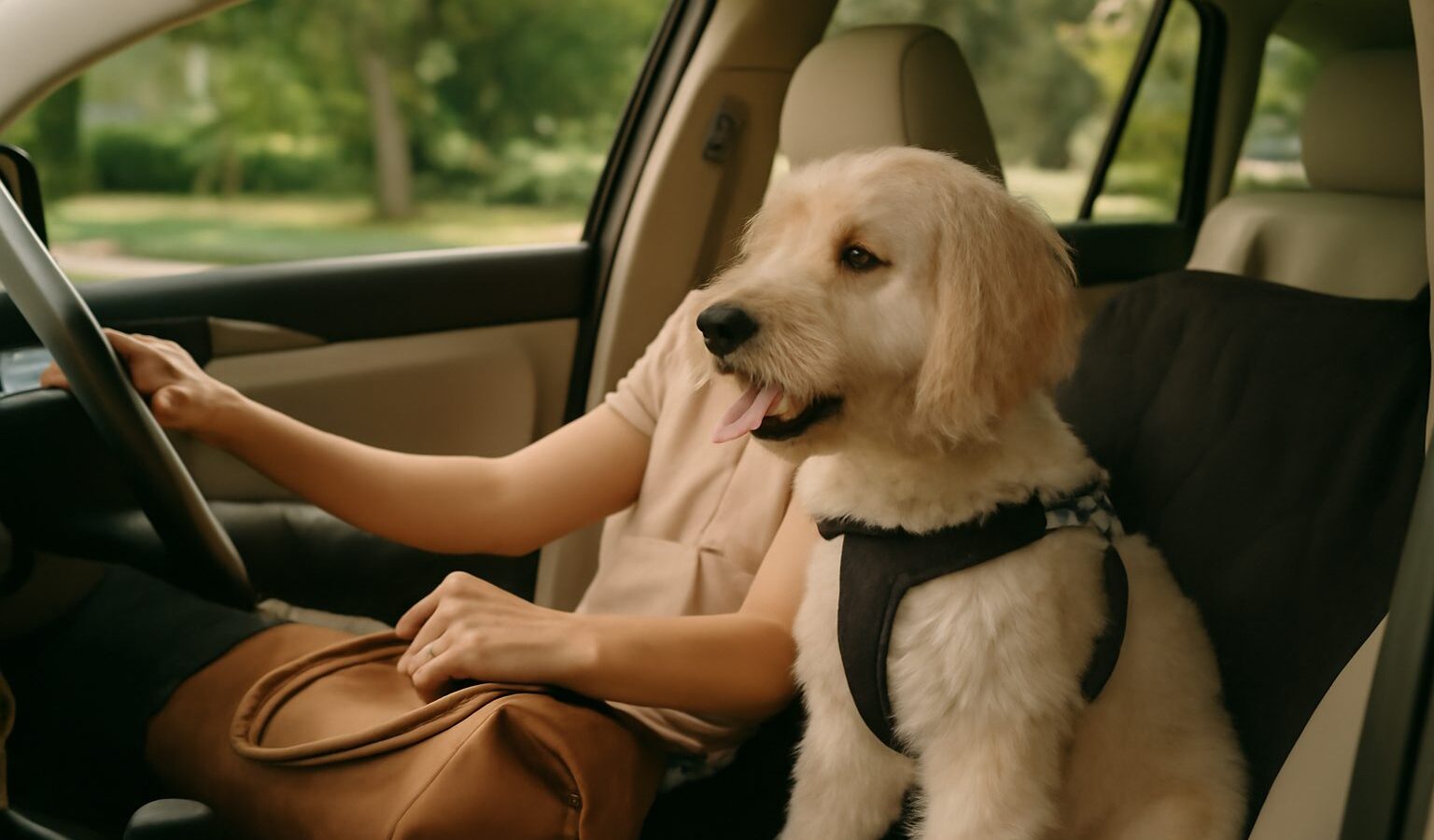
A drive to the park, the vet or a weekend outing can be a joy for a dog that loves the car, but the journey needs a little planning to be truly safe. An unrestrained dog is a risk to itself and to everyone in the vehicle, and our warm climate adds a danger that too many owners underestimate. Getting dog car travel safety right is straightforward once you know the essentials. This article is general information, not veterinary advice, so speak to your vet about your dog’s specific needs, especially for anxiety or travel sickness.
Why Restraint Comes First
A loose dog in a moving car is a genuine hazard. If you brake hard or stop suddenly, an unsecured dog can be thrown forward, hurting itself and possibly the people in front. A dog roaming the cabin can also distract the driver, block the view, or slip out the moment a door opens. Restraining your dog is not about limiting its fun. It keeps everyone safer and helps your dog feel more settled, because a defined space is calmer than a sliding, shifting one.
Never let your dog ride with its head out of the window. Wind can carry grit and insects into the eyes, and a sudden movement or stop can be dangerous. Keep windows up enough that your dog cannot lean or jump out.
Choosing How to Secure Your Dog
There are a few sensible ways to restrain a dog in a car, and the best one depends on your dog’s size, temperament and your vehicle. Whatever you choose, introduce it gently at home first so it feels familiar before a real trip.
| Method | Best suited to | Points to keep in mind |
|---|---|---|
| Travel crate | Dogs comfortable in a crate | Secure it so it cannot slide; size it for standing and turning |
| Crash-tested harness | Dogs who prefer to sit on a seat | Attaches to a seatbelt; fit and adjust it properly |
| Car barrier | Larger dogs in a wagon or SUV | Contains the dog behind it but does not restrain the body |
| Loose in the cabin | No dog, ever | Unsafe for the dog, the driver and passengers |
For many owners, a well-secured crate or a properly fitted harness offers the best balance of safety and comfort. Whichever route you take, make sure it is the right size and correctly adjusted, and never attach a restraint to a neck collar, which could injure your dog in a sudden stop.
Preventing Car Sickness and Anxiety
Some dogs feel queasy or anxious in the car, particularly puppies and those with little experience of driving. You can help by building up slowly. Start with your dog simply sitting in a parked car, reward calm behaviour, then progress to short trips to pleasant places so the car is not only associated with the vet.
A few habits ease the journey:
- Travel on a light stomach. Avoid a big meal right before setting off, and check timing with your vet if sickness is a problem.
- Keep the air cool and fresh. Good ventilation and a comfortable temperature help a queasy dog settle.
- Give a familiar comfort. A favourite blanket or toy that smells of home can be reassuring.
- Drive smoothly. Gentle acceleration, braking and cornering reduce both nausea and nerves.
- Take breaks on longer trips. Stop safely for water and a toilet break where it is allowed.
If your dog is severely anxious or is sick on every trip, talk to your vet. Do not give any human medication or supplement without veterinary guidance, because many are unsafe for dogs and the wrong choice can cause harm.
The Rule That Saves Lives
The single most important rule of travelling with a dog is this: never leave your dog alone in a parked car. In Singapore’s heat, the inside of a car climbs to dangerous temperatures within minutes, even in shade and even with the windows cracked open. A dog cannot cool itself the way we do, and a parked car can become deadly frighteningly fast. There is no safe amount of time, so if your dog cannot come with you when you leave the car, do not bring it on that trip.
Learn the signs of heat stress so you can act if your dog ever overheats, whether in a car or out on a walk. Seek emergency veterinary care at once if you see:
- Heavy, frantic panting that will not settle.
- Drooling, bright red gums or obvious distress.
- Weakness, stumbling, confusion or collapse.
- Vomiting or diarrhoea with any of the above.
Heatstroke is a true emergency. While you head to the vet, move your dog into shade or air-conditioning, offer small sips of water, and cool it gently with room-temperature water rather than ice-cold water.
Packing and Planning for the Trip
A little preparation makes every journey smoother. Bring water and a bowl, a leash for safe exits, poop bags, and any comfort item your dog likes. Make sure your dog wears proper identification and that its microchip and licence details are up to date, so it can be reunited with you quickly if it ever goes missing. When you arrive, clip the leash on before opening any door, and let your dog out on the side away from traffic.
Check ahead whether your destination allows dogs and whether any transport rules apply, since these can change. If your journey involves a visit to the vet, a groomer or a pet-friendly venue, a calm, well-restrained arrival sets the tone for a good day out.
Every Journey, Done Safely
Travelling with your dog can be one of the small pleasures of ownership, as long as safety comes first. Restrain your dog with a crate or a proper harness, build up slowly if it is nervous, prepare for the heat, and never leave your dog alone in a parked car. Get these basics right and the car becomes just another happy part of life together. When your dog struggles with sickness or anxiety, your vet can help you find a gentler way forward.
Explore More
Safe travel pairs well with everyday care. Before a walk at your destination, check our guide to dog paw care and hot pavements, and keep outdoor time worry-free with our advice on tick, flea and heartworm prevention. Keeping your dog trim helps too, so see our guide to managing your dog’s weight.