

Most insurance conversations in Singapore focus on protecting yourself: hospitalisation, life cover, critical illness. Far fewer people think about the other side of risk, which is what happens if you accidentally injure someone or damage their property and they claim against you. That is the job of liability insurance, and umbrella liability insurance in Singapore is the idea of adding an extra layer of that protection on top of what you already have.
This guide explains the concept in plain terms, shows where you may already have some liability cover without realising it, and helps you decide whether your household’s risks justify looking further.
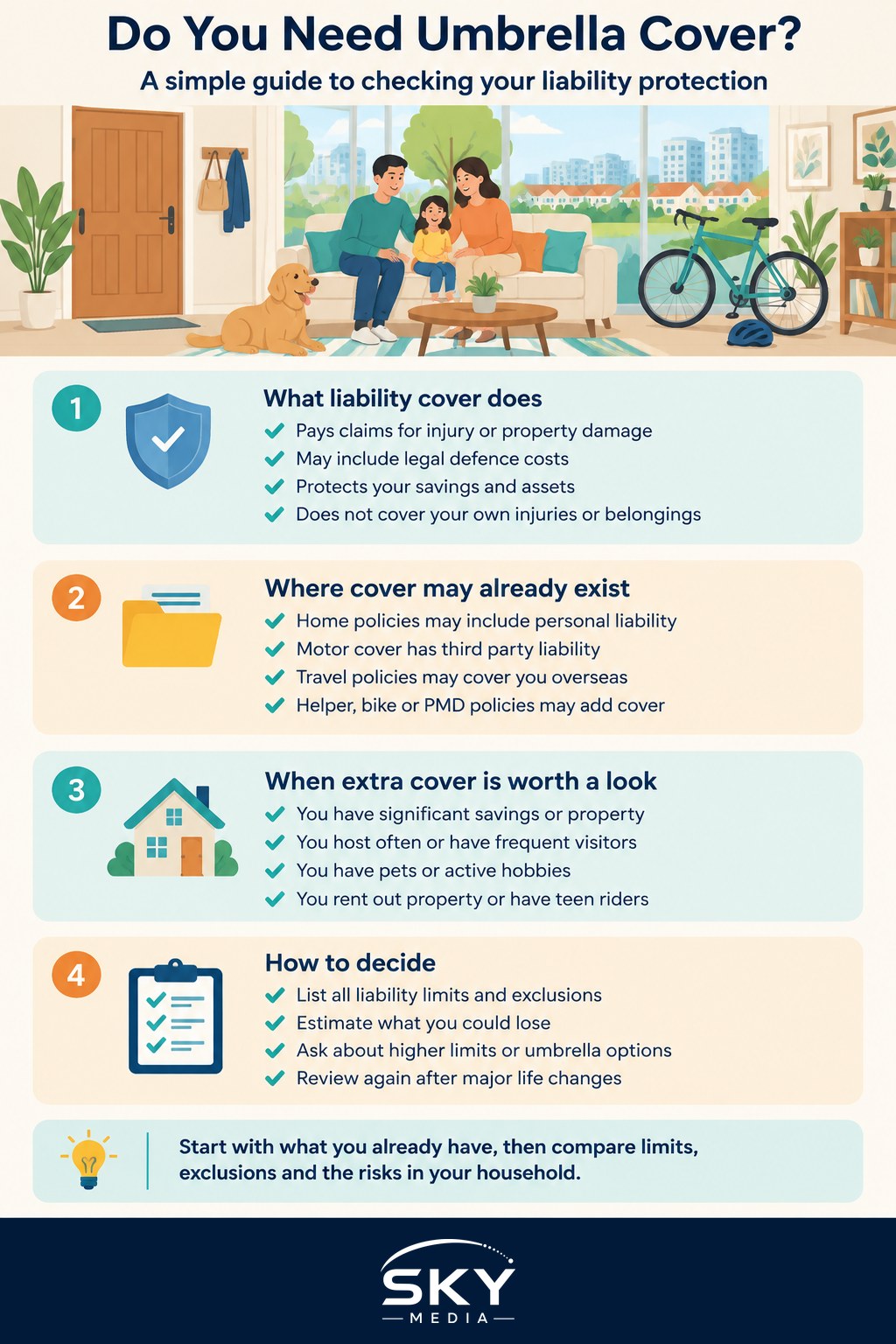
What Personal Liability Cover Actually Does
Personal liability insurance pays, up to a limit, for claims made against you by other people for injury or property damage you are legally responsible for. It typically also helps with legal defence costs, depending on the policy wording.
Some everyday examples of the kind of incident it is designed for:
- Water from your bathroom leaks and damages your downstairs neighbour’s ceiling and furniture.
- Your child knocks over and breaks an expensive item in someone else’s home.
- A guest slips and is injured in your home.
- Your dog bites a passer-by at the park.
- You accidentally hit a pedestrian while riding a bicycle.
Liability cover does not pay for your own injuries or your own belongings. It protects your savings and assets from claims made by others.
Where You May Already Have Liability Cover
Before considering anything extra, check what you already hold. Many Singapore households have some personal liability protection bundled into other policies:
- Home contents or home insurance. Many home policies include a personal liability section. This often covers incidents in and sometimes outside the home.
- Motor insurance. Third party liability is a legal requirement for vehicles in Singapore under the Motor Vehicles (Third-Party Risks and Compensation) Act, and covers liability arising from using the vehicle.
- Travel insurance. Many travel policies include personal liability while you are overseas.
- Domestic helper insurance. Policies bought for a foreign domestic worker, as required by the Ministry of Manpower (MOM), may include some third party liability elements. Check the specific policy.
- Personal mobility device or bicycle cover. Some policies for e-scooters, PMDs or bicycles include third party liability.
Each of these has its own limit, exclusions and conditions. Pull out your policy documents, find the liability section, and note the maximum amount payable and what situations are covered.
How an Umbrella or Excess Layer Works
In some markets, an umbrella policy is a standalone product that sits above your other policies. When a claim exceeds the liability limit of your home or motor policy, the umbrella layer pays the excess, up to its own limit. It can also fill some gaps the underlying policies do not cover.
In Singapore, standalone umbrella policies for individuals are less commonly advertised than in some other countries. Higher liability protection may instead be available through higher limits on your existing policies, through comprehensive home or private client packages offered by some insurers, or through an insurance broker who can source specialist cover. Availability, terms and costs vary, so speak to licensed insurers or brokers to see what is offered for your situation.
Here is how the main options compare:
| Option | What it is | Typical strength | Typical limitation |
|---|---|---|---|
| Liability section in home insurance | Personal liability cover bundled into your home or contents policy | Low extra cost, covers common household incidents | Limit may be modest; exclusions apply |
| Liability in motor, travel or PMD policies | Cover tied to a specific activity or vehicle | Matches the specific risk | Only applies to that activity |
| Higher limit on an existing policy | Paying more for a larger liability limit, where offered | Keeps cover in one place | Not every insurer offers this |
| Standalone umbrella or excess policy | Extra layer above your other policies, where available | Raises total protection across several risks | Less common locally; usually requires underlying cover |
Which Households Face Higher Liability Risk
Most households will find that the liability sections in their existing policies are a reasonable starting point. Extra protection is worth investigating if several of these apply to you:
- Significant assets. If you have substantial savings, investments or property, a large claim could put more at stake.
- Frequent guests or hosting. Regular gatherings, parties or helpers coming in and out of your home.
- Pets, especially larger dogs.
- Active hobbies with others around. Cycling, boating, horse riding or other activities where an accident could injure someone else.
- Renting out property. Landlords face extra risks from tenants and visitors. Landlord policies usually differ from regular home cover.
- Teen drivers or riders in the household.
- A public profile, such as being active on social media, where claims of defamation could arise. Check whether any policy covers this, as many do not.
If none of these apply, you may already be adequately covered. If several do, it is worth a closer look.
A Step-by-Step Way to Decide
- Inventory your existing liability cover. List every policy, its liability limit and main exclusions.
- List your risk factors from the section above.
- Estimate what you could lose. Think about your total assets and future income that a large claim could affect.
- Identify the gaps. Are there activities or situations none of your policies cover? Are the limits low compared with what you could lose?
- Get quotes and compare. Ask your current insurer about higher limits, and ask a broker about excess or umbrella style options.
- Read the exclusions carefully. Business activities, intentional acts and certain hobbies are commonly excluded.
- Review yearly or after major life changes, such as buying property, getting a pet or starting a new hobby.
If you find yourself stuck comparing options endlessly, our guide on how to avoid analysis paralysis offers a simple way to reach a decision.
Fitting Liability Cover Into Your Insurance Plan
Liability protection is one piece of a wider plan. Most people should first make sure their core protection is in place: hospitalisation cover, life protection if others depend on their income, and disability or critical illness cover as appropriate. Our explainer on the types of insurance you actually need covers these basics, and our guide to how much insurance you need helps you size them.
Once those are set, checking your liability cover is a sensible next step, especially as your assets and responsibilities grow.
This article is general information, not financial or legal advice. Policy terms, limits and availability vary by insurer and change over time. Always read the policy wording and speak to a licensed insurer, broker or financial adviser before buying cover.
Official sources: MoneySense
Further reading: Public Liability Insurance for Small Businesses and Events in Singapore