
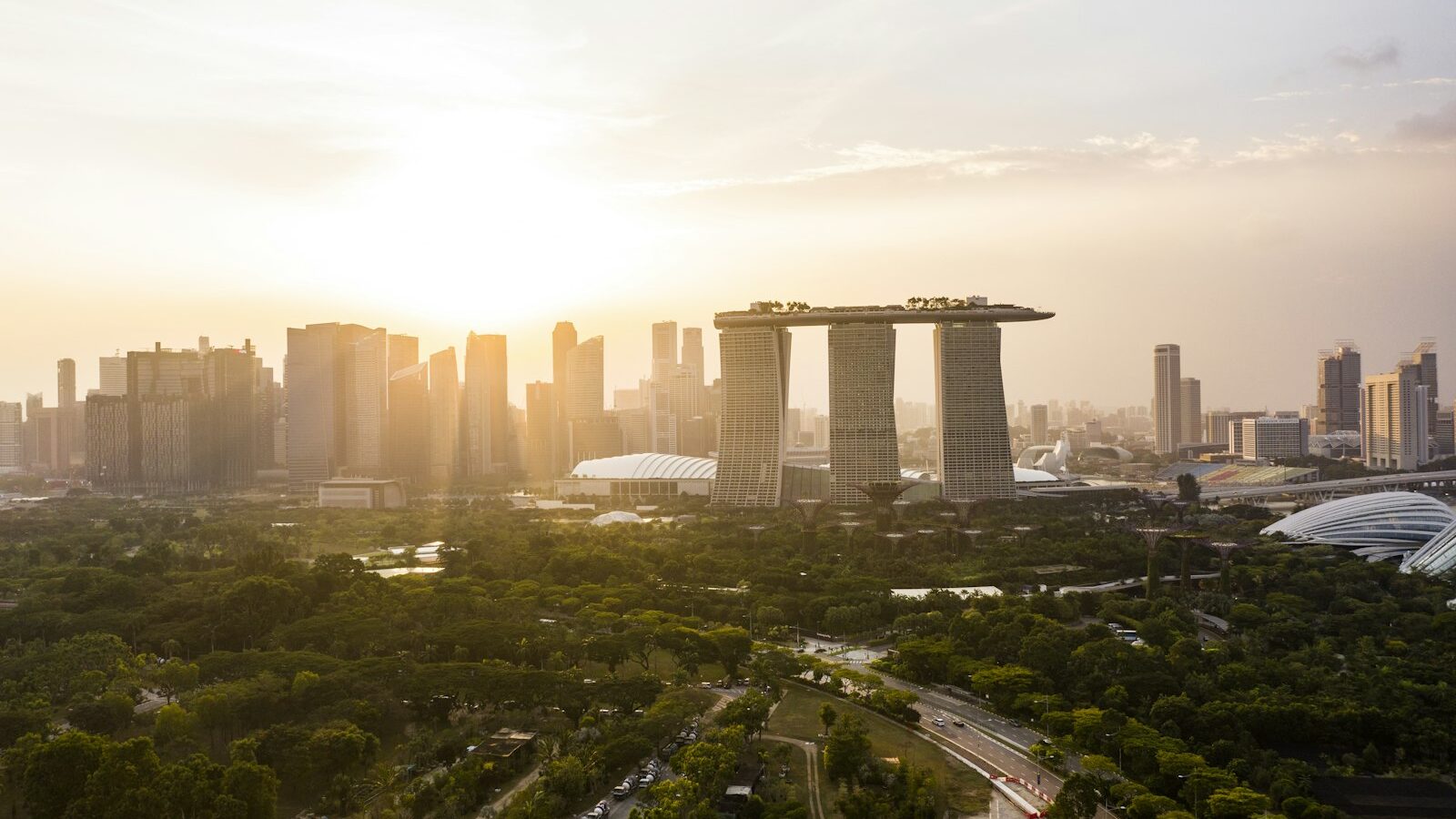
We hear about greenhouse gases constantly, usually in the same breath as climate change, yet the phrase can stay a bit vague. What are they, exactly, and why do a few gases in the air have such an outsized effect on the whole planet? Understanding greenhouse gases in Singapore is worth a little of your time, because once the basic idea clicks, a lot of green choices stop feeling like rules and start making obvious sense.
This guide explains what these gases are, the main ones to know, where they come from, and how everyday life here connects to the picture. No heavy science, just the useful essentials.
What Greenhouse Gases Actually Do
Start with the good news. The greenhouse effect is natural and we need it. Sunlight reaches Earth and warms the surface, and the surface then radiates heat back out. Certain gases in the atmosphere trap a portion of that heat rather than letting it all escape to space, a bit like the way a car left in a car park heats up on a sunny day. Without any of these gases, the planet would be a frozen, lifeless place.
The problem is one of degree. Human activity, mostly the burning of fossil fuels along with changes to land and farming, has been adding extra greenhouse gases to the atmosphere. More of these gases means more heat trapped, and that steadily raises average temperatures and shifts weather patterns. It is not that the gases are new or evil. It is that we have thickened the natural blanket faster than the planet’s systems can comfortably adjust to. Our companion piece on climate change and Singapore looks at what that warming means for a low-lying tropical island.
The Main Gases to Know
There are several greenhouse gases, and they differ in where they come from and how strongly they trap heat. You do not need the chemistry, just a feel for the main players.
- Carbon dioxide, often written as CO2, is the one we hear about most. It comes largely from burning fossil fuels for electricity, transport and industry, and from deforestation. It does not trap heat as strongly as some others per unit, but we produce so much of it that it is the biggest single driver.
- Methane is released from sources like livestock, rice cultivation, landfills and the production of oil and gas. It traps heat far more powerfully than carbon dioxide, though it breaks down in the atmosphere more quickly.
- Nitrous oxide comes mainly from farming, especially the use of nitrogen fertilisers, as well as some industrial processes. It is present in smaller amounts but is very potent.
- Fluorinated gases are human-made, used in things like refrigeration, air conditioning and some industry. They exist in tiny quantities but can be extremely powerful, which matters in a warm country that relies heavily on cooling.
- Water vapour is also a greenhouse gas, and it amplifies warming, but its amount is governed by temperature rather than directly by our emissions.
Because these gases differ so much in strength, scientists often express emissions in terms of carbon dioxide equivalent, a common yardstick that lets very different gases be compared on one scale.
Where Emissions Come From
At the global level, the biggest sources are broadly the energy we use, the way we get around, how we produce food, and industry. In a highly urban setting like Singapore, with no farmland to speak of and limited natural energy resources, the picture leans heavily towards electricity generation, industry and transport, alongside the emissions embedded in everything we import.
That last point is easy to miss. A large share of the impact tied to our lifestyles is baked into the products, food and materials shipped in from elsewhere. So while the gas may be released in another country’s factory or field, the demand often sits here. This is why measures like reducing your carbon footprint in Singapore look at consumption as well as the energy used directly at home.
On policy, Singapore uses a range of tools to steer emissions down over time, including pricing carbon for larger emitters. We have kept the specifics general on purpose, so for current rates, coverage and timelines, check the official sources such as the National Climate Change Secretariat and the Ministry of Sustainability and the Environment. Our overview of the carbon tax in Singapore explains the idea in plain terms.
What This Means for Everyday Choices
Here is the reassuring part. Once you understand the main sources, the helpful habits line up naturally, and most of them save money too. Using less electricity, especially by being smart with air conditioning, chips away at the largest local source. Travelling car-lite, wasting less food so methane-producing landfills get less, buying less stuff and keeping it longer, and choosing more plant-forward meals all trim emissions across several gases at once.
None of this asks for perfection. The point of understanding greenhouse gases is not to feel guilty about every action, but to know which choices carry real weight so you can put your effort where it counts. Pick one that fits your life, whether that is nudging up the aircon temperature or wasting less food, and let the understanding turn into a habit that quietly adds up.