

If you play modern games for any length of time, you will run into loot boxes and microtransactions. They are the small in-game purchases, from a new outfit to a random reward crate, that fund a lot of today’s titles. This guide explains loot boxes singapore players see in mobile and console games, how microtransactions work, and how to enjoy them without spending more than you meant to.
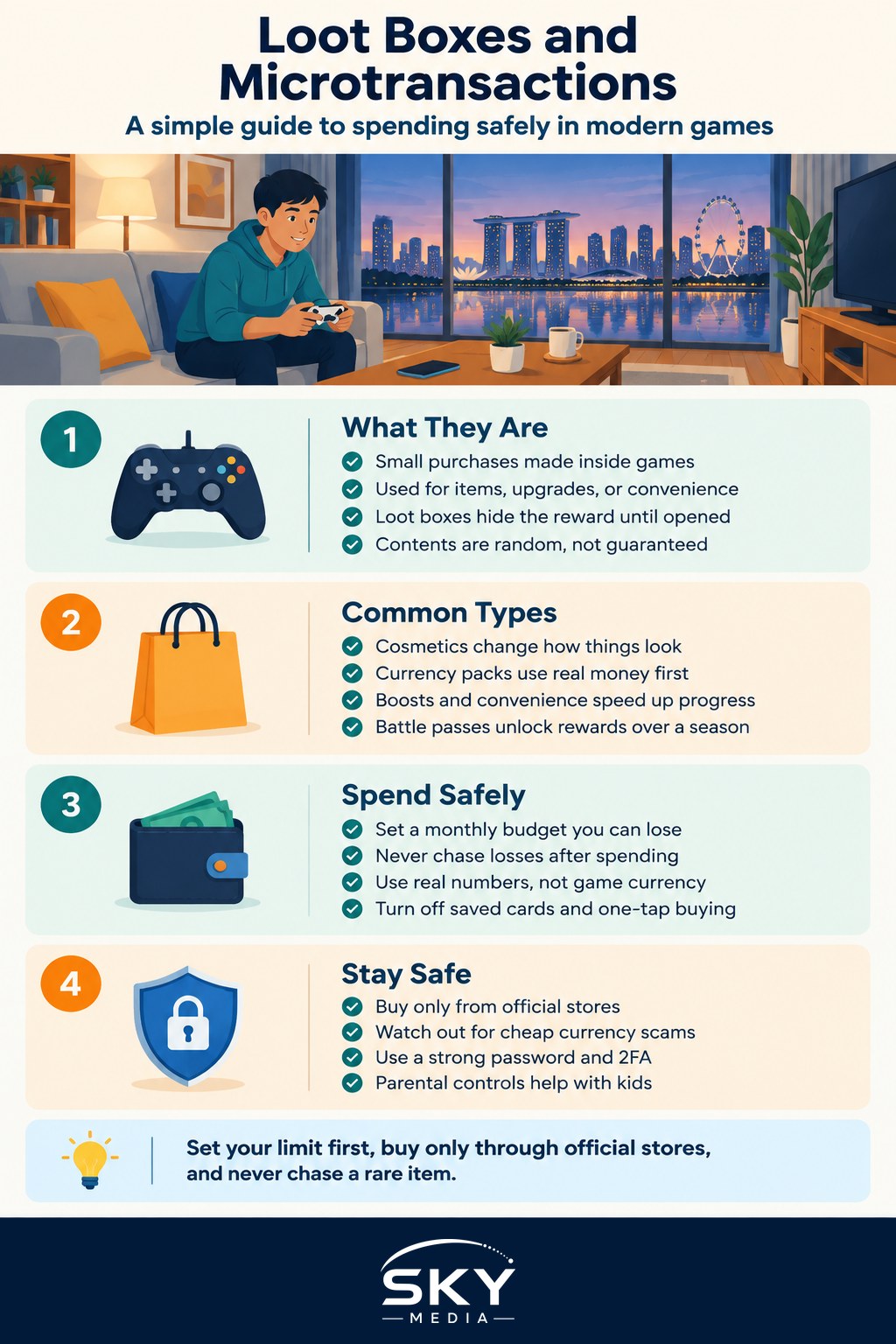
What Microtransactions Actually Are
A microtransaction is any small purchase you make inside a game using real money, usually to buy items, upgrades, or convenience. They come in a few common shapes.
- Cosmetics: skins, outfits, emotes, and colours that change how something looks but not how it plays.
- Currency packs: you buy an in-game currency with real money, then spend that currency inside the game. This extra step can make it harder to feel how much you are actually spending.
- Boosts and convenience: experience boosts, extra energy, or time-savers that speed up progress.
- Battle passes: a season-long track of rewards you unlock by playing, often with a paid tier.
A loot box is a specific type of microtransaction. You pay for a sealed box, pack, or crate, and you do not know exactly what is inside until you open it. The contents are random. In some games you can earn boxes through play as well as buy them.
The important thing to understand is that a loot box uses a random-reward mechanic that is gambling-like. You put money in, and what you get back is down to chance. That feeling of “one more try” is designed in, so it pays to go in with clear eyes.
The Gambling-Like Side of Loot Boxes
Loot boxes and gacha pulls share a lot with gambling in how they feel, even when no cash prize comes out. You spend real money for an uncertain outcome, the good items are rare, and the near-misses keep you pulling. This is worth respecting, especially because the value you get is not guaranteed.
Because the odds are set by the game, not by you, treat any spending as money spent for fun, not as an investment or a way to “win” something valuable. Different countries regulate loot boxes differently, and the rules keep changing, so do not assume any legal protection covers your spending. If a game shows published drop rates, read them, but never rely on your own guesses about how likely a rare item is.
Spending Safely: A Simple Plan
You can enjoy these systems without regret if you set the terms in advance.
- Set a budget and a spending limit. Decide a fixed amount per month you are happy to lose entirely, and stop there. Many consoles and app stores let you set a hard spending cap, which does the discipline for you.
- Never chase losses. If you have spent your budget and did not get the item you wanted, walk away. Spending more to “make it worth it” is exactly the trap.
- Use real numbers, not currency. Convert in-game coins back to dollars in your head before buying. A “1,200 gem” bundle is a real dollar figure.
- Turn off saved cards and one-tap buying so every purchase takes a deliberate step.
- Sleep on big purchases. If you still want it tomorrow, fine. Most of the time the urge passes.
Remember that spending is never required to enjoy a good game. Plenty of Singapore players clear entire titles buying nothing at all, and many strong games are free to start. If you want a wider view, see our guide on free-to-play vs paid games and our tips on how to set a gaming budget.
Scams, Account Theft, and Staying Safe
Where money and rare items meet, scammers follow. Be wary of sites offering cheap currency, free boxes, or “topped-up” accounts. These often steal your login or payment details, and buying from unofficial sellers can get your account banned. Only buy through the official in-game store or your platform’s storefront.
Protect your account with a strong, unique password and two-factor authentication. Never share your login, and never click “free reward” links in chat or email. Our guide on avoiding scams and in-game spending goes deeper on the common tricks used in Singapore and beyond.
Loot Boxes and Younger Players
If children play games with loot boxes, extra care matters. Random-reward systems can be especially hard for younger players to resist, and it is easy for spending to add up on a linked card.
- Use the parental controls on the console, phone, or app store to require a password or approval for every purchase.
- Set a spending limit, or remove saved payment methods entirely.
- Talk about how the random rewards are designed, so kids understand the odds are not in their favour.
Our parent’s guide to kids and gaming covers age ratings, controls, and healthy limits in more detail.
The Practical Takeaway
Loot boxes and microtransactions are not evil, but they are built to encourage spending, and loot boxes in particular carry a gambling-like pull. Decide your budget before you open the store, never chase a rare item you missed, buy only through official channels, and lock down purchases if kids share the device. Do that, and these systems stay a small bit of fun rather than a slow drain on your wallet.
Further reading: Understanding Blockchain and NFT Games · Understanding DLC and Season Passes