
Wander down any supermarket aisle in Singapore and you will spot the word “organic” on everything from vegetables to biscuits, often at a higher price. But what does that label actually promise, and is it always what it seems? Understanding organic food labels in Singapore helps you spend your money on what you truly value, rather than on clever packaging. Organic is essentially a claim about how food is produced, not a magic guarantee of any particular benefit. This guide explains what the term generally means, how certification works, and how to read the labels with a clear and confident eye.
What “Organic” Generally Means
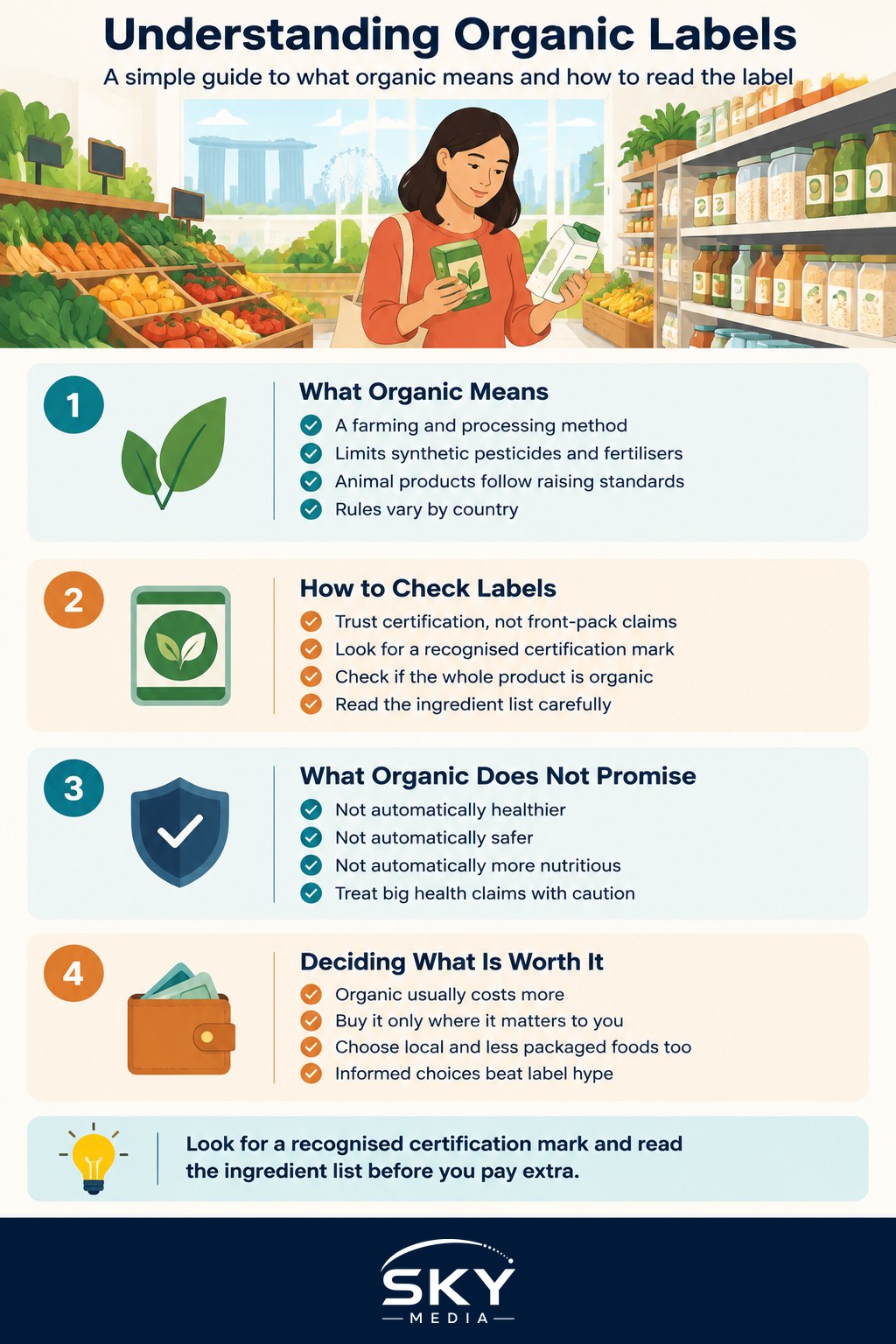
Organic is a description of a way of farming and processing food. In broad terms, organic production limits the use of synthetic pesticides and fertilisers and avoids certain conventional inputs, leaning instead on methods intended to work with natural systems. For animal products, it usually involves standards around how animals are raised and fed.
The exact rules differ from country to country, because there is no single global definition. Since Singapore imports most of its food, the “organic” products on our shelves are typically certified under the standards of where they were grown or made, such as recognised overseas certification bodies. That is why you will see a range of different logos rather than one local stamp.
It is worth being clear about what organic does not automatically mean. Organic is not automatically healthier, safer, or more nutritious than conventionally grown food. The evidence on such claims is mixed and debated, so treat sweeping health promises with caution. This article is general information, not dietary or medical advice, and if you have specific health needs, a doctor or dietitian is the right person to ask. People choose organic for a variety of reasons, including concerns about farming methods and the environment, and those are personal choices rather than settled facts about your health.
How to Read the Labels
The most trustworthy signal is a recognised certification logo, not just the word “organic” printed on the front. Certification means an independent body has checked that the producer follows a defined standard.
When you are shopping, keep a few things in mind:
- Look for a certification mark, ideally from a well-known scheme, rather than a vague claim alone.
- Check whether the whole product or just one ingredient is organic. A processed food might contain only some organic ingredients while still featuring the word prominently.
- Be wary of fuzzy words. Terms like “natural”, “farm fresh”, or “chemical free” are not the same as certified organic and often mean very little on their own.
- Read the ingredient list, which tells you far more than a marketing phrase on the front of the pack.
This kind of label literacy is a close cousin of spotting exaggerated green claims. Our guide to how to spot greenwashing is a useful companion for seeing through vague or misleading packaging in general.
Deciding What Is Worth It for You
Organic food usually costs more, so it is fair to ask where it is worth spending. There is no single right answer, and you do not have to go all in or not at all.
Some shoppers choose organic for a few specific items they buy often, and stick with conventional produce for the rest. Others prioritise supporting particular farming methods they care about. What matters is that you are making an informed choice rather than paying extra simply because a label caught your eye.
Remember that plenty of green and healthy habits have nothing to do with the organic label at all. Eating more vegetables, cutting food waste, buying local where you can, and choosing loose produce over heavily packaged options are all valuable in their own right. Our guides to buying local produce in Singapore and choosing loose and ugly produce offer practical ideas that often cost less, not more.
Shopping With Confidence
The aim of understanding organic food labels is to take back a little control at the checkout. When you know that organic is a production claim, that certification is what gives it weight, and that it does not automatically mean healthier or safer, you can decide calmly what deserves a place in your basket.
Buy organic where it genuinely matters to you and skip it where it does not, without guilt either way. A thoughtful shopper who reads labels, questions marketing, and focuses on the habits with real impact is doing far more good than one who simply follows whichever pack shouts the loudest. That clear-eyed confidence is worth more than any single label.
Official sources: Singapore Food Agency (SFA)