
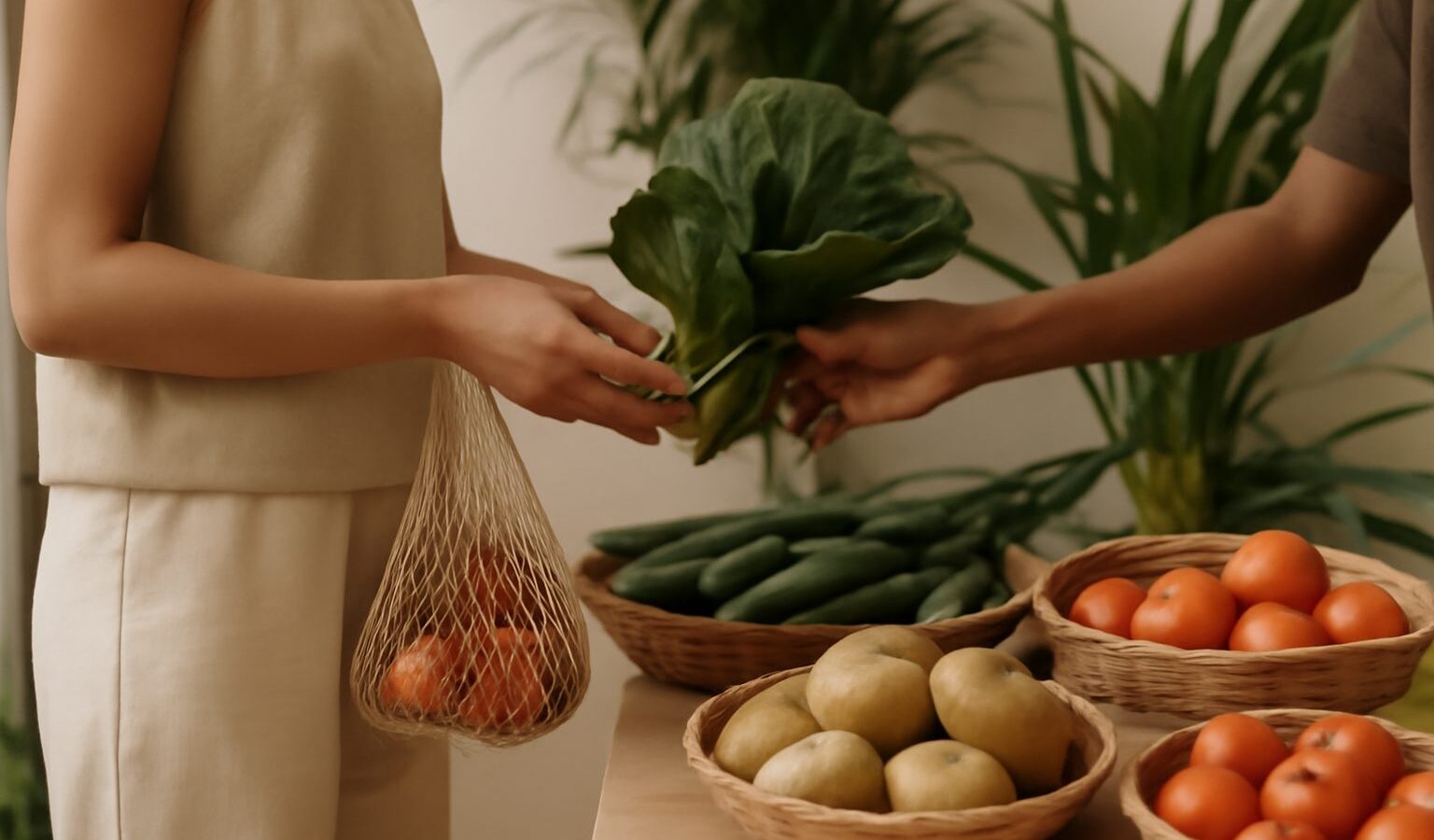
Singapore imports most of the food it eats, from a wide range of countries. That openness keeps our shelves full, but it also means our meals travel a long way to reach us. Choosing local produce singapore shoppers can find in supermarkets and markets is one small, satisfying way to shift the balance. Local eggs, leafy greens and fish are grown and raised right here, so they spend less time in transit and put a little more resilience into the food we rely on.
This guide explains what our farms actually produce, where to find it, how to spot the “SG Fresh Produce” mark, and why buying a bit more local food is good for both freshness and food security. None of it requires a big lifestyle change; it is mostly about noticing what is already on the shelf.
Why Local Food Matters Here
Because Singapore relies heavily on imported food, the country has set out to strengthen its own food supply so that a meaningful share of our nutritional needs can be met locally over time. This ambition is often described under the banner of “30 by 30”, a goal to build up local capacity in nutritional self-sufficiency. The exact targets, timelines and definitions are set by the authorities and can be refined, so treat the phrase as shorthand for a national direction rather than a fixed number, and check the Singapore Food Agency (SFA) for the current details.
The logic is simple enough. Food that is grown here does not depend on long supply chains, shipping schedules or the weather in another country. If an overseas source is disrupted, local farms can help cushion the gap. Buying local produce, in a modest, everyday way, supports the farms that make that cushion possible.
There is a freshness payoff too. Leafy greens harvested nearby can reach a shelf quickly, so they often arrive crisp and last well at home. Local eggs are laid close by. For many shoppers, that closeness is reason enough.
What Singapore’s Farms Actually Grow
Local farms here are varied, and they have leaned into what works in a small, urban, tropical setting. You will commonly find:
- Eggs. Singapore’s egg farms are a well-established part of local supply, and local eggs are widely stocked in supermarkets.
- Leafy greens. Vegetable farms, including high-tech indoor and vertical setups, grow crops such as xiao bai cai, cai xin, kang kong, kailan, lettuce and other leafy vegetables suited to fast, year-round harvests.
- Fish and seafood. Local fish farms, both coastal and land-based, raise species such as sea bass (barramundi), grouper and others, along with some shellfish.
- Beansprouts, mushrooms and specialty crops. Smaller producers grow beansprouts, mushrooms, microgreens and herbs.
Farming here is increasingly indoors and technology-driven, partly because land is scarce and the climate is demanding. That is why so much local produce is leafy greens, eggs and fish: crops and systems that can be productive in a compact footprint.
Where to Buy Local Produce
Local food is easier to find than many people assume. You just need to know what to look for.
- Supermarket local shelves. Major supermarkets often group or label local vegetables, eggs and sometimes fish together, and many carry the “SG Fresh Produce” logo. Look for signage near the chilled greens and the egg fridge.
- Farmers’ markets and pop-ups. Weekend markets and community events sometimes host local farms and producers selling directly. These are a good way to meet growers and ask questions.
- Farm shops and farm gates. Some farms run their own shops or stalls, or sell on-site, so you can buy close to the source. A few also welcome visitors.
- Direct and online. A number of farms and local grocers sell boxes or bundles online, delivering greens, eggs or fish straight to your door, often harvested to order.
- Wet markets. Friendly stallholders can often tell you what is local on the day, especially for eggs, beansprouts and some vegetables and fish.
Here is a quick comparison of common local products and where to look for them.
| Local product | Where to buy it |
|---|---|
| Local eggs | Supermarket egg fridge, wet markets, some farm shops |
| Leafy greens (cai xin, kang kong, xiao bai cai) | Supermarket local shelf, farmers’ markets, farm direct/online |
| Local fish (sea bass, grouper) | Supermarket chilled seafood, wet market fishmongers, farm direct |
| Beansprouts and mushrooms | Wet markets, supermarkets, some farm stalls |
| Microgreens and herbs | Farmers’ markets, farm shops, online boxes |
Spotting the SG Fresh Produce Mark
To make local food easier to identify, there is a recognisable “SG Fresh Produce” mark, a logo used to signal that a product is grown or farmed in Singapore. Once you have seen it, you will start noticing it on packs of greens, egg cartons and other local items.
The mark is helpful because packaging can otherwise be confusing, with imported and local products sitting side by side. If you want to support local farms, scanning for that logo is the quickest shortcut. As with any labelling scheme, the exact design and which producers participate can evolve, so if you want the current list of what qualifies or how the mark is administered, the Singapore Food Agency is the source to check.
Fresher Food, Shorter Miles, More Resilience
“Food miles” is the rough idea that the further food travels, the more transport it takes to reach you. Local produce, by definition, travels a shorter distance from farm to shelf, which can mean it spends less time in transit and can arrive fresh. It is worth being honest here: the full environmental picture of any food depends on how it is grown, not distance alone, so think of shorter miles as one sensible factor among several rather than a guarantee.
The more durable benefit is resilience. Every carton of local eggs and bag of local greens supports farms that form part of Singapore’s home-grown food capacity. In a country that imports most of its food, keeping local farms viable is a quiet form of security. You do not have to buy only local, and you should not feel guilty about imported staples; even shifting a portion of your regular shop to local produce makes a difference over time.
A gentle note on health: eating a variety of vegetables, eggs and fish is part of a balanced diet, but this is general information, not nutritional advice. For your own dietary needs, speak to a doctor or dietitian.
Making It a Habit
The easiest way to buy more local produce is to build it into shopping you already do. Pick one or two items to switch, such as always buying local eggs and local leafy greens, and let the rest follow naturally. Keep an eye out for the SG Fresh Produce mark, ask your wet market stallholder what is local that day, and try a farmers’ market when one pops up nearby. Over a few weeks it stops being a special effort and becomes just how you shop.
Explore More
Buying local is one thread in a bigger picture of eating well and lightly. See our guide to sustainable eating in Singapore for how local food fits with seasonal, plant-forward and low-waste habits, and if you catch the growing bug, learn how to start growing your own food in Singapore on a balcony or corridor at home.