
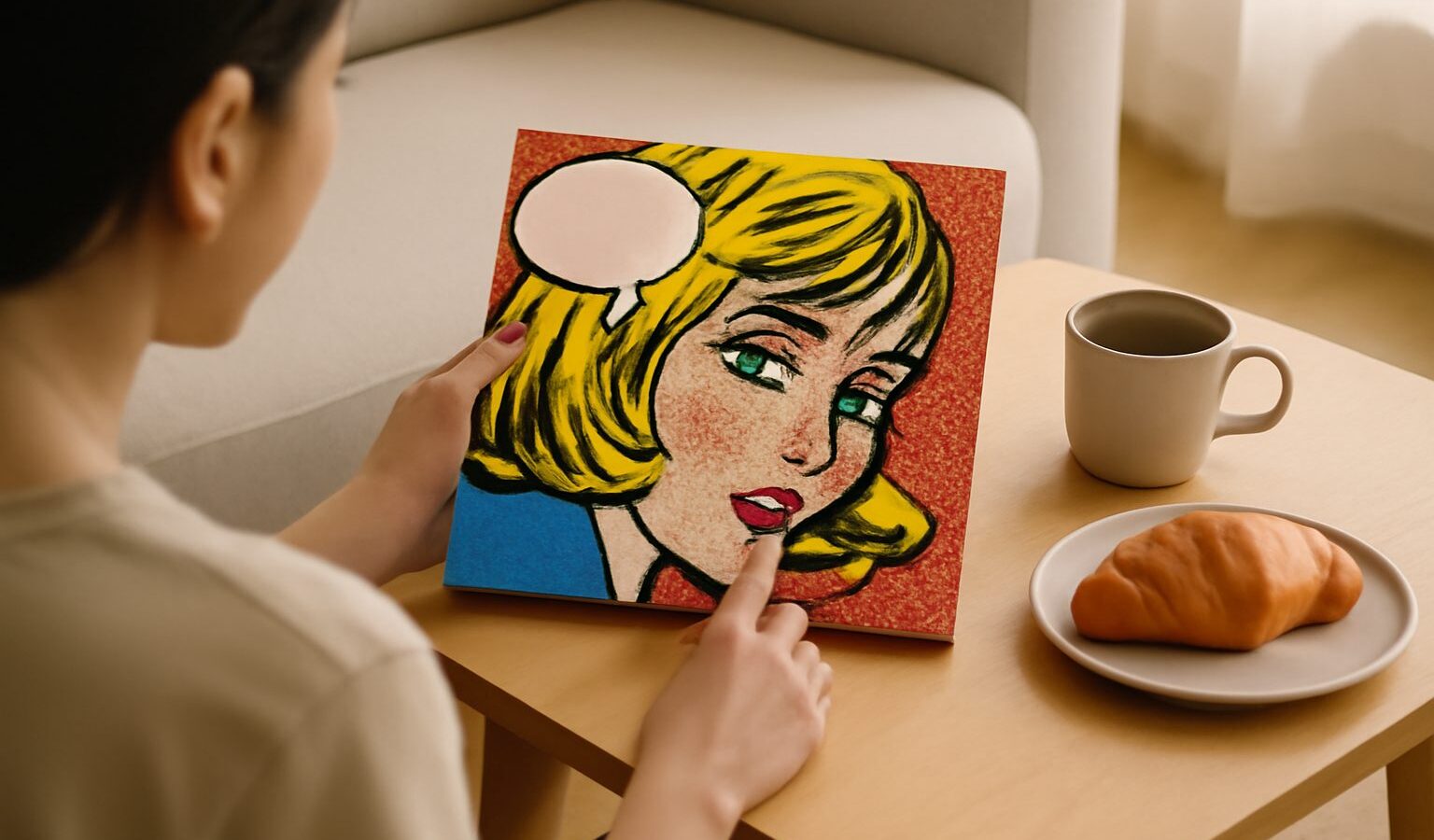
Bold colours, comic-strip dots, and soup cans hanging in serious galleries can seem almost cheeky, and that is exactly the point. Discovering pop art in Singapore is one of the most fun ways into modern art, because the movement took the everyday world of advertising, celebrity, and supermarket shelves and turned it into something worth looking at twice. Behind the playful surface lies a sharp set of ideas about consumer culture and what art is allowed to be. This guide explains what pop art was, who made it, and how to start enjoying it.
What Pop Art Was
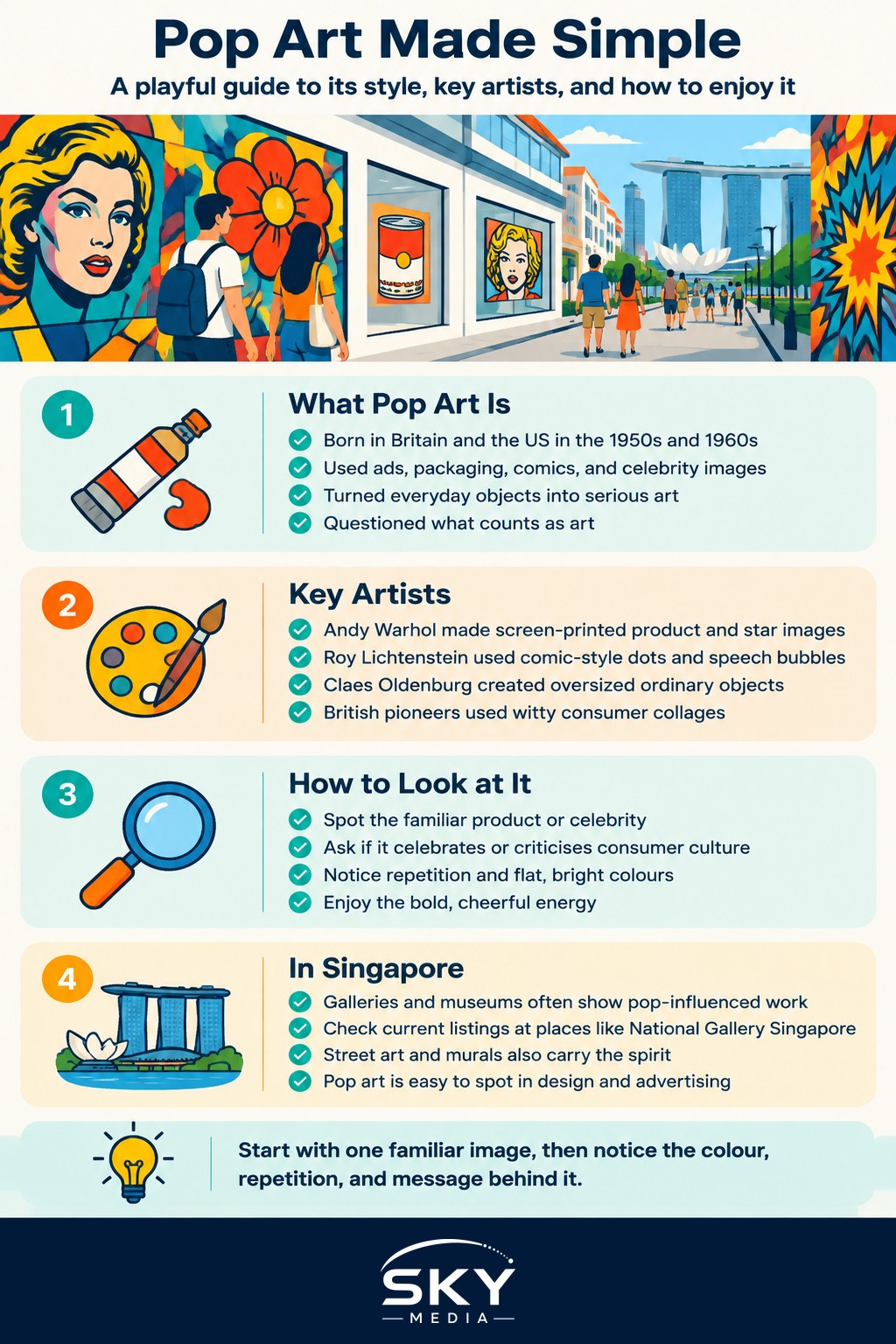
Pop art burst into life in the 1950s and 1960s, first in Britain and then powerfully in the United States. It arrived as a cheerful rebellion. Much of the serious art of the time was abstract, emotional, and deliberately difficult. Pop artists went the opposite way. They embraced the bright, loud, mass-produced imagery of everyday life, advertisements, product packaging, comic books, film stars, and household objects.
This was a genuinely radical idea. By painting a can of soup or a comic panel with the same care once reserved for grand subjects, pop artists blurred the line between high art and popular culture. They asked pointed questions. If we are surrounded by images of products and celebrities all day, is that not our real modern landscape? And if art can be a soup tin, then who gets to decide what counts as art at all?
Pop art often borrowed the techniques of mass production too. Artists used screen printing to make repeated images, mimicked the printing dots of cheap comics, and worked in flat, bright, commercial colours. The result was work that felt slick, familiar, and instantly recognisable, yet was quietly commenting on the world that produced it. Placing it within the wider timeline of styles is rewarding, and it fits naturally with understanding art movements as a whole.
The Artists To Know
A few figures defined the movement. Andy Warhol is the most famous, celebrated for his screen-printed images of everyday products and famous faces, and for turning his studio into a kind of art factory. Roy Lichtenstein is instantly recognisable for his large paintings that imitate comic-book panels, complete with printed dots and speech bubbles. Claes Oldenburg made playful, oversized sculptures of ordinary objects like food and household items. In Britain, earlier pioneers helped kick-start the movement with witty collages of consumer imagery.
What unites them is a knowing sense of humour paired with real craft. Their work looks effortless and commercial, but the choices behind it, what to repeat, what to enlarge, what to isolate, are deliberate and thoughtful. Because pop art plays so freely with images, fans of it often enjoy the freer logic of understanding abstract art as a contrast.
How To Enjoy Pop Art
Pop art is meant to be accessible, so you can relax and have fun with it. A few pointers will help you get more from it.
- Recognise the source. Half the pleasure is spotting the everyday product, comic, or celebrity being used, so enjoy that flash of familiarity.
- Ask what it is saying. Consider whether the work celebrates consumer culture, gently mocks it, or simply holds up a mirror to it.
- Notice the repetition. Many pop works repeat an image, which can make something ordinary feel strange, hypnotic, or hollow.
- Enjoy the colour and energy. It is perfectly fine to like a piece simply because it is bright, bold, and cheerful.
If you would like a broader toolkit for responding to any artwork, the habits in how to appreciate visual art work well with pop art, and its bold, graphic style is a natural inspiration if you ever try digital art and illustration for beginners yourself.
Pop Art In Singapore
Singapore’s bright, image-saturated cityscape is a fitting place to appreciate pop art. Contemporary galleries, art fairs, and museum exhibitions here regularly feature bold, graphic, and culturally playful work, so it is worth checking current listings at venues like the National Gallery Singapore and around the local gallery scene to see what is on. Street art and murals across the island also carry a lively, pop-influenced spirit that is free to enjoy on a walk.
Beyond exhibitions, pop art’s influence is everywhere in design, fashion, advertising, and social media, so once you start noticing its style you will spot it all around you. That constant presence makes it an easy and enjoyable movement to keep exploring.
Understanding pop art in Singapore is really an invitation to look at the ordinary world with fresh, amused eyes. You do not need any special background to enjoy it. Pick one bright, familiar image that makes you smile, think about why it works, and let your curiosity lead you deeper into one of the most approachable corners of modern art.