
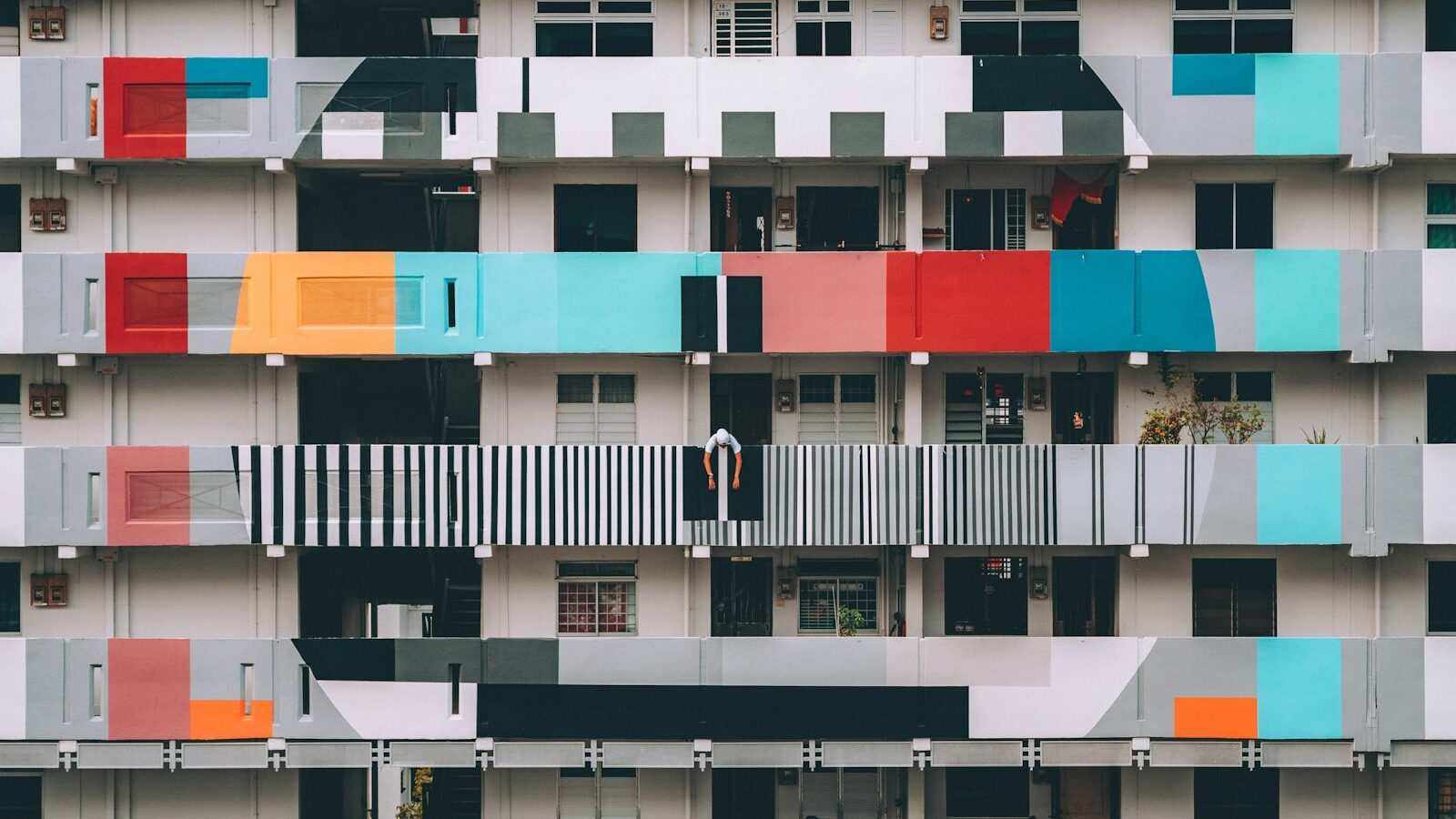
Standing before a canvas of pure colour and shape, many people quietly think they simply do not get it. Understanding abstract art can feel like being handed a book in a language nobody taught you. The good news is that there is no secret code, only a few friendly ways of looking. This guide will help you approach non-representational work with curiosity instead of anxiety.
What Abstract Art Is Trying to Do
Most art through history tried to depict something, a person, a landscape, a bowl of fruit. Abstract art loosens or abandons that goal. Instead of showing the world as it looks, it works directly with the raw ingredients of art itself, colour, line, shape, texture and gesture, to stir a feeling or an idea.
Think of it like music. A piece of instrumental music does not depict anything, yet it can make you feel calm, restless or elated. Nobody stands at a concert asking what a melody is a picture of. Abstract art asks for the same openness. It is not a puzzle with a hidden object to find. It is an experience to have.
Some abstract work departs only partly from reality, simplifying a real scene until it is barely recognisable. Other work is fully non representational, invented entirely from the artist’s imagination. Both are valid, and knowing which you are looking at can ease your way in.
Letting Go of the Wrong Question
The question that traps most viewers is what is it supposed to be. With abstract art, that question often has no answer, and asking it just leads to frustration. A far more useful question is what does it do to me.
Try standing in front of an abstract work and noticing your body’s response before your thinking mind interrupts. Does the piece feel loud or quiet, warm or cold, calm or agitated. Do your eyes race around it or settle in one place. These reactions are not random. They are exactly what the artist was working with, and trusting them is the first real step in understanding abstract art.
A Simple Way to Look
When you feel stuck, walk slowly through these layers. You do not need art history for any of them.
- Colour. Notice the palette. Warm reds and oranges push forward and energise. Cool blues recede and calm. A limited palette feels controlled, a riot of colour feels free.
- Composition. See how the artist has arranged the space. Is it balanced or deliberately off centre. Is there a busy area and a quiet area, or is the tension spread evenly.
- Mark and texture. Look closely at how the paint sits. Are the strokes fast and slashing or smooth and controlled. Is the surface thick and sculptural or thin and flat.
- Rhythm. Follow where your eye travels. Artists guide your gaze with repetition, direction and contrast, much like a piece of music has a beat.
Spend a minute on each layer and a blank wall of colour slowly becomes a set of decisions you can read.
Approaches Compared
Different viewers find different doors into abstract work. Here is a comparison to help you pick a way in that suits you.
| Approach | How it works | Good for |
|---|---|---|
| Pure feeling | Notice your emotional and bodily response first | Trusting instinct and staying open |
| Formal looking | Read colour, composition, mark and rhythm | Analytical minds who want a method |
| Artist’s context | Learn the artist’s life, ideas and era | Those who enjoy stories behind the work |
| Titles as clues | Use the title as a gentle hint, not a rule | Getting unstuck without over relying on words |
None of these is the correct method. The richest experience usually comes from mixing them, feeling first, then looking closely, then reading a little.
The Role of Titles and Context
Titles can help, but treat them lightly. Some abstract works carry titles like Composition or Untitled precisely so you are not steered towards a single meaning. Others give a poetic hint that opens a door. Read the title, let it colour your view, then set it aside and look again.
Context can deepen things too. Knowing that a movement arose after a war, or that an artist painted in grief or in joy, can make marks that once seemed arbitrary feel charged with purpose. You will find plenty of this background in Singapore’s museums and galleries, where wall texts and guides gently explain what an artist was reaching for. A little reading transforms confusion into connection.
Common Doubts, Gently Answered
Many newcomers worry that abstract art is a trick, that a child could do it. It is worth sitting with that thought rather than dismissing it. Some abstract works are indeed simple to reproduce. What is hard is deciding to make exactly that mark, in that colour, at that scale, and defending it as complete. The apparent ease is often the result of years spent stripping away everything unnecessary.
Another common doubt is that there is a right interpretation you are failing to reach. There is not. A thoughtful, honest response grounded in what you actually see and feel is a valid reading, even if it differs from the person beside you. Abstract art trusts you to bring yourself to it.
Trust Your Eyes
Understanding abstract art is less about acquiring knowledge and more about giving yourself permission to look and feel freely. Slow down, notice your response, read the colour and composition, and let the work be an experience rather than a riddle. Visit often, sit with pieces that unsettle or delight you, and your confidence will grow with every encounter. The wall of colour that once shut you out will start, quietly, to speak.
Explore more: How to Appreciate Visual Art · Contemporary Art in Singapore · An Introduction to Singapore Art History