
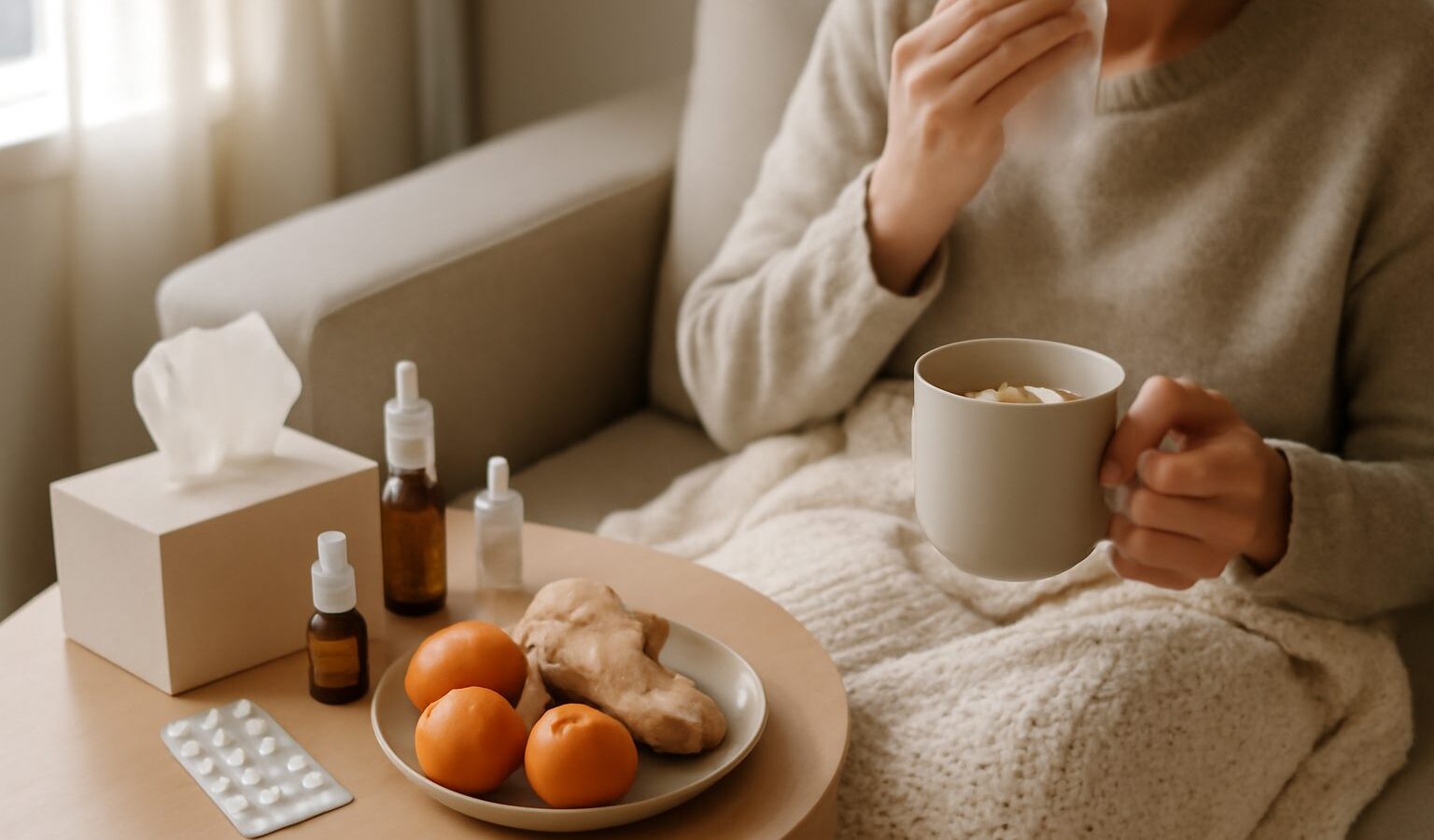
A runny nose, a sore throat and that heavy, achy feeling are all part of everyday life, and our year round warm weather does not make us immune. Between crowded MRT rides, shared office air conditioning and busy family homes, respiratory bugs pass around easily. Knowing how to handle a cold and flu in Singapore, from easing symptoms to knowing when to see a doctor, helps you recover comfortably and avoid passing it on. This is general information, not medical advice, so check with a doctor if you are worried.
Cold or Flu: How to Tell Them Apart
Colds and flu are both caused by viruses and share many symptoms, but they tend to feel different. A cold usually comes on gradually and stays mostly in the nose and throat. The flu, caused by influenza, often hits harder and faster, with fever and body aches that can leave you flat in bed. The comparison below is a general guide, not a way to diagnose yourself.
| Feature | Common cold | Flu (influenza) |
|---|---|---|
| Onset | Gradual, over a day or two | Sudden, within hours |
| Fever | Mild or none | Often present, can be high |
| Body aches | Mild if any | Common and can be marked |
| Energy | Up and about, a bit tired | Wiped out, may need bed rest |
| Main symptoms | Runny nose, sneezing, sore throat | Fever, aches, cough, exhaustion |
Because they overlap, you cannot always be sure which one you have, and it does not usually change the basics of home care. What matters more is how unwell you feel and whether any warning signs appear.
It is also worth knowing that not every runny nose is an infection. In Singapore, dust, haze, indoor air conditioning and allergies to things like dust mites can cause sneezing, a blocked nose and a scratchy throat that mimic a cold but come without a fever and tend to linger or recur. If your symptoms flare in certain rooms, ease outdoors, or return every year at the same time, an allergy may be part of the picture, and a doctor or pharmacist can help you tell the difference and manage it.
Easing Symptoms at Home
Most colds and mild flu get better on their own with rest and time. Your aim is to stay comfortable while your body does the work. Sensible steps include:
- Rest and slow down, taking sick leave if you can rather than pushing through at work.
- Drink plenty of fluids, which is easy to forget in our air conditioning and heat; water, soup and warm drinks all count.
- Soothe a sore throat with warm fluids or a saltwater gargle, and ease a blocked nose with steam from a warm shower.
- Keep your room comfortable and not too cold, and get good sleep to help recovery.
- Eat simple, nourishing food such as porridge or soup when your appetite is low.
If you choose an over the counter remedy from a pharmacy for symptoms like fever or a blocked nose, follow the label and ask the pharmacist for advice, especially for children, older adults, pregnant women, or anyone with other health conditions or on regular medication. Antibiotics do not work on cold and flu viruses, so do not expect or ask for them; a doctor decides if they are ever needed for a complication.
Stopping the Spread
Colds and flu spread through droplets and touch, so a few courtesies protect your family, colleagues and fellow commuters:
- Stay home and rest when you can, especially in the first, most infectious days.
- Cover your coughs and sneezes with a tissue or your elbow, and bin tissues promptly.
- Wash your hands often with soap, or use hand sanitiser when you are out.
- Wear a mask if you must go out or be around others while unwell.
- Avoid sharing cups, utensils and towels at home.
These simple habits matter most around the vulnerable, such as newborns, the elderly and anyone with a weakened immune system.
Workplaces and schools are common places for bugs to circulate, so try to resist the local habit of soldiering on at the office when you are clearly unwell. Resting at home in the first day or two often means a shorter illness for you and fewer colleagues catching it, which is better for everyone in the long run. If you do need to be around others, keeping a little distance and wearing a mask are considerate, low effort steps.
Lowering Your Risk
You cannot avoid every bug, but you can tilt the odds. Good sleep, regular activity, balanced hawker or home meals, and steady handwashing all help your body cope. Annual influenza vaccination is offered in Singapore and is recommended for certain groups; HealthHub and your doctor or polyclinic can tell you whether it is suitable for you and your family, and it is worth asking about for the elderly, young children, pregnant women and those with chronic conditions. Building strong daily basics, as covered across our health guides, supports your defences without any need for miracle cures.
When to See a Doctor
Most people recover in about a week, though a cough can linger longer. See a GP or polyclinic if your fever is high or lasts several days, if symptoms are severe or keep getting worse instead of slowly improving, if you have a long term condition such as asthma, heart or lung disease or diabetes, or if you are pregnant, very young or elderly. A doctor can also advise if you are unsure whether it is flu, a chest infection, or something else.
Some symptoms need urgent care. Call 995 or go to A&E if there is difficulty breathing or breathlessness at rest, chest pain, blue lips, confusion or drowsiness, a stiff neck with a bad headache, a fit, or signs of dehydration such as very little urine, dizziness on standing or a child who is floppy and not drinking. When something feels seriously wrong, do not wait it out; get help.
With rest, fluids, sensible care and an eye on the warning signs, most bouts of cold and flu pass without drama, and you can get back to your usual Singapore routine feeling like yourself again.
Explore more
Recovery leans heavily on rest, so it is worth getting the basics right. See our guide to building better sleep habits and, for the tiredness that lingers after a bug, beating afternoon fatigue and low energy. To support your body between illnesses, read about boosting your immunity naturally.