
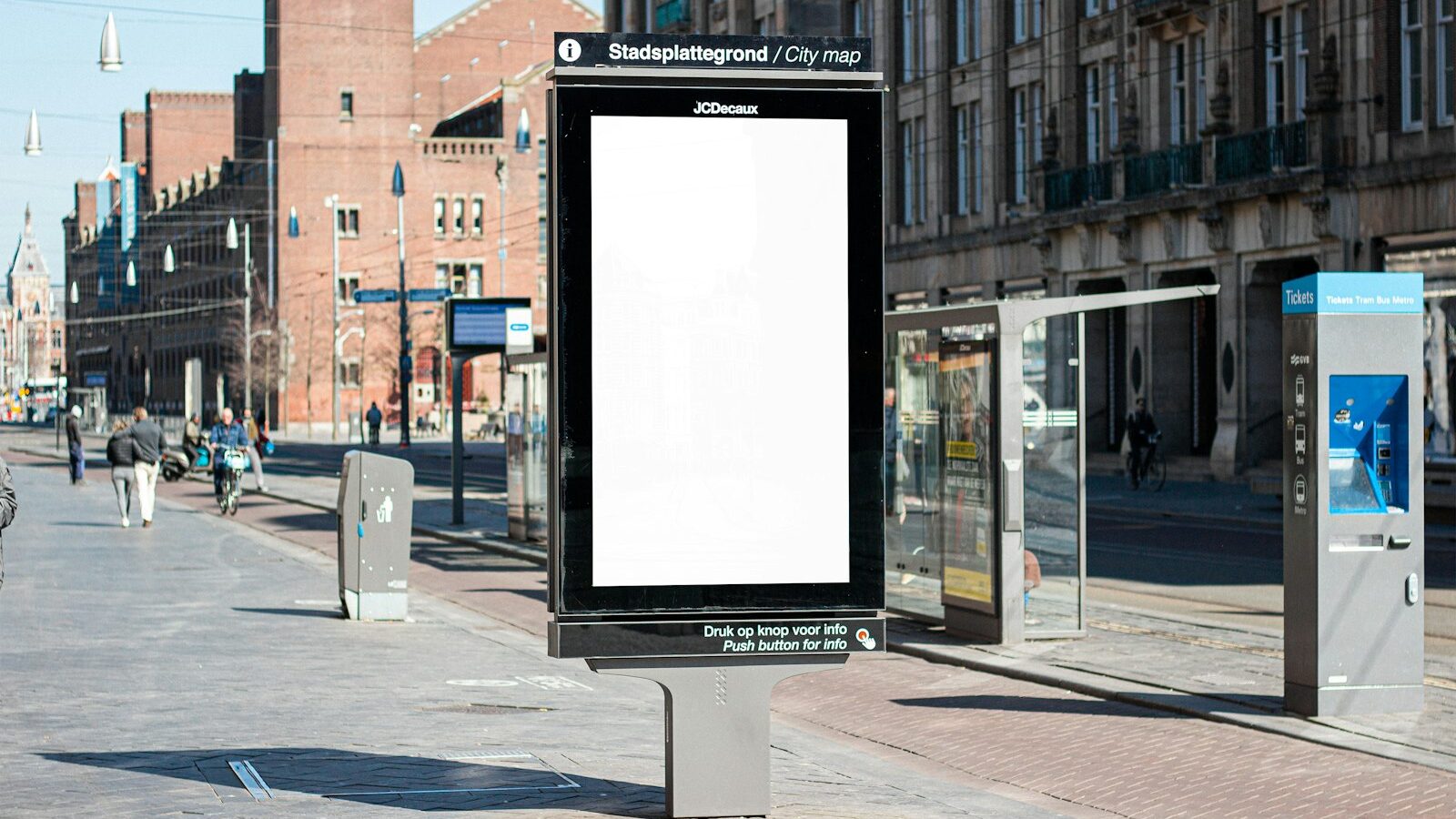
A digital standee is a slim, freestanding vertical screen that sits at eye level and does the job a printed poster used to do, only better. Picture a 43 to 55 inch display in portrait orientation, mounted on a floor stand near a shop entrance, a hotel lobby or an exhibition booth. Where a paper poster shows one fixed message, a digital standee plays video, animation and a rotating set of promotions that you can change in seconds. For Singapore businesses that refresh offers weekly, a digital standee removes the endless cycle of designing, printing, delivering and pinning up new artwork.
The appeal is simple. You buy the hardware once, then update the message as often as you like at no extra cost. This guide explains what a digital standee is, how it differs from a printed standee and a kiosk, where it earns its keep, the specifications worth checking, and whether buying or renting suits your situation.
What a digital standee actually is
At its core, a display standee is a commercial-grade LCD panel built into a self-supporting stand. It powers on, loads your content and runs unattended for long hours. Most units include a built-in media player, so you load images and video onto a USB drive or push them over the network, with no separate computer bolted to the back.
Because the screen is oriented vertically, a digital poster display mirrors the shape of the A1 and A0 posters that retail and hospitality teams already design for. Your existing creative translates neatly, and you gain motion, sound and scheduling on top.
How it differs from a printed standee
A printed standee is a one-time message on foam board or fabric. Once it is printed, it is fixed. If a price changes or a promotion ends, you print again. A digital standee singapore buyer, by contrast, treats the same physical unit as an infinite canvas. Consider the practical contrasts:
- Update speed: A printed poster takes days from design to installation. A digital standee updates in minutes.
- Content type: Paper shows a still image only. A screen shows video, animation and a looped playlist.
- Running cost: Every printed change carries a reprint bill. A digital change costs nothing.
- Reusability: A printed board is discarded after the campaign. A digital unit is reused indefinitely.
- Impact: Motion draws the eye far more effectively than static print in a busy walkway.
How it differs from a kiosk
People sometimes use standee and kiosk interchangeably, but they solve different problems. A standee kiosk with a touchscreen invites the viewer to interact, browse a menu or complete a self-service task. A digital standee is usually a broadcast device: it shows content outward to passers-by and does not wait for input. Standees tend to be slimmer, lighter and easier to reposition, while kiosks are built around interaction, enclosures and sometimes payment or printing hardware. If you need customers to tap and transact, read our guide on how to select the best digital kiosk. If you simply need a striking, changeable poster, a standee is the leaner choice.
The benefits that make standees worth it
The strongest argument for a digital standee is control. You decide what shows, where and when, and you can change your mind without cost or delay.
One well-placed digital standee at an entrance can carry a full week of rotating promotions that would otherwise need seven separate printed posters.
The core benefits break down cleanly:
- Instant updates: Change a price, swap a promotion or correct a typo the moment you spot it.
- Motion and sound: Video and animation lift dwell time and recall in ways static print cannot match.
- Remote scheduling: Networked units let you set a happy-hour message for the evening and a lunch offer for midday, automatically.
- Reusable hardware: One purchase serves campaign after campaign, year after year.
- No reprint costs: After the initial outlay, content changes are effectively free.
- Consistent branding: Multiple outlets can show the same synchronised message from one central point.
Over a year of weekly promotions, the reprint savings alone often cover a meaningful share of the hardware cost.
Where digital standees shine in Singapore
A digital standee performs best in high-footfall spots where people pause or slow down, even briefly. Across Singapore, the most productive placements include:
- Retail entrances: Greet shoppers with current offers the instant they arrive, and change the message by the hour if trade demands it.
- Hotel and office lobbies: Welcome guests, list the day’s events or direct visitors without printed signage clutter.
- Events and roadshows: Portability and quick setup make standees ideal for exhibitions at Marina Bay Sands, Suntec or Expo, where booths change daily.
- Showrooms: Show product features, finishes and demonstrations that a printed panel could never convey.
- F&B outlets: Rotate daytime set lunches, afternoon promotions and evening menus on a single unit at the shopfront.
In all these settings, the screen replaces a rack of printed boards and lets your team react to weather, footfall and stock in real time.
Specifications worth checking before you buy
Not every display standee is built for commercial duty. A domestic television will overheat and dim when run all day. Look for these features when comparing units.
Size and orientation
For eye-level poster use, 43 to 55 inch panels strike the right balance between presence and portability. Confirm the unit is designed for portrait mode, with a panel rated for continuous vertical operation rather than a consumer TV turned on its side.
Brightness
Singapore interiors near glass frontages get bright. A commercial panel of at least 350 to 500 nits stays legible in a sunlit mall atrium, where a 250-nit consumer screen would wash out.
Built-in player and connectivity
A standee with an integrated Android media player saves you cabling in a separate box. Check whether it supports USB loading, network scheduling or cloud content management, depending on how many units you plan to run.
Mobility
If you move the unit between a shopfront by day and an event by night, look for a sturdy base, optional wheels and a manageable weight. A tempered-glass front and a lockable panel protect the screen in public spaces.
Build quality
Commercial-grade panels are rated for 16 to 24 hours of daily use. This matters for warranty cover and for avoiding the burn-in and failures that plague consumer sets pushed beyond their design limits.
Buying versus renting a digital standee
The right choice depends on how long and how often you need the screen.
Buying suits permanent placements: a shop entrance, a lobby or a showroom that needs a standee every day for years. The cost per day falls sharply over the lifespan of the unit, and you keep full control over content and scheduling.
Renting suits short bursts: a three-day exhibition, a weekend roadshow or a product launch. You avoid storage, transport and maintenance between uses, and a good supplier handles delivery, setup and collection.
Many Singapore businesses do both, owning a couple of units for their permanent frontage and renting extras for peak event seasons. Whichever route you take, the supplier matters as much as the hardware, so it is worth reading our guide to choosing the right digital signage supplier in Singapore before you sign anything.
Bringing it together
A digital standee turns a fixed printed poster into a living, changeable advertising surface. It updates instantly, plays video, schedules itself and pays back its cost through the reprints you no longer order. Match the size, brightness and player to your setting, decide between owning and renting based on how often you will use it, and place it where footfall naturally slows.
Explore more: