
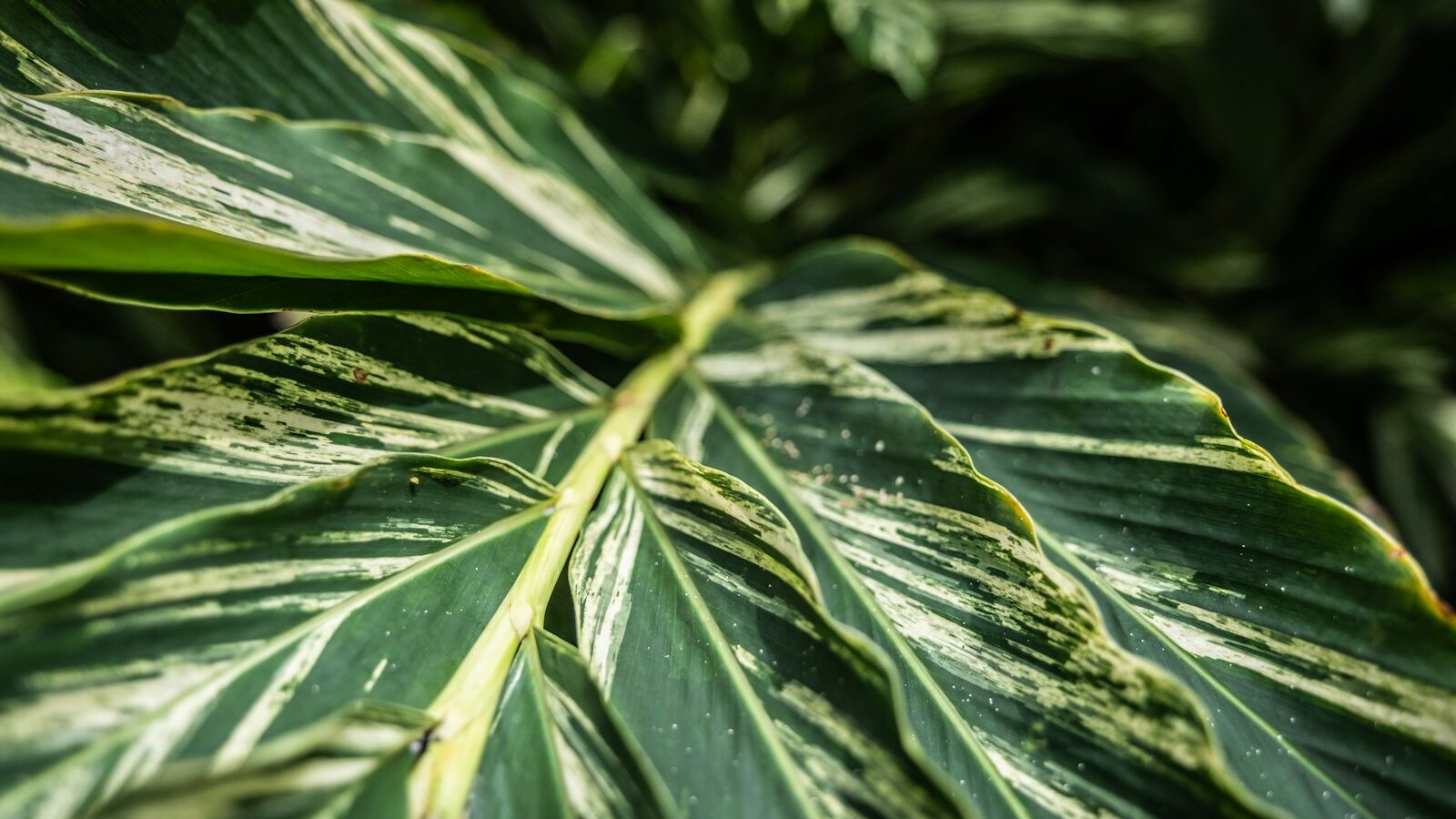
Few plants turn heads like a well-grown variegated one. Those splashes of white, cream, pink or yellow against green make even a common pothos look like a collector’s piece, and it is no surprise they command higher prices and long waiting lists. But variegated plants in Singapore ask for a little more understanding than their all-green cousins. The very thing that makes them beautiful, patches of leaf with no green pigment, also makes them slower, fussier about light, and prone to losing their pattern if you are not careful.
This guide explains what variegation actually is, why it changes how you care for a plant, and how to keep those markings bright in our hot, humid conditions.
What variegation actually is
Variegation is simply the presence of areas on a leaf that lack chlorophyll, the green pigment plants use to turn light into food. Those pale sections can be white, cream, yellow or even pink. Because they cannot photosynthesise, a variegated plant has less green tissue doing the work of feeding the whole plant. That single fact explains almost everything about their care.
There are different types, and it helps to know which you have. Some variegation is stable and genetic, passed on reliably. Some is chimeric, meaning it comes from a mix of cell types and can shift or vanish, which is why a prized white-heavy plant can suddenly throw all-green leaves. A little of it is caused by a virus, and some patterning is natural to the species rather than a mutation at all. For most popular houseplants, such as variegated monstera or pothos, you are dealing with the chimeric kind, which is exactly why they need attention.
Because they have less chlorophyll, variegated plants generally grow more slowly and need brighter light than the plain green form of the same species. They are not harder to keep alive, but they are less forgiving of a dim corner.
Caring for variegated plants in our climate
The golden rule is light. A variegated plant needs plenty of bright, indirect light to feed itself with less green tissue to spare. In too dim a spot it will grow leggy, produce smaller leaves, and often lose variegation as the plant compensates by making more green. Near a bright window, or on a sheltered balcony out of harsh midday sun, is usually ideal.
That said, the pale patches are also more vulnerable to burning. White leaf sections have no pigment to protect them, so direct tropical sun can scorch them brown and crisp. The balance to aim for is bright but filtered light. If you see bleaching or crisp brown patches, that is sunburn, and the advice on dealing with sunburn and leaf scorch on plants applies directly here. Move the plant back from the glass or add a sheer curtain.
Beyond light, treat them much like the green version of the species, with a few tweaks.
- Water carefully: slower growth means they use water more slowly, so let the top of the mix dry before watering again to avoid root rot in our humidity.
- Feed lightly: a gentle, regular feed supports the extra effort of growing, but do not overdo it.
- Watch the roots: because they grow slowly, they need repotting less often. When you do, follow the usual care for how to repot a houseplant and go up only one pot size.
- Keep leaves clean: dust on those pale sections cuts light further, so a gentle wipe helps.
Stopping your plant reverting
Reverting is when a variegated plant starts producing all-green leaves. It happens because green growth is more vigorous and, if left, can take over the whole plant, since those green stems grow faster and outcompete the variegated ones. The fix is to prune out fully green shoots as they appear, cutting back to a point where variegation is present. This encourages the plant to keep pushing variegated growth. Do it with clean tools and do not remove so much at once that you leave the plant unable to feed itself.
The opposite problem is a shoot with too much white and no green at all. These highly prized sections look stunning but cannot survive alone, because they have no way to make food, so a stem that is entirely white will eventually weaken and die back. That is normal and not something you did wrong.
A rewarding but honest hobby
Variegated plants are a lovely step up for anyone who has got comfortable with the basics, and many collectors find them the most satisfying plants they own. They reward attention with striking leaves, and they teach you to read light and growth more closely than any plain green plant would. Just go in with realistic expectations. They grow slowly, they cost more, and their patterns can shift. Give them bright filtered light, water with a light hand, and prune away reverting growth, and your variegated plants will keep their beauty through Singapore’s endless growing year.