
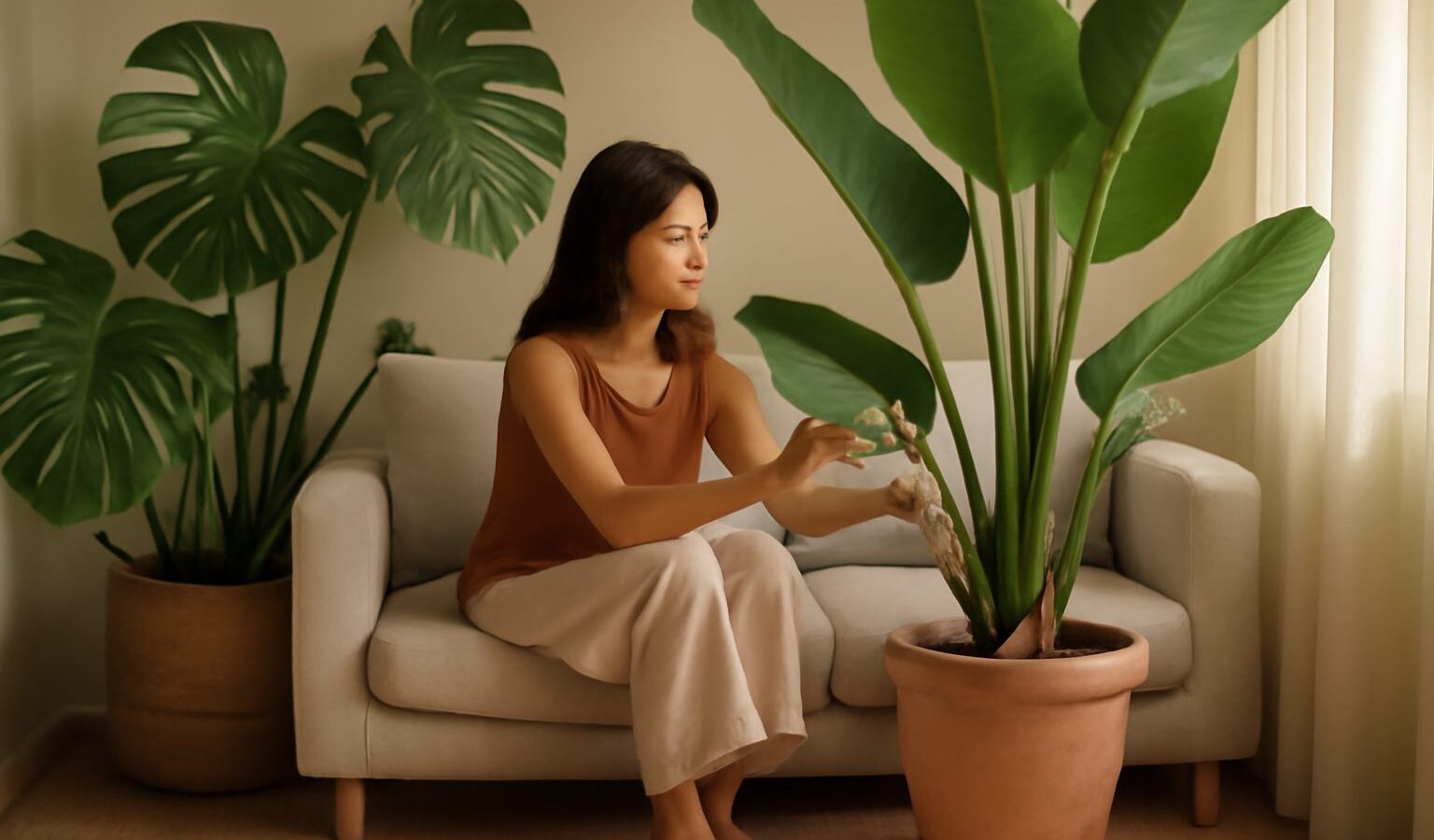
One well-placed large plant can transform a room in a way that a dozen little pots never quite manage. A tall, sculptural specimen fills an empty corner, frames a window or anchors a seating area, giving a home the settled, lived-in feel of an indoor garden. The best statement plants Singapore homes can grow are lush, dramatic and, happily, well suited to our warm and humid conditions. This is a general guide to choosing and caring for them, with notes on light and safety.
Big plants are an investment of both money and space, so it pays to choose one that will actually thrive where you intend to put it. Light is the deciding factor: a plant that wants a bright window will slowly decline in a dim corner no matter how carefully you water it. Read the light notes below honestly against your own home before you fall for a particular leaf shape.
Bold Foliage for Bright Rooms
If you have a bright spot with plenty of indirect light, you can grow some of the most striking foliage plants around. These reward good light with size and drama.
- Fiddle-leaf fig is the celebrated statement tree, with huge violin-shaped leaves on an upright trunk. It is undeniably handsome but does demand steady bright light and dislikes being moved or overwatered, so it suits a committed owner.
- Rubber plant offers the same tree-like presence with far less fuss, its large, glossy, deep-green leaves shrugging off conditions that would sulk a fiddle-leaf fig.
- Bird of paradise brings a real tropical flourish with large paddle-shaped leaves that can reach towards the ceiling in a bright room, thriving in the warmth we have in abundance.
- Monstera is the crowd favourite, its huge split leaves climbing a moss pole into a genuine feature plant, and it is forgiving enough for a relative beginner.
All four love our year-round warmth. Give them the brightest indirect light you can, turn them now and then for even growth, and let the top of the mix dry before watering again.
Architectural Plants for Trickier Spots
Not every corner is flooded with light, and some of the most striking large plants actually prefer more moderate conditions, which makes them useful where a fiddle-leaf fig would struggle.
A Kentia palm or a parlour palm brings soft, arching height and copes with medium light, lending a relaxed, resort-like feel. A snake plant, with its stiff upright leaves, is close to indestructible and tolerates low light and irregular watering, making it the easiest large statement plant of all. A ZZ plant offers glossy, upright stems and the same tough constitution, happy in shade that would defeat most foliage. A dracaena adds slender height and interesting variegation, again without demanding a bright window.
For a truly grand gesture in a bright, humid room, a mature Rhaphidophora or a large philodendron can climb into a magnificent specimen, though these want more light and moisture than the palms and the snake plant. Choose according to the corner you are trying to fill rather than the boldest leaf in the shop.
Light, Watering and Toxicity at a Glance
Use the table below to match a plant to your space and to check safety before you buy. Large plants are especially worth getting right, since they are heavy to move and slow to replace.
| Plant | Light it prefers | Toxic to pets and children? |
|---|---|---|
| Fiddle-leaf fig | Bright indirect | Yes, keep out of reach |
| Rubber plant | Bright to medium indirect | Yes, keep out of reach |
| Bird of paradise | Bright, some direct | Mildly, keep out of reach |
| Monstera | Bright to medium indirect | Yes, keep out of reach |
| Kentia palm | Medium indirect | No, considered pet-safe |
| Snake plant | Low to bright indirect | Yes, keep out of reach |
Many popular statement plants, including monstera, fiddle-leaf fig, rubber plant and snake plant, are toxic if chewed or swallowed. Their size can put leaves right at the level of a curious child or a chewing pet, so site them thoughtfully and choose a genuinely pet-safe option such as a Kentia or parlour palm for a home with cats, dogs or toddlers. If a plant is ever eaten, seek advice from a vet or doctor promptly.
Caring for Large Plants Here
A big plant in a big pot holds a lot of mix, which stays wet far longer than a small pot does, so the commonest way to kill one is to overwater it. Always check well down into the mix with your finger before reaching for the watering can, and water thoroughly only when the top third or so has dried out. Make sure every large pot drains freely and never leave one standing in a full saucer, both to protect the roots and to avoid leaving stagnant water where mosquitoes breed.
Big leaves gather dust, which dulls their shine and gets in the way of light, so wipe them gently with a damp cloth every few weeks. Turn the plant occasionally so it grows evenly rather than leaning towards the window, and feed lightly during active growth. In the wet monsoon, keep any large plant kept on a balcony out of the worst of the driving rain and wind, which can shred big soft leaves and topple a top-heavy pot. In drier, hazier spells, watch for the mix drying faster and for dust settling more quickly on the foliage.
One Bold Choice Goes a Long Way
You do not need a jungle to make an impact, because a single well-chosen large plant, healthy and thriving in the right light, does more for a room than a shelf of struggling small ones. Match the species to your light, mind the toxic ones around pets and children, resist the urge to overwater, and give those big leaves an occasional wipe. Get that right and your statement plant will hold court in its corner for years, quietly making the whole home feel greener and calmer.
Explore more
The Best Plants for Low-Light Homes
The Best Low-Maintenance Indoor Plants
Styling Plants in Your Home
How to Choose Pots and Planters