

The first vet bill often surprises new pet owners. You walk in expecting to pay a single vet consultation fee in Singapore, and you walk out with an itemised receipt listing a physical exam, a vaccine, a dewormer, a nail trim and perhaps a blood test. A vet visit is built from separate charges, and once you know what each one is for, the bill becomes far easier to predict and to plan for.
This guide breaks a single visit into its parts: the consultation itself, vaccinations, after-hours and emergency surcharges, and diagnostics. It does not quote prices, because fees differ widely between clinics and change over time. Instead, it shows you what drives the cost so you can ask the right questions before you agree to anything.
What the Consultation Fee Covers
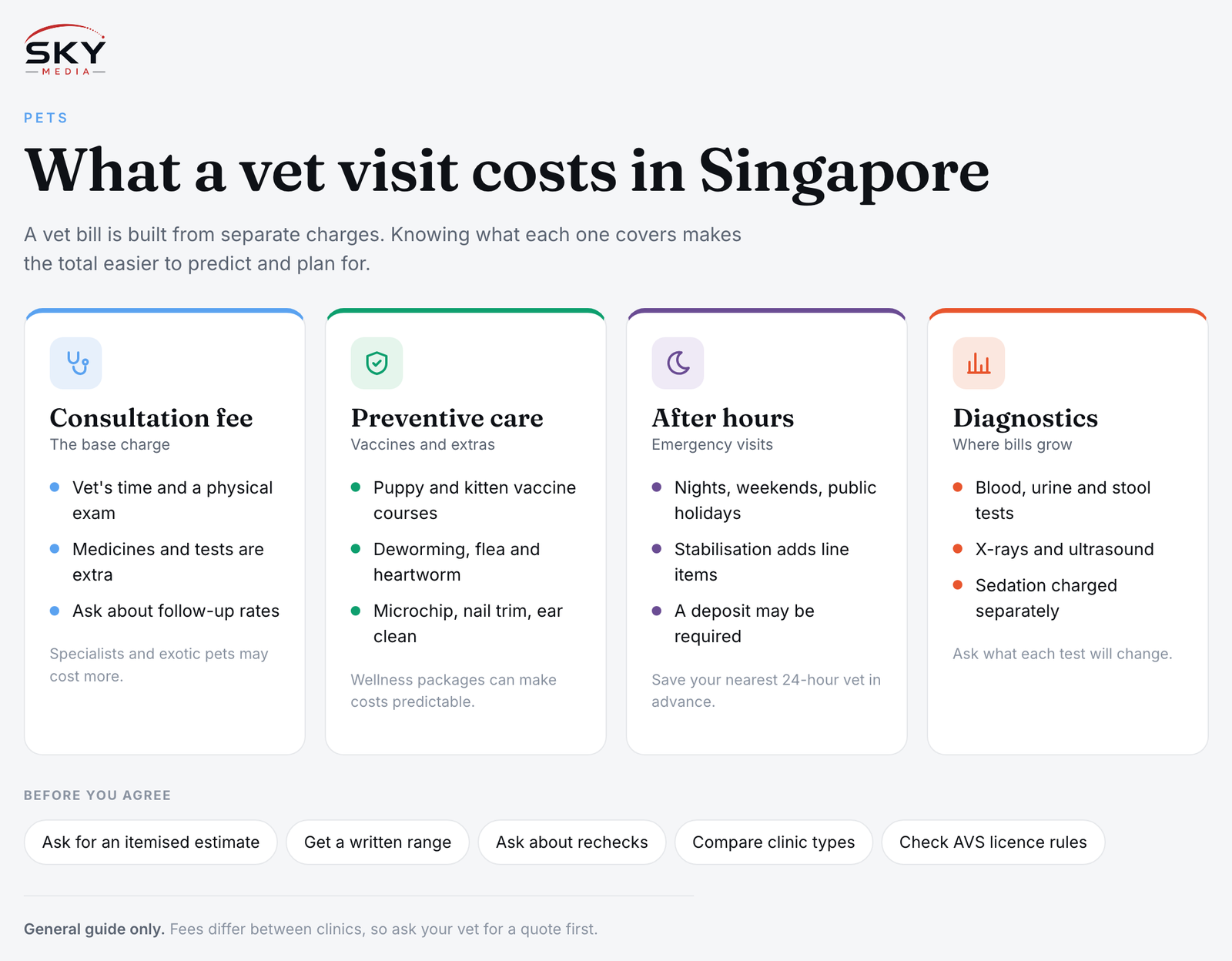
The consultation fee is the base charge for the vet’s time and a physical examination. In most general practice clinics this covers:
- A conversation about your pet’s history, diet, behaviour and the reason for the visit.
- A nose-to-tail physical exam: eyes, ears, teeth, heart and lungs, abdomen, skin, coat and weight.
- The vet’s assessment and a recommended plan, which may or may not include further tests or treatment.
What it usually does not cover is anything the vet does or dispenses beyond the exam. Medicines, injections, swabs, lab tests, imaging, wound cleaning and take-home products are normally charged separately. Some clinics charge a reduced fee for a follow-up visit about the same problem within a set period, so ask whether a recheck counts as a new consultation.
Several things affect the consultation fee:
- Type of clinic. A neighbourhood general practice, a larger multi-vet hospital and a specialist referral centre tend to sit at different price points. Specialists (for example in dermatology, cardiology or orthopaedics) usually charge more for their time.
- Species. Some clinics charge differently for exotic pets such as rabbits, birds, reptiles and small mammals, which need specific training and equipment.
- Time of day. This is the biggest swing factor, covered below.
If you are still deciding where to register your pet, our guide to choosing a vet in Singapore explains what to look for beyond price.
Vaccinations and Routine Preventive Care
Vaccination visits are where many owners first see how charges stack. A typical vaccination visit may include the consultation or health check, the vaccine itself, and sometimes a separate charge for a vaccination certificate or record booklet. Puppies and kittens usually need a course of vaccines spaced a few weeks apart, followed by boosters at intervals your vet recommends, so the first year costs more than later years.
Routine preventive items often added at the same visit include:
- Deworming tablets or spot-on treatments.
- Flea, tick and heartworm prevention, often sold as monthly products.
- Microchipping, if your pet is not yet chipped. Dog owners should note that licensing rules are set by the Animal and Veterinary Service (AVS), part of NParks; check the AVS website for current microchip and licence requirements.
- A nail trim, ear clean or anal gland expression.
Ask your clinic whether they offer wellness packages that bundle a year of vaccines and checks. These can make costs more predictable, but read what is included and whether unused items carry over.
After-Hours and Emergency Visits
The same problem can cost noticeably more at 11pm on a Sunday than at 11am on a Tuesday. Clinics that open late, on weekends, on public holidays or around the clock usually charge an after-hours or emergency consultation fee on top of, or instead of, the standard rate. Long weekends such as Hari Raya Puasa or Chinese New Year are a common time for owners to discover this.
Emergency visits also tend to cost more because of what happens next. A pet that is vomiting repeatedly, struggling to breathe or has been hit by a vehicle may need stabilisation, oxygen, fluids, pain relief, imaging and hospitalisation, each with its own line item. 24-hour hospitals carry overnight staffing costs, which is reflected in their fees.
A few practical habits help:
- Save the address and phone number of your regular clinic and the nearest 24-hour vet hospital before you ever need them.
- When you call ahead, ask what the after-hours fee is and whether a deposit is required on arrival. Many emergency hospitals ask for one.
- If your pet’s condition is not urgent, ask the clinic whether it is safe to wait for normal hours. Never delay for genuine emergencies; your vet is the right person to judge.
Diagnostics: Blood Tests, Imaging and Lab Work
Diagnostics are where vet bills can grow quickly, and where owners most often feel caught off guard. They are also how vets find out what is actually wrong rather than guessing. The table below shows common tests and what to expect.
| Test or service | What it is for | What affects the cost |
|---|---|---|
| Blood tests (complete blood count, biochemistry) | Checking organ function, infection, anaemia; often done before anaesthesia and for senior pets | Number of panels run, in-house versus external lab, urgency |
| Urine and stool tests | Urinary infections, kidney issues, parasites | How the sample is collected and whether a culture is needed |
| X-rays | Bones, chest, swallowed objects, some abdominal problems | Number of views, whether sedation is needed |
| Ultrasound | Soft tissue organs, pregnancy, fluid in the abdomen | Whether done by a general vet or a specialist imaging service |
| Skin and ear tests | Mites, fungal or bacterial infections, allergies | Simple in-clinic tests versus lab cultures or allergy panels |
Some tests give same-day results in the clinic; others go to an external laboratory. Sedation, if needed to keep a pet still for imaging, is usually a separate charge.
How to Get a Clear Estimate Before You Agree
Good clinics are used to these questions and will not be offended.
- Ask for an itemised estimate before non-urgent tests or procedures. For surgery or hospitalisation, a written estimate with a range is common.
- Ask what each test will change. A reasonable question is “If this result comes back normal or abnormal, what would we do differently?” This helps you prioritise when budget is tight.
- Ask about staged diagnostics. Sometimes the vet can start with the most informative test and add others only if needed.
- Ask about medicine options. There may be more than one suitable product at different price points.
- Ask whether a follow-up is included or charged as a new consultation.
If you have pet insurance, check your policy wording for what it covers, any waiting periods, excess and exclusions, and whether you need to pay first and claim later. Your insurer is the authority on what will be reimbursed.
Budgeting for Vet Visits Through the Year
A single visit is only one part of what a pet costs over its lifetime. For the day-to-day picture, it helps to plan for three kinds of vet spending:
- Predictable care: annual check-ups, vaccine boosters, parasite prevention and dental checks. Ask your vet for a yearly plan and set aside a monthly amount.
- Occasional problems: ear infections, tummy upsets, minor injuries. Expect a few of these, especially with young or older pets.
- Emergencies and surgery: the costs that hurt most. An emergency fund or suitable insurance is the usual way owners prepare.
Senior pets typically need more frequent checks and blood tests, so budgets often rise as pets age. Cats can find clinic visits stressful, which can make exams harder; our guide to carrier training to reduce your cat’s vet-visit stress can make each visit smoother for both of you.
The most reliable way to know a clinic’s current vet consultation fee is simply to call or check its website, and to ask for a breakdown before anything beyond the exam. Knowing what each line item means turns a confusing receipt into a plan you can manage.
This article is general information and not veterinary advice. For your pet’s health and treatment choices, always speak to a licensed veterinarian.
Further reading: Pet Euthanasia in Singapore: What Happens and What It Costs · Cushing’s Disease in Dogs: Symptoms, Testing and Treatment Costs · Anal Gland Problems in Dogs and When to See a Vet