
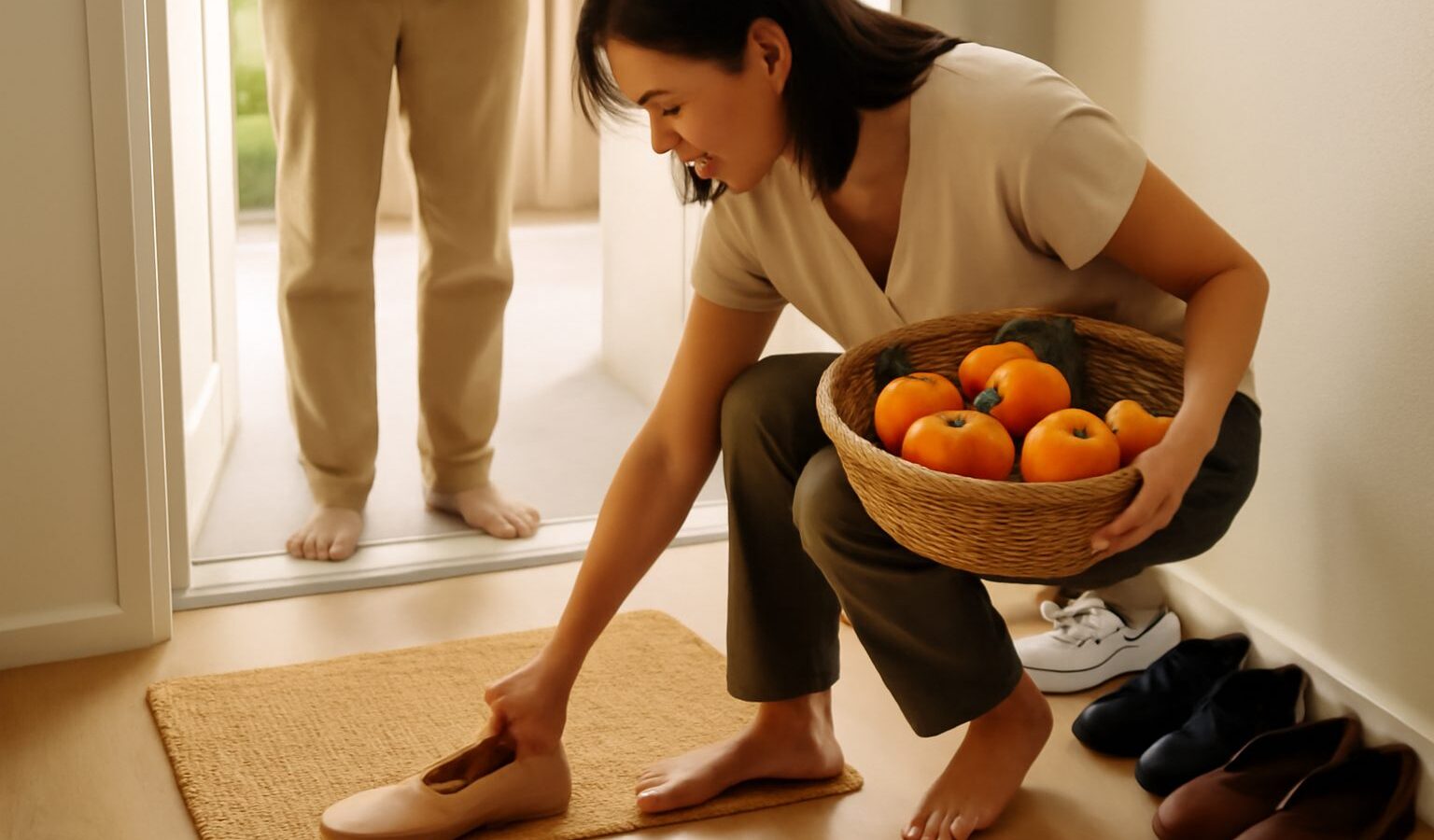
Few things say more about a household than what happens at its front door. In Singapore, the small ritual of slipping off your shoes before you step inside a home is one of the most widely shared customs across communities, and it is often the first test a newcomer faces when invited to visit. Getting visiting etiquette right in Singapore is less about memorising rules and more about reading the household, showing respect, and following the lead of your hosts. This guide walks through the shoes, the gift and the general manners that help a visit go smoothly.
Because Singapore is a multiracial society, homes reflect many traditions. What is polite in one family may differ slightly in another, and customs vary by community, religion, dialect group and simply by how each family likes to do things. The safest approach is to arrive with good intentions, watch closely and ask if you are unsure. Most hosts are warm and forgiving, and a guest who is trying to be considerate is always welcome.
Shoes at the Door
The shoes-off custom is close to universal in Singapore homes, and you will notice it the moment you approach a flat or house. A row of footwear sitting neatly outside the door, or a shoe rack in the entrance, is the clearest signal that you should take yours off too. Even without such a cue, it is safe to assume you should remove your shoes unless your host insists otherwise.
There are several reasons behind the practice. On a practical level, Singapore is warm and often wet, and leaving outdoor dirt at the door keeps floors clean, especially where families sit, eat or pray on the ground. For many Malay and Muslim families, cleanliness in the home also carries religious meaning, particularly in areas set aside for prayer. Many Indian and Chinese households follow the same custom for reasons of hygiene and respect. Whatever the origin, removing your shoes is a gesture of care for someone else’s space.
A few small courtesies help. Wear socks or footwear that are easy to slip off, and make sure your feet are presentable, as you may be barefoot or in socks for the whole visit. Place your shoes tidily beside the others rather than blocking the doorway, and point them outward if you see the household doing so. Some hosts offer indoor slippers to guests, so accept them graciously if they are handed to you. If a family genuinely wants you to keep your shoes on, they will say so, and you should follow their wishes without fuss.
When visiting a place of worship rather than a home, the same instinct applies but the rules can be stricter. Temples, mosques and some shrines require shoes to be removed and, in certain cases, modest dress or a head covering. These deserve their own attention, and our overview of social etiquette and norms in Singapore touches on how to carry yourself respectfully in shared and sacred spaces.
Gifts, Greetings and Being a Good Guest
Arriving empty-handed is generally seen as a little bare, though the gift need not be grand. A box of pastries, some fruit, a tin of biscuits or a small treat for the children is always appreciated. During festive seasons the choice becomes more meaningful, and it helps to know a few sensitivities: avoid alcohol or anything containing pork when visiting Muslim friends, and be thoughtful about items tied to particular beliefs. Our guide to gift-giving etiquette in Singapore explains these nuances in more detail, including which gifts carry lucky or unlucky associations for different communities.
How you present a gift matters as much as the gift itself. In many Chinese and Indian households it is polite to offer and receive items with both hands, and a host may set your gift aside to open later rather than in front of you. Do not read this as coolness, as it is simply the custom in some families. Greetings also vary. A warm smile and a slight nod work everywhere, while some elders may prefer a gentle handshake or none at all. When meeting older relatives, letting them lead the greeting is a safe and respectful choice.
Once inside, a few habits mark you as a considerate guest. Accept the drink or snack you are offered even if you only take a little, as refusing outright can seem cold. Wait to be shown where to sit, keep your voice and phone at a comfortable volume, and avoid wandering into bedrooms or prayer areas uninvited. If a family is observing a religious practice, follow their cues quietly. Offering to help clear up is kind, though many hosts will wave you off, and letting them play host graciously is part of the exchange.
Timing and farewells round things off. Try to arrive close to the time you agreed, message ahead if you are running late, and avoid overstaying once the evening winds down. A short thank-you message afterwards is a warm touch. During major festivals such as Chinese New Year, Hari Raya or Deepavali, homes throw open their doors for visiting, and the same principles of shoes, gifts and gentle manners carry you through. Understanding how these visiting traditions fit into Singapore’s wider culture, explored in our look at understanding Singapore’s multiracial society, turns a simple house call into a small act of shared belonging.
In the end, visiting etiquette in Singapore rewards attention over perfection. Take off your shoes, bring a little something, watch your hosts, and let warmth guide the rest.