

Feeling tired is one of the most common reasons people reach for a supplement, and vitamin b12 singapore is a popular search when energy is running low. B12 does play a genuine role in how your body makes energy, but the story is more nuanced than the glossy adverts suggest. This is general information, not medical or nutrition advice, and taking a supplement is not a substitute for eating well or for seeing a doctor if you feel persistently exhausted.
What vitamin B12 does
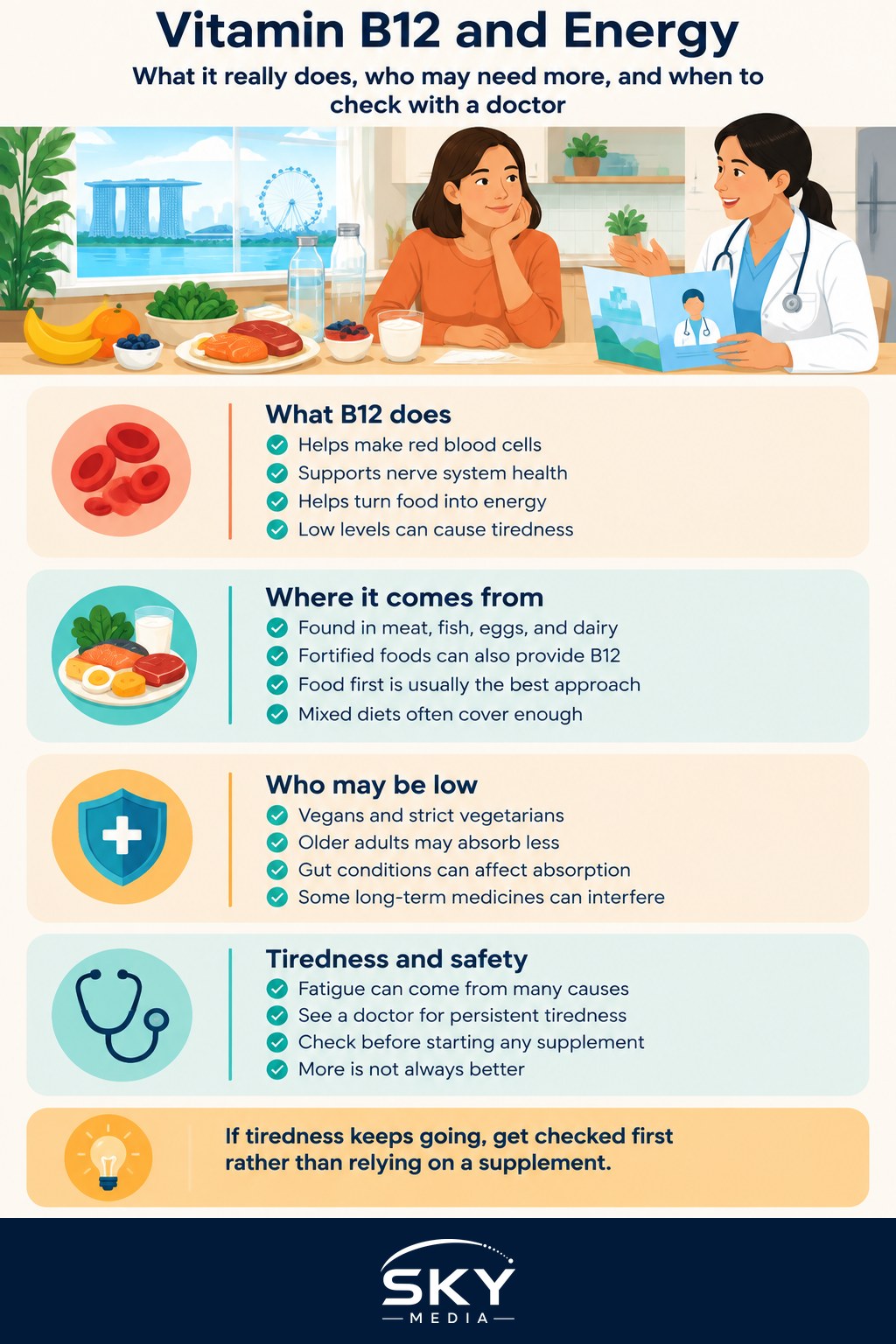
Vitamin B12 is an essential nutrient your body cannot make on its own. It helps produce red blood cells, keeps your nervous system working properly, and supports the process that turns food into usable energy. When levels are genuinely low over time, this can lead to a type of anaemia that causes tiredness, weakness, breathlessness, tingling in the hands or feet, and low mood.
Because of that link, B12 is often marketed as an energy booster. Here is the honest part. If your B12 levels are already normal, taking more will not give you extra energy or make you feel supercharged. Your body simply uses what it needs and clears much of the excess. Topping up only helps if you were actually low to begin with.
Where B12 comes from
B12 is found naturally in animal foods: meat, fish, eggs, and dairy. For most people in Singapore who eat a mixed diet including these foods, getting enough B12 is not difficult. A plate with fish, an egg, or some meat, plus dairy through the week, usually covers it.
The nutrient is also added to some fortified foods, such as certain plant milks and breakfast cereals, which is useful for people who eat little or no animal produce. As with most nutrients, food first is the sensible principle. Whole foods bring B12 alongside other vitamins, minerals, and protein that a single pill does not.
Who is most likely to be low
This is where B12 genuinely matters, and it is worth being clear about the groups at higher risk rather than encouraging everyone to supplement.
- Vegans and strict vegetarians, because B12 comes mainly from animal foods. If you eat no animal products, a supplement or reliably fortified foods are usually necessary.
- Older adults, whose ability to absorb B12 from food tends to decline with age.
- People with absorption problems, such as certain gut conditions, or those who have had gut surgery.
- People on some long-term medications that can affect B12 absorption.
If you fall into one of these groups, B12 is one of the more worthwhile nutrients to pay attention to. For everyone else eating a varied diet, a routine B12 supplement is often unnecessary.
Tiredness is not always about B12
It is easy to blame low energy on a vitamin, but fatigue has many causes. Poor sleep, stress, low iron, an underactive thyroid, dehydration in Singapore’s heat, doing too much, or an unbalanced diet can all leave you flat. Reaching for a B12 tub may do nothing if the real issue lies elsewhere.
If you are constantly tired, the better move is to see a doctor, who can check whether B12 or something else is behind it with a simple blood test, rather than guessing. For everyday habits that genuinely affect your energy, building better sleep habits and staying hydrated in Singapore’s heat are practical places to start, and getting your vitamins from food not pills explains why the plate usually beats the bottle.
Safety and checking with a professional
Supplements are not regulated in the same way as medicines, and more is not better. Check with a doctor, pharmacist, or dietitian before starting B12 or any supplement, especially if you are pregnant or breastfeeding, on medication, or managing a health condition. If you suspect a deficiency, a doctor can confirm it and advise the right approach rather than you self-treating based on symptoms alone. For a broader overview of when supplements make sense, a simple guide to vitamins and supplements is a useful companion.
The practical takeaway
Vitamin B12 is essential and genuinely important for energy and nerve health, but it only boosts you if you were actually low. Get it from a varied diet where you can, pay closer attention if you are vegan, older, or have absorption issues, and see a doctor for persistent tiredness rather than assuming a pill is the fix. Sensible, food-first, and checked with a professional when in doubt is the way to treat it.
Frequently Asked Questions
What are the signs of vitamin B12 deficiency? Common signs include tiredness, weakness, breathlessness, tingling in the hands or feet and low mood. These symptoms overlap with many other conditions, so they do not prove a deficiency. A doctor can confirm it with a simple blood test.
Do vegans in Singapore really need a B12 supplement? Generally yes. B12 comes mainly from animal foods, so people who eat none usually need a supplement or reliably fortified foods. Check the label of fortified plant milks or cereals, and ask a doctor or dietitian what suits you.
Are B12 injections better than tablets? Not necessarily. Injections are usually reserved for people who cannot absorb B12 properly from the gut, and a doctor decides that after testing. For most people who are simply low, oral supplements or dietary changes are the usual route.
Can I take too much vitamin B12? B12 is generally considered low in toxicity because the body clears much of the excess, but more is not better. High doses will not give you extra energy if your levels are normal. Check with a doctor or pharmacist, especially if you take other medication.
Which blood test checks my B12 level, and when should I get one? A doctor can order a blood test for B12 if you have persistent tiredness, tingling, or belong to a higher-risk group such as older adults or vegans. Avoid starting supplements first, since the doctor may want a clear baseline.
Further reading: Iron Deficiency and Anaemia