
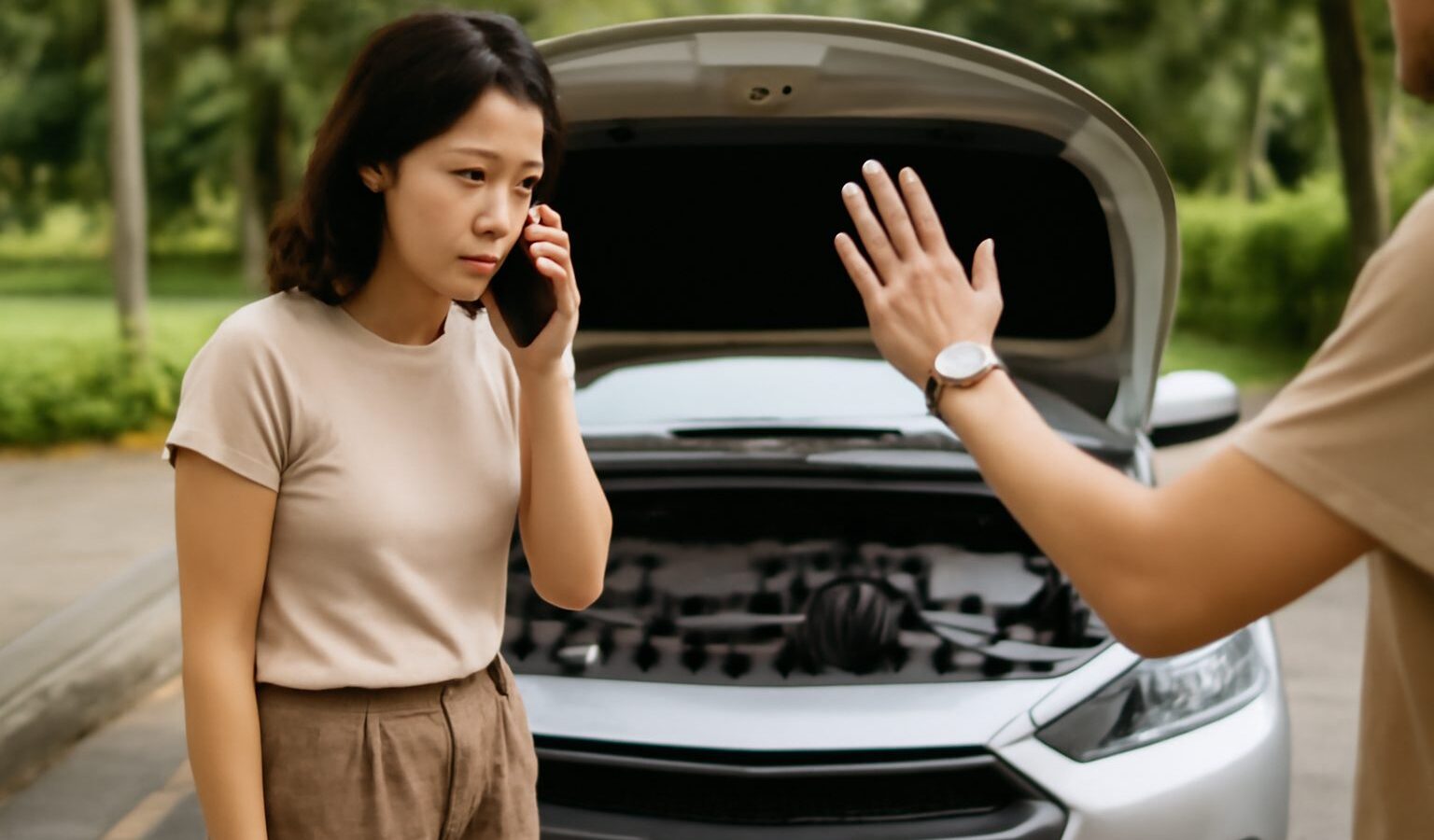
A car that suddenly loses power, overheats or refuses to start is stressful, especially in traffic, but a clear head keeps you safe. Handling a car breakdown in Singapore well is mostly about protecting yourself and other road users first, then getting the right help. This guide sets out a calm, safety-first order of actions so you know exactly what to do.
Safety comes before everything else
When something goes wrong, your priority is not the car, it is the people in and around it. Work through these steps in order.
- Switch on your hazard lights immediately so other drivers can see that something is wrong.
- Ease the car out of the flow of traffic if it is still moving, steering towards the road shoulder, a side lane or a safe spot away from moving vehicles.
- Do not brake hard or stop in a live lane if you can avoid it, as a sudden stop invites a collision.
- Once stopped, keep your hazard lights on and assess whether it is safe to get out.
If the car has died in a dangerous position and you cannot move it, staying calm and visible matters more than trying to force it anywhere.
Getting out safely
Deciding whether to leave the vehicle depends entirely on where you have stopped.
- On a safe verge or shoulder: exit on the side away from traffic where possible, and move well clear of the vehicle.
- In a live lane or a fast road: think very carefully before opening a door into moving traffic. Sometimes remaining belted inside with hazards on, while help is on the way, is safer than stepping out.
- Warning others: if you carry a warning triangle and it is safe to place it at a sensible distance behind the car, do so. Never put yourself in danger to set one up.
Keep any passengers, especially children, away from traffic and behind a barrier if one exists.
Calling for help
Once you and your passengers are safe, it is time to get assistance. Who you call depends on your situation and your cover.
| Situation | Who to contact |
|---|---|
| General breakdown, need recovery | Your insurer, motoring club or roadside assistance provider |
| Breakdown on an expressway | The expressway assistance and recovery service |
| Accident involved, or injuries | Emergency services first, then your insurer |
| Vehicle blocking traffic dangerously | Alert the relevant authorities for help clearing it |
Have your details ready when you call: your location, the road or expressway name, the direction of travel, the nearest landmark or exit, and a brief description of the fault. On an expressway, note the nearest reference marker if you can see one, since it helps recovery reach you faster.
Expressway breakdowns need extra care
Expressways carry fast traffic, so a breakdown there deserves special caution. Get the car onto the shoulder if at all possible, keep hazards on, and call for the expressway assistance and recovery service rather than trying to fix anything in a live environment. Standing between your car and moving traffic is dangerous, so stay behind a barrier where one exists and wait for trained help.
Do not attempt risky roadside repairs
It is tempting to lift the bonnet and tinker, but a busy roadside is not a workshop. Avoid crawling under the car, touching a hot engine, or working on the road side of the vehicle where traffic passes. If you are confident and it is genuinely safe, a very simple check such as looking at whether a tyre is flat may be fine, but anything more should wait for a professional or a safe location. When in doubt, do nothing except stay safe and wait for help.
While you wait
The waiting is often the hardest part, so use it well.
- Keep your hazard lights on to stay visible.
- Stay in a safe position, clear of traffic.
- Keep your phone charged enough to receive the recovery team’s call.
- Note the time you called and any reference number given.
- If someone stops to offer help, be cautious and rely on your official recovery service.
After you are recovered
Once the vehicle is towed or restarted, a few follow-up steps save you trouble later.
- Get it properly diagnosed at a trusted workshop rather than assuming the problem is solved.
- Keep records of the breakdown, the recovery and any repair, which is useful for insurance and future reference.
- Review your cover. If you had no roadside assistance, this is a good moment to consider it.
- Learn from the cause. Regular servicing, tyre checks and keeping an eye on warnings prevent many breakdowns.
Preparing before it ever happens
Most breakdowns are handled far better by drivers who prepared in advance, and the preparation costs almost nothing. Save your insurer and roadside assistance numbers in your phone now, while you are calm, rather than searching for them by the side of a busy road. Keep your phone able to charge in the car, because a flat phone during a breakdown turns a manageable situation into a stressful one.
A few items in the boot also help. A warning triangle, a torch and a high-visibility item make you safer and more visible if you do break down at an awkward spot. Knowing where these are, and how to place the triangle safely, means you are not fumbling under pressure. Finally, treat the warning signs your car gives you as invitations to act early. A persistent noise, a warning light or a change in how the car drives is far cheaper to investigate in a workshop than to ignore until it strands you.
Staying calm and prepared
A car breakdown in Singapore is inconvenient, but it is manageable when you put safety first. Warn other drivers, get to a safe spot, call the right help, and resist the urge to attempt risky repairs by the road. Keep your insurer and assistance numbers saved in your phone before you ever need them, and a breakdown becomes a delay rather than a danger. Stay calm, stay visible, and let the professionals do the rest.
Explore more: What to do after a car accident in Singapore · COE and car ownership in Singapore · Using ERP and parking apps in Singapore