
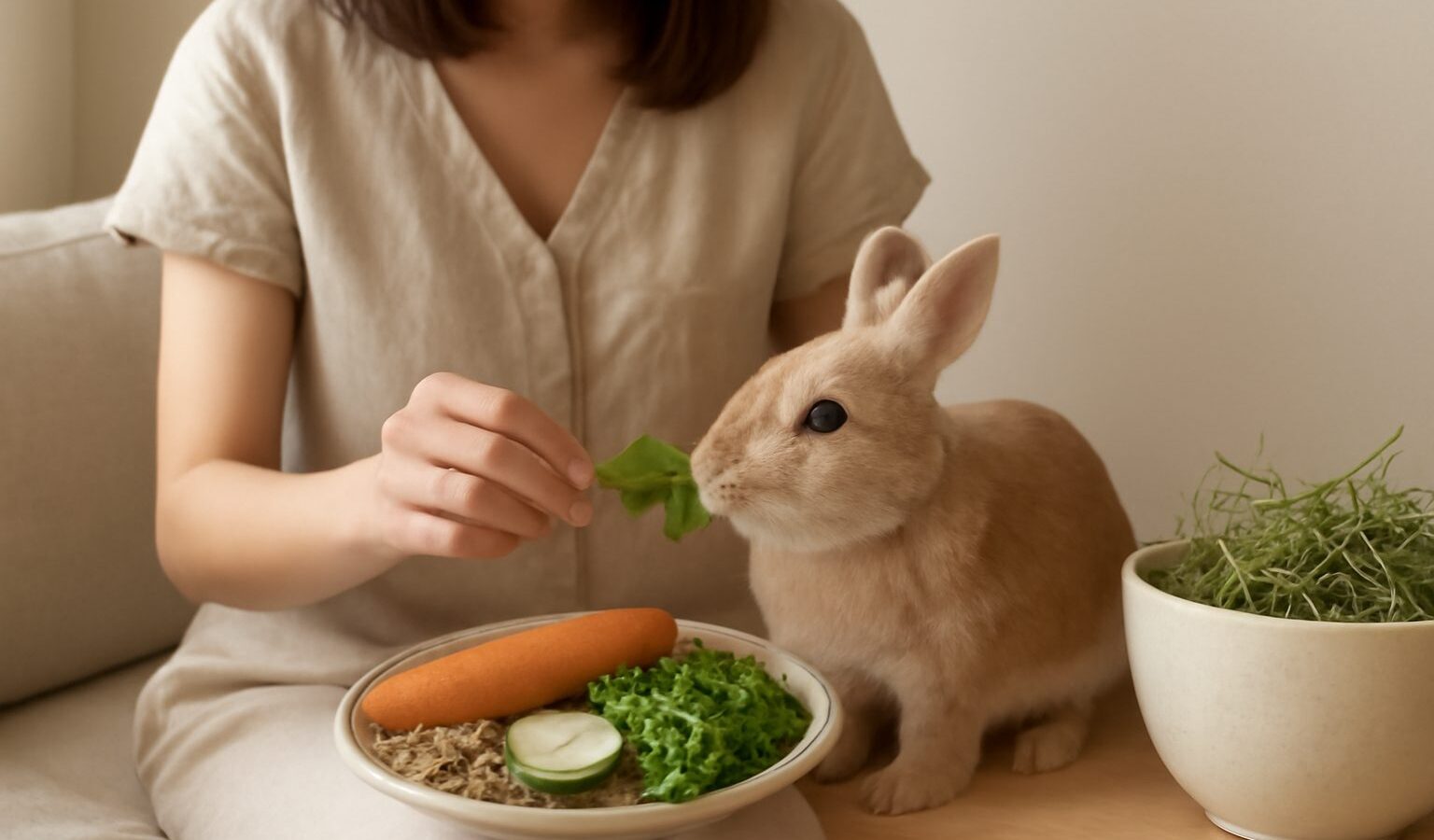
Rabbits look like easy, low-maintenance pets, but their digestion is surprisingly delicate, and the wrong diet is one of the most common reasons pet rabbits fall ill. Getting the food right is the single biggest thing you can do for a long, healthy life. Knowing what to feed a rabbit in Singapore is really about one big idea: rabbits are grazing herbivores whose gut is built to process large amounts of fibre all day long. That means hay does most of the work, with fresh greens and a small measure of pellets playing supporting roles. This guide explains the sensible framework, but for your specific rabbit always defer to a rabbit-savvy vet or a reputable rescue.
Hay comes first, always
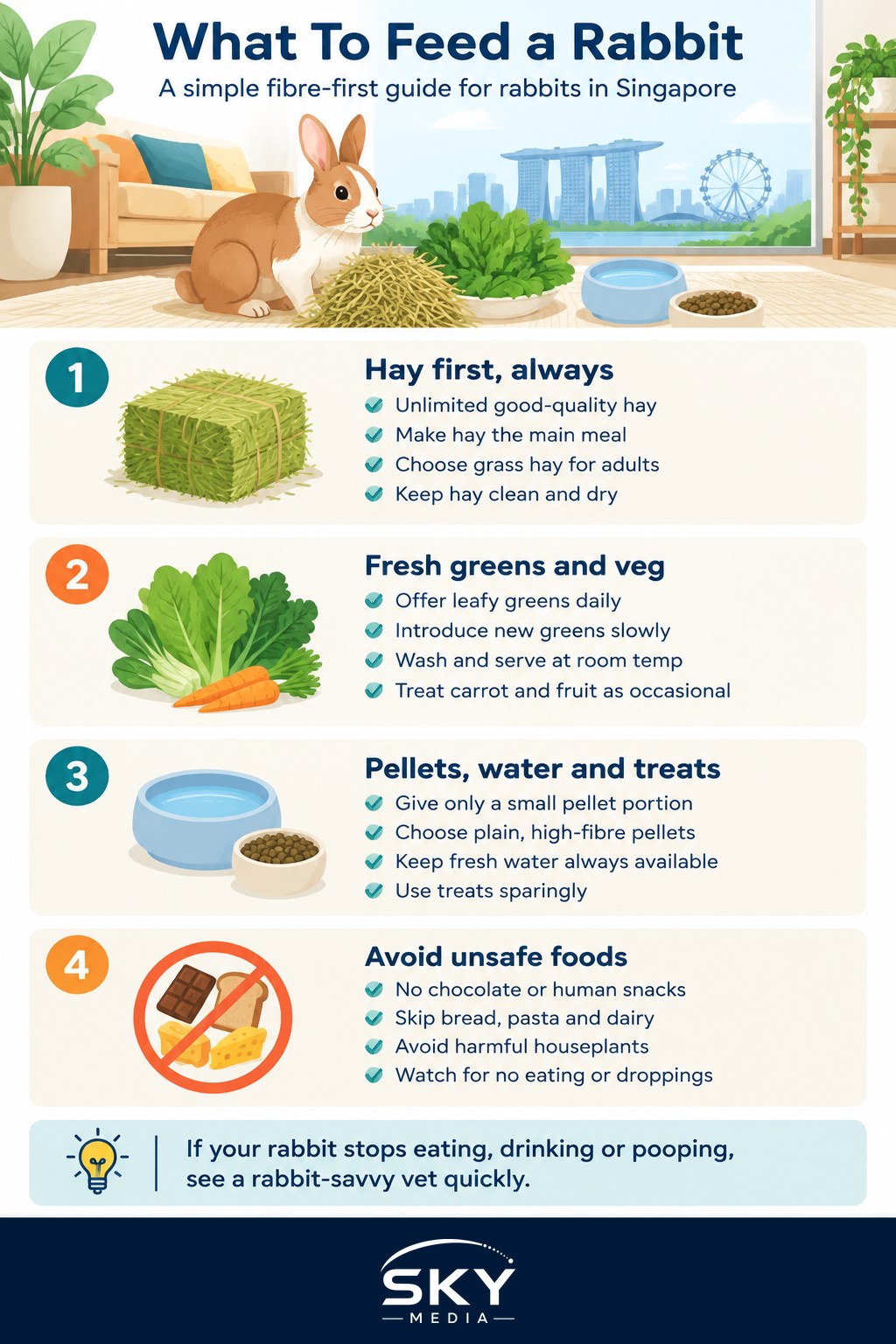
If you remember only one thing, make it this: unlimited good-quality hay should form the large majority of a rabbit’s diet. Grass hay such as Timothy hay should be available at all times, day and night. Hay keeps the gut moving, which rabbits depend on to stay alive, and the constant chewing wears down teeth that grow continuously. A rabbit that goes off its hay is a rabbit to watch closely.
- Offer fresh hay every day and keep the supply topped up.
- Choose grass hays like Timothy for adult rabbits as the staple.
- Keep hay clean, dry and stored away from our humidity so it does not go mouldy.
- Do not treat hay as optional or as bedding only; it is the main meal.
Because hay is bulky and rabbits eat so much of it, it should physically dominate the food they get through in a day. Everything else is an addition, not a replacement. If you are still setting up your rabbit’s home and routine, keeping rabbits in Singapore is a helpful companion guide.
Fresh greens and vegetables
Leafy greens add variety, moisture and nutrients, and most rabbits love them. Introduce any new green slowly and in small amounts, watching for soft stool over the next day or two, since sudden diet changes upset the gut. A mix of a few different leafy greens is better than a large pile of any single one.
Generally rabbit-friendly greens include a range of leafy vegetables and herbs. Wash everything well, serve at room temperature, and remove anything uneaten before it wilts in the heat. Go easy on watery or starchy vegetables and treat sweet items like carrot or fruit as occasional treats in tiny portions rather than daily food, because too much sugar and starch disturbs a rabbit’s digestion.
Because plants can be confused for one another and some are harmful, check any green against a reputable rabbit source or your vet before offering it for the first time. When in doubt, leave it out.
Pellets, water and treats in proportion
Commercial pellets can supply concentrated nutrients, but they are easy to overfeed. Offer only a small measured daily amount of plain, high-fibre pellets, and skip mixes full of colourful seeds, grains and dried bits, which encourage rabbits to pick out the sugary parts. Fresh, clean water must always be available, whether from a heavy bowl or a bottle, and it matters even more in our warm weather.
Here is a simple way to picture the balance rather than exact grams, which vary by rabbit:
| Food type | Rough share of the diet | Notes |
|---|---|---|
| Grass hay | The large majority | Unlimited, available at all times |
| Leafy greens | A modest daily portion | Variety, introduced slowly |
| Plain pellets | A small measured amount | High fibre, not a seed mix |
| Treats and fruit | Tiny and occasional | High sugar, use sparingly |
| Fresh water | Always available | Bowl or bottle, kept clean |
For exact quantities suited to your rabbit’s age, weight and health, ask a vet, as individual needs differ and invented figures can do harm.
Foods to avoid and warning signs
Some foods are harmful or outright toxic to rabbits, and others are simply wrong for their digestion. As a rule, rabbits should not eat chocolate, biscuits, bread, crackers, pasta, cereals, dairy, meat, or sugary human snacks. Many common houseplants and some vegetables and seeds are also unsafe. Toxic foods are a wider issue for all pets, so it is worth reading foods that are toxic to pets in Singapore and keeping such items well out of reach.
This is general information, not veterinary advice. A rabbit’s gut can shut down quickly, so treat certain signs as urgent. Get to a vet, and an emergency vet after hours, if your rabbit stops eating or drinking, produces no droppings for several hours, sits hunched and refuses to move, or bloats and seems in pain. These can be life-threatening fast. To have a trusted clinic ready before you need it, see choosing a vet in Singapore.
Knowing what to feed a rabbit in Singapore comes down to keeping it simple and fibre-first: endless hay, a sensible handful of varied greens, a small measure of plain pellets, fresh water, and treats kept rare. Build the diet around hay, introduce changes slowly, and lean on a rabbit-savvy vet for anything specific, and you give your rabbit the best foundation for a healthy, active life.
Frequently Asked Questions
Which vegetables are safe to feed a rabbit and which should I avoid? Most rabbits do well on a variety of leafy greens and herbs, offered in small amounts. Go easy on watery or starchy vegetables, and keep carrots and fruit as tiny occasional treats. Check any new plant with a rabbit-savvy vet or reputable rescue first, because some plants are toxic.
Do baby rabbits eat the same food as adults? Not quite. Young rabbits have different nutritional needs from adults, and the right hay and pellet choice changes as they grow. Introduce any new food slowly, and ask a rabbit-savvy vet for a feeding plan that suits your rabbit’s age and weight.
My rabbit has stopped eating. Is that an emergency? Yes, treat it as urgent. A rabbit’s gut relies on constant eating, and it can shut down quickly. If your rabbit refuses food or water, produces no droppings, or sits hunched and still, see a vet straight away, using an emergency clinic after hours.
How do I stop rabbit food going mouldy in Singapore’s humidity? Store hay and pellets in a cool, dry place in a container that lets some air through rather than sealing in damp. Buy amounts you will finish fairly soon, and throw out anything that smells musty or looks speckled. Remove uneaten fresh greens before they wilt in the heat.
Further reading: How to Bond Two Pet Rabbits