

Have you ever wondered why it is so hard to put your phone down, even when you are bored of what is on it? You are not imagining things. Many of the apps we use every day are carefully built to hold our attention for as long as possible. Understanding why addictive apps in Singapore keep pulling us back is the first step to using them on your terms rather than theirs. Once you can spot the tricks, they lose a lot of their grip.
None of this means the people who make apps are villains. Most are simply following a business model. But it helps to know that the struggle you feel is by design, not a flaw in your character.
The Business Behind the Feed
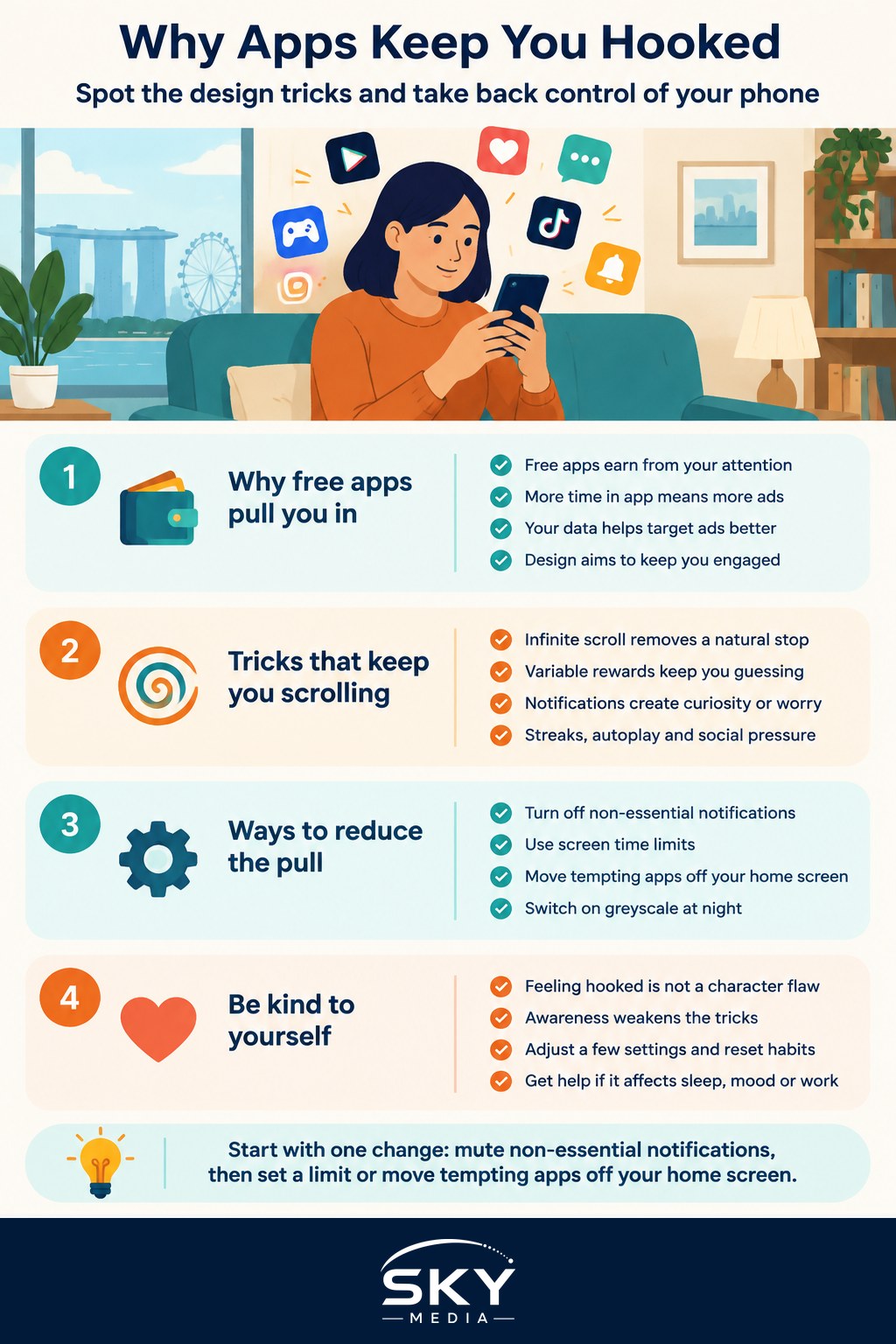
Most free apps make money from your attention. The longer you stay and the more you scroll, the more ads you see, and the more the app learns about you to sell better targeting. In that model, your time is the product. So the goal of the design team is not really to help you feel good. It is to keep you engaged.
That single fact explains almost everything about how these apps behave. Features that seem helpful or fun are often there to squeeze out a few more minutes. When you understand the incentive, the individual tricks start to make sense.
The Design Tricks That Keep You Hooked
App makers borrow ideas from psychology and, honestly, from slot machines. Here are the common ones to watch for.
- The infinite scroll. There is no bottom to the page, so there is no natural moment to stop. A feed that ends would give you a chance to leave.
- Variable rewards. You never know if the next post will be brilliant or boring. That uncertainty is exactly what makes it compelling, the same pull that keeps people at a slot machine.
- Pull to refresh. That little tug to load new content mimics a lever, and the surprise of what appears keeps you doing it.
- Notifications and badges. Red dots and buzzes are engineered to create a small itch of curiosity or worry that only opening the app can scratch.
- Streaks and rewards. Daily streaks and points make you feel you will lose something if you skip a day, so you come back out of obligation.
- Autoplay. The next video starts on its own, so stopping now requires an active choice while continuing requires nothing.
- Social pressure. Read receipts, likes, and “seen” markers tap into our deep need to belong and be acknowledged.
Once you see these patterns, you cannot unsee them, and that awareness alone weakens their effect. The same forces are behind the endless scroll many of us fall into, which we cover in breaking the doomscrolling habit.
How to Take Back Control
You do not need to delete everything or swear off social media. The aim is to shift the balance so you decide when to engage, not the app. A few practical moves make a big difference.
- Turn off non-essential notifications so the app cannot summon you. Our guide to managing notifications and staying focused shows how.
- Use built-in screen time tools to set daily limits on the apps that eat your time.
- Move tempting apps off your home screen so opening them takes a deliberate tap.
- Switch on greyscale in the evenings to make bright feeds less appealing.
- Disable autoplay where you can, so each video is a choice.
If you would like a bigger reset, planning a digital detox is a good companion to this article. And if you want a lighter, calmer phone in general, digital minimalism and a simpler phone offers a gentler long-term approach.
Being Kind to Yourself
It is worth repeating that feeling hooked is not a personal weakness. You are up against teams of talented designers whose job is to hold your attention. Blaming yourself only makes it harder. A more useful mindset is to treat your phone like a tool you configure, then set it up to serve you.
For most people, being aware of these tricks and adjusting a few settings is enough to feel more in control. But if you find that app use is seriously affecting your sleep, mood, work, or relationships, that deserves attention. Talk to someone you trust or a professional who can help.
Addictive apps in Singapore are built to be hard to resist, but they are not unbeatable. Understand the design, change a few settings, and you can enjoy the good parts of your phone without letting it run your day.
Frequently Asked Questions
Are all apps designed to be addictive? Not all, but many free apps that earn money from ads aim to maximise your time on them. Tools with a clear, finite purpose are less likely to use these tricks. Look at how an app makes money, since that tells you what it wants from your attention.
Why do I feel the urge to check my phone with no notification? Variable rewards train the brain to expect something interesting might be waiting. Habit and boredom then trigger the reflex. Moving apps off your home screen and putting the phone out of reach in some moments can weaken the urge.
Do streaks and daily rewards in apps really work? They work because people dislike losing progress, so you return out of obligation instead of enjoyment. If a streak is making you anxious, it is fine to let it go. Decide whether the app still gives you real value.
How can parents limit addictive app design for young children? Use built-in parental controls and screen time settings, turn off autoplay and in-app purchases, and choose apps without endless feeds. Agree on device-free times and use devices together where possible. Your child’s school or paediatrician can offer further guidance.
Is there any way to use social media without getting hooked? Yes, by shaping how you use it. Switch off non-essential notifications, set daily limits, unfollow accounts that leave you tense and use it at set times. Treat it as a tool you configure, and check in on how it makes you feel.