
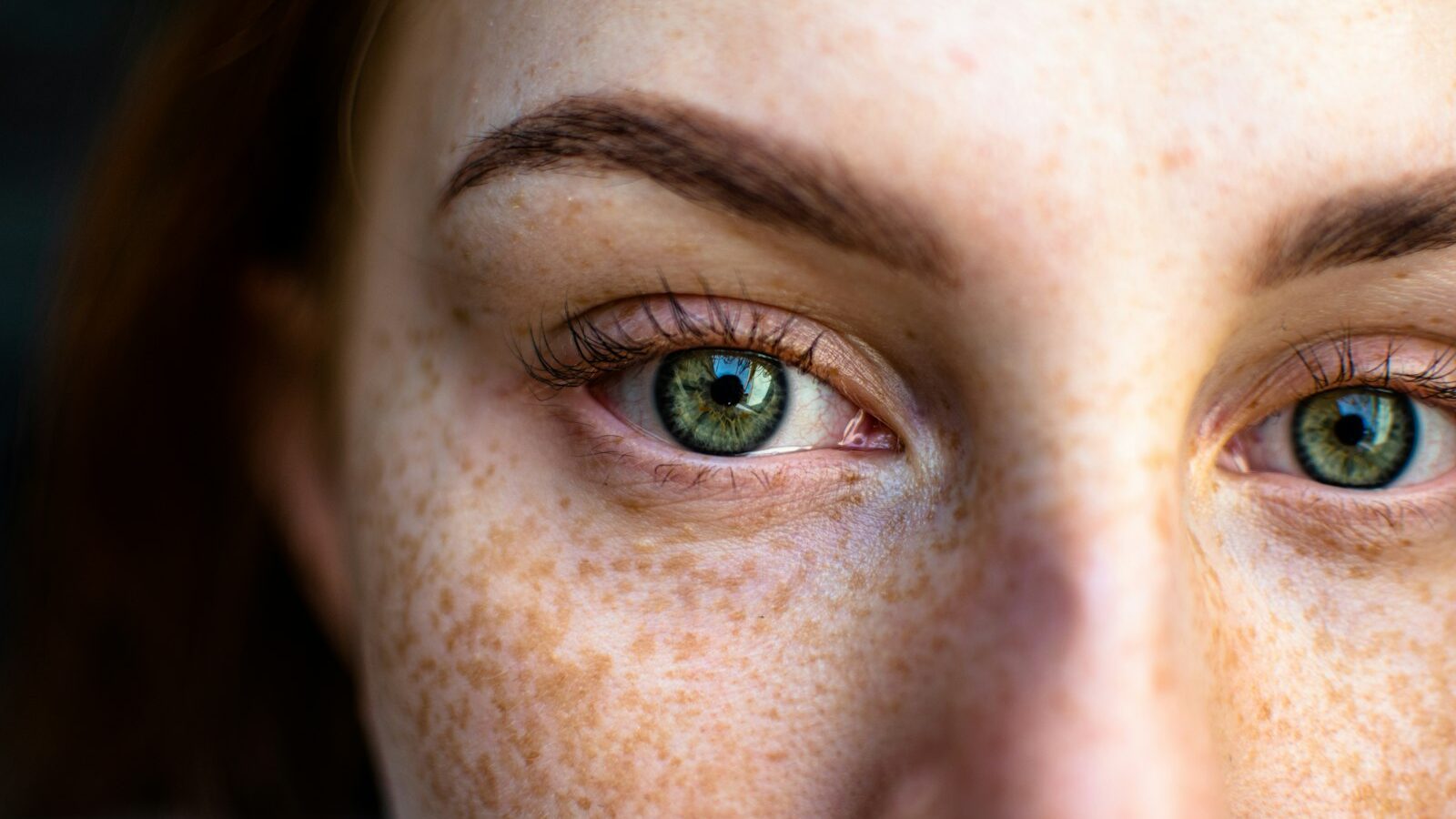
You notice a soft, flat, yellowish patch near the inner corner of your eyelid. It does not hurt or itch, but it does not go away either, and it may slowly get bigger. This is often xanthelasma, a common and harmless skin deposit that can nonetheless be a useful signal about your health. This guide explains what xanthelasma is, why your doctor may want to check your cholesterol, and how xanthelasma removal options compare.
This is general information, not medical advice. Any new growth around the eyes should be looked at by a doctor, who can confirm what it is and advise you on treatment.
What Xanthelasma Is
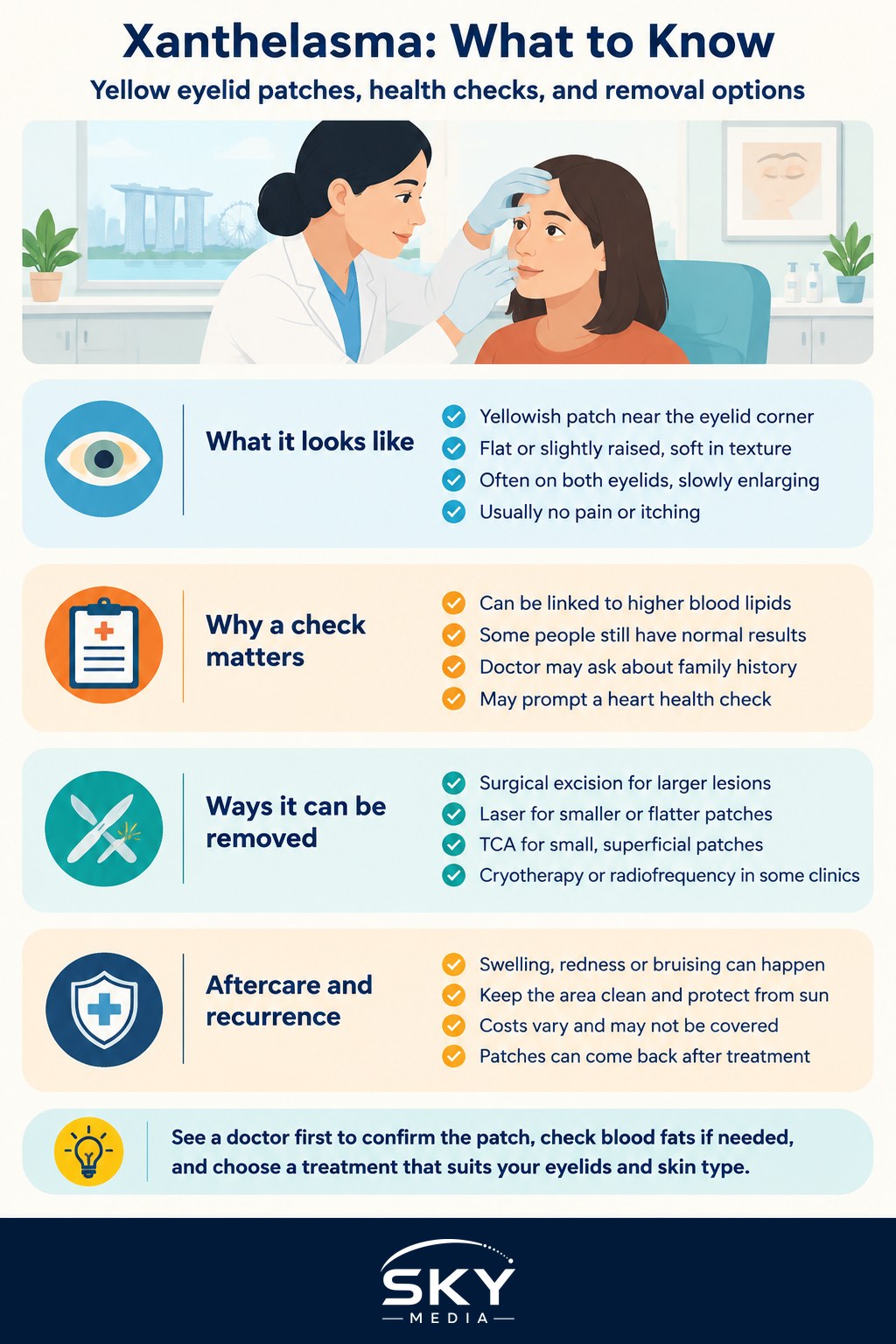
Xanthelasma (full name xanthelasma palpebrarum) refers to yellowish plaques made up of fat-laden cells deposited under the skin of the eyelids. They typically:
- Appear on the upper or lower eyelids, most often near the inner corner, close to the nose
- Look flat or slightly raised, soft and yellow or orange in colour
- Show up on both sides, sometimes symmetrically
- Grow slowly over months or years
- Cause no pain or itching
They are not cancerous and do not affect vision in most cases. The main concerns for most people are appearance and what the patches might say about blood fats.
Other conditions can look similar, including milia, some cysts and other skin growths, which is why a proper diagnosis from a GP or dermatologist (skin specialist) is the first step.
The Cholesterol Link and Why a Check Matters
Xanthelasma is associated with raised levels of lipids (fats such as cholesterol and triglycerides) in the blood. However, the relationship is not simple. Some people with xanthelasma have abnormal blood lipids, while many others have normal results.
Doctors also look at other possible contributing factors, which may include family history of high cholesterol, certain inherited lipid disorders, diabetes, thyroid problems and liver conditions. Because lipid problems are linked with heart and blood vessel disease, xanthelasma is often treated as a good reason to check your overall cardiovascular health, even if you feel well.
What this usually means in practice:
- See a GP. They can examine the patches and ask about your family and medical history.
- Get a blood test. A lipid panel measures your cholesterol and triglycerides, and your doctor may order other tests depending on your situation.
- Follow up on results. If anything is abnormal, your doctor will discuss lifestyle changes and, if needed, treatment.
In Singapore, polyclinics and GP clinics (including those under CHAS, the Community Health Assist Scheme that subsidises care at participating clinics for eligible residents) can arrange this. Screening programmes through Healthier SG and HealthHub may also be relevant depending on your age and eligibility; check HealthHub for current details.
Treating high cholesterol is important for your heart, but it does not reliably make existing xanthelasma disappear. That is why removal is a separate decision.
Xanthelasma Removal Options Compared
Removal is generally done for cosmetic reasons. Treatment is usually carried out by a dermatologist, an oculoplastic surgeon (an eye doctor specialising in eyelid surgery) or a plastic surgeon. Which option suits you depends on the size, depth and position of the patches, your skin type and your doctor’s experience.
| Method | How it works | Typical considerations |
|---|---|---|
| Surgical excision | The patch is cut out and the skin stitched | Suited to larger lesions; leaves a fine scar, usually in the eyelid crease |
| Laser treatment | Laser energy removes or breaks down the deposit | Can treat smaller or flatter patches; may need several sessions; pigment changes possible |
| Chemical peel (TCA) | A strong acid applied by a doctor removes the top layers | For small, superficial patches; risk of scarring or pigment change |
| Cryotherapy or radiofrequency | Freezing or controlled heat destroys the tissue | Used in some clinics for small lesions; pigment change and scarring risks |
Surgical excision
Cutting out the patch is a long-established method. For larger or thicker deposits, it may be the most effective way to remove them in one go. The surgeon must be careful not to take too much eyelid skin, which could pull the eyelid out of position. For this reason, very large lesions may need staged surgery or skin grafting, and an experienced eyelid surgeon is important.
Laser
Different types of laser are used, and they work by vaporising the deposit or targeting the tissue with heat. Laser can be precise and avoids stitches, but darker skin types, which are common in Singapore, carry a higher chance of temporary or lasting changes in skin colour. Ask your doctor about their experience treating your skin type.
Chemical peels and other methods
Trichloroacetic acid (TCA) applied in a controlled way by a doctor can treat small, flat lesions. It is not a home treatment. Cryotherapy and radiofrequency are also used in some clinics. Each has its own risk profile, so discuss pros and cons with your specialist.
Avoid DIY Removal
Online, you will find creams, “spot removal pens” and home remedies claiming to dissolve xanthelasma. The eyelid skin is thin, and it sits right next to your eye. Burning, freezing or applying acids at home risks scarring, infection, eyelid deformity and eye injury. Do not attempt to remove xanthelasma yourself, and be wary of non-medical beauty salons offering to do it.
For other eye-area concerns that are cosmetic, such as puffiness or bags, see our comparison of eye bag removal options, and for everyday skincare products for the area, hydrogel eye patches explained. Neither will treat xanthelasma.
Recovery, Cost and Recurrence
After any procedure, expect some swelling, redness or bruising around the eyes for a while. Your doctor will give you aftercare instructions, which usually cover cleaning the area, using any prescribed ointment, avoiding rubbing your eyes and protecting the skin from the sun. Ask how long before you can wear makeup or contact lenses.
Costs vary widely between clinics, methods and the number of sessions needed. Because removal is usually cosmetic, it is often not covered by insurance or MediSave; check with your clinic and your insurer for the current position on your specific case.
Recurrence is common. Xanthelasma can come back after any method, and new patches can appear elsewhere on the eyelids. Managing underlying lipid problems, if you have them, is sensible for your overall health, and some people simply choose to retreat new patches as they appear.
Questions to Ask Before Treatment
- Are you sure this is xanthelasma, and should I have blood tests first?
- Which method do you recommend for the size and position of my patches, and why?
- How many treatments are likely to be needed?
- What are the risks for my skin type, especially pigment changes and scarring?
- What does recovery look like, and when can I return to work?
- What happens if it comes back?
With a clear diagnosis, a health check and an experienced specialist, xanthelasma removal is a manageable procedure, and the check-up along the way can be valuable in its own right.
Frequently Asked Questions
Can xanthelasma go away on its own or shrink with medication? It does not usually disappear by itself. Treating high cholesterol is important for your heart, but it does not reliably clear existing patches. Removal is a separate decision to discuss with a dermatologist or eyelid surgeon.
Is xanthelasma dangerous or a sign of cancer? No, it is not cancerous, and in most cases it does not affect vision. It can be a useful signal to check blood fats, though, and other eyelid growths can look similar, so a doctor should confirm the diagnosis.
Do I need a blood test even if I feel perfectly healthy? A lipid blood test is usually sensible, because xanthelasma is associated with raised blood fats even when you feel well. Some people have normal results. A GP can examine the patches, take your family history and decide which tests to order.
Which doctor should I see for yellow patches on my eyelids? Start with a GP or polyclinic, which can examine the patches and arrange blood tests. Removal is usually done by a dermatologist, an oculoplastic surgeon or a plastic surgeon, depending on the size and position of the patches.
Does xanthelasma come back after removal? It can. Recurrence is common after any method, and new patches may appear elsewhere on the eyelids. Managing any underlying lipid problem is sensible for your health, and some people simply choose to have new patches treated as they appear.
Further reading: Syringoma Removal in Singapore: What Works · Seborrhoeic Keratosis: Removing Age Spots and Growths in Singapore