
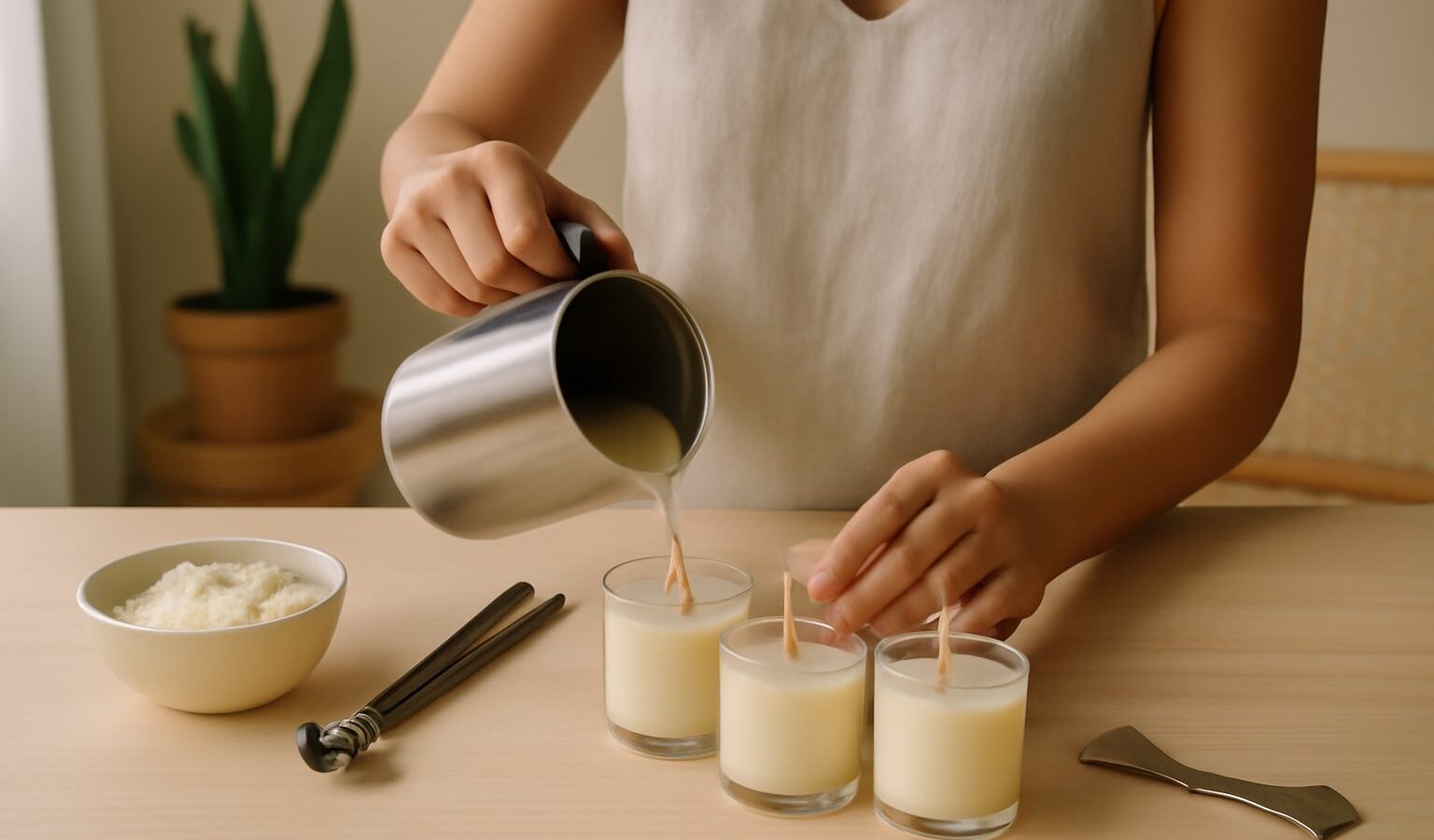
Few crafts feel as rewarding as lighting a candle you poured yourself, watching the flame catch, and filling your home with a scent you chose. Candle making is affordable, deeply satisfying, and genuinely beginner-friendly. If you have been curious about candle making in Singapore, this guide walks you through everything a first-timer needs, from picking wax to pouring your first tin, with the hot wax and open-flame safety you should never skip.
The best part is that you can start small on a kitchen table, with just a pot, a thermometer and a few basic supplies. No special studio or expensive gear required.
Why Candle Making Is a Great First Craft
Candle making sits in a sweet spot for beginners. The steps are simple, the results are usable, and the whole process takes an evening. You melt wax, add fragrance, pour it around a wick, and wait for it to set. Within a day you have something to show for it.
It is also flexible. You can make plain candles to save money, scented candles as gifts, or experiment with colours, containers and fragrance blends as you improve. And because a batch fills several containers at once, it is a lovely hobby to share with friends or family.
Best of all, it scales to any budget. A basic starter run costs very little, and you can reuse jars and tins you already own.
What You Need to Start
Your shopping list is short. Here is what a beginner actually needs.
- Wax. Soy wax is the most popular beginner choice because it melts at a low temperature, is easy to work with, and cleans up with soap and water. Beeswax and coconut blends are other options as you progress.
- Wicks. Cotton wicks are the standard. Wick size must match your container width, so buy a small assortment to test.
- Fragrance oils. Use oils made specifically for candles, not perfume. Follow the recommended dosage on the label, as too much can stop a candle setting or burning cleanly.
- Containers. Heat-safe glass jars, metal tins or ceramic vessels. Never use thin or cracked glass that could shatter when hot.
- A melting setup. A double boiler, or a heatproof jug set in a pot of simmering water. Do not melt wax directly in a pan over a naked flame.
- A thermometer. Wax needs to be poured within the right temperature range for a smooth finish.
- Extras. A stirring spoon, wick stickers or a dab of glue, and pegs or a wick holder to keep the wick centred while it sets.
Many beginners start with an all-in-one candle making kit, which bundles wax, wicks, fragrance and a jar so you can learn the steps before buying supplies in bulk. It is a low-risk way to see if you enjoy the craft.
Working Safely With Hot Wax and Open Flame
Candle making is safe when you respect two things: hot wax and fire. Please read this section before your first pour.
- Never leave melting wax unattended. Wax can overheat and, at high enough temperatures, catch fire. Keep the heat moderate and stay in the kitchen the whole time.
- Use a double boiler, not direct heat. Melting wax in a pot straight on the hob risks scorching and flare-ups. The water-bath method keeps the temperature controlled.
- Keep a lid or baking soda nearby, never water. If wax ever ignites, smother it. Water thrown on a wax fire makes it worse, much like an oil fire.
- Protect your skin and surfaces. Hot wax burns. Work slowly, wear covered clothing, and cover your table with newspaper or a mat. Keep children and pets out of the pouring area.
- Ventilate the space. Open a window or work near airflow, especially when adding fragrance oils.
- Test-burn your finished candles. Always burn on a heat-safe surface, away from curtains and draughts, and never let a candle burn right down to the container base.
None of this should scare you off. Treat hot wax like hot cooking oil, give it your full attention, and candle making is a calm, enjoyable craft.
Choosing Your Starting Point
There is no single right way in. Pick the route that matches your budget and how hands-on you want to be, and check the retailer or studio for current prices, as supplies and class fees vary.
| Starting point | Best for | Rough cost band | What to know |
|---|---|---|---|
| All-in-one starter kit | First-timers testing the hobby | Low | Everything for one or two candles; easiest way to learn the steps |
| Buying supplies separately | Those ready to make several batches | Low to mid | Cheaper per candle; lets you pick your own wax, wicks and scents |
| A hands-on candle making class | Learning in person with guidance | Mid | An instructor, a finished candle to take home, and a fun outing |
| Scaling up with moulds and blends | Hobbyists refining their craft | Mid to premium | More equipment; worthwhile once you know you love it |
Starting cheap is completely fine. Most people begin with a kit or a single bag of soy wax and grow from there.
Where to Learn and Buy in Singapore
Supplies are easy to find here. Craft retailers such as Spotlight and Art Friend stock wax, wicks, fragrance oils, dyes and containers suitable for beginners. Daiso is handy for cheap glass jars, tins, stirring tools and storage. For larger quantities, specialist candle and soap supply shops sell soy wax, quality fragrance oils and wick assortments online with local delivery, which works out cheaper once you make candles regularly.
If you prefer to learn hands-on, plenty of studios and craft cafes across Singapore run beginner candle making workshops, often as a relaxed weekend activity or a group outing. It is a lovely way to learn the pouring technique in person and walk away with a candle you made. Community centres occasionally offer affordable craft sessions too, so it is worth checking your neighbourhood listings.
For the tropical climate, store your wax and finished candles somewhere cool and out of direct sun. Heat and humidity can soften candles, cause surface sweating on scented ones, and warp them if left near a sunny window. An airtight box in a cupboard keeps supplies fresh.
Small Batches, Big Satisfaction
The joy of candle making is in the small wins: your first clean pour, a scent blend you are proud of, a set of matching jars for a gift. Do not worry if early candles have a bumpy top or an off-centre wick, as these are easy fixes with a little practice. Start with one simple soy candle this weekend, keep your safety habits tight, and you may find yourself hooked on the quiet satisfaction of making light with your own hands.
Explore more
If pouring your own candles has you hungry for more hands-on crafts, keep exploring. Try soap making as a hobby or getting started with resin art for more home-friendly making. Not sure what suits you yet? Begin with how to find a new hobby in Singapore.