
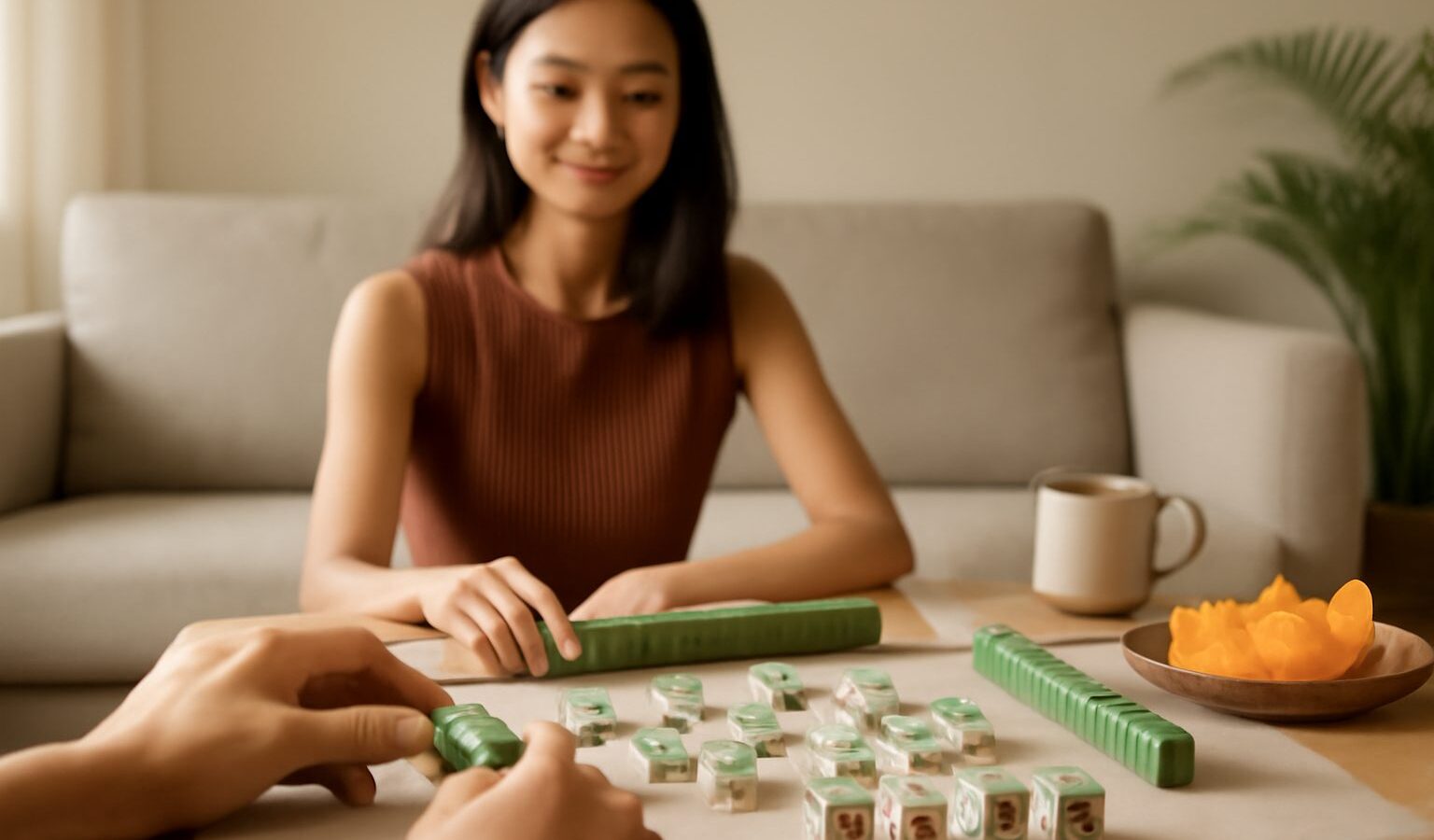
Few sounds are as familiar in Singapore as the gentle clatter of mahjong tiles being shuffled on a table. For generations it has been a game of family reunions, festive gatherings and long, chatty afternoons. Yet many people who grew up hearing that sound never actually learned to play. If that is you, this is your invitation. Mahjong in Singapore is a wonderful hobby: a game of skill, memory and pattern-spotting that rewards practice and, above all, brings people together around a table.
This guide treats mahjong as a game and a social skill, not a gamble. You can absolutely enjoy it for the pleasure of the play alone. Here is what the tiles are, how a hand works, and where to learn locally so you can join in this weekend.
What Mahjong Is and Why People Love It
Mahjong is a tile-based game for four players, usually described as a bit like the card game rummy but played with beautifully engraved tiles. Over a series of rounds, each player draws and discards tiles, trying to collect a complete winning hand made of sets. It blends luck with genuine skill: reading the discards, deciding which sets to chase, and weighing when to hold or let go. That mix is why a single game can feel relaxing and quietly strategic at the same time.
The deeper appeal, though, is social. Mahjong is played face to face, at conversational speed, with plenty of room for chatter between turns. It is a reason to gather three friends or relatives, sit down for a couple of hours, and simply be together. Learning it also connects you to a piece of local and regional heritage that spans grandparents and grandchildren alike. You do not need to play for stakes to enjoy any of that; the game itself is the reward.
Meet the Tiles
A standard set has 144 tiles, and they look more complicated than they are. Once you can recognise the groups, the rest follows quickly. The tiles fall into a few families:
- Three number suits, each running from one to nine: the Dots (circles), the Bamboo (sticks) and the Characters (marked with Chinese numerals). There are four of every tile.
- Honour tiles: the four Winds (East, South, West, North) and the three Dragons (Red, Green and White).
- Bonus tiles: the Flowers and Seasons, which are set aside for small extra rewards when drawn.
A winning hand is typically four sets plus a pair. A set is either three identical tiles, three of a kind, or a run of three consecutive numbers in the same suit, along with the pair of matching tiles that completes the hand. Spend ten minutes handling a real set and naming the suits out loud, and this all becomes second nature far faster than reading about it suggests.
How a Game Flows
Play moves anticlockwise, and the rhythm is simple once you have seen it once. The tiles are shuffled face down, built into walls, and each player draws a starting hand. On your turn you draw one tile and discard one, always keeping your hand at the right size, as you work towards a complete pattern. You can also claim certain tiles that others discard to complete a set, which speeds up your hand and adds a layer of decision-making. When a player finally completes a valid hand, they declare a win and the round ends.
Do not worry about mastering every rule at once. The best way to learn is to sit in on a real game, play a few slow practice rounds with patient friends, and let the flow sink in through your hands. Singapore’s local rules have their own quirks around scoring and special hands, so agree on a simple house version with your group when you begin. A comparison of a few beginner-friendly ways to learn is below.
| Way to learn | Cost to start | Pace of learning | Best for |
|---|---|---|---|
| Family or friends who play | Free | Gentle, hands-on | Learning local house rules naturally |
| A physical mahjong set at home | Low, one-off buy | Self-paced practice | Repeating rounds until it clicks |
| Mahjong apps and online tutorials | Free to low | Fast, solo drilling | Memorising tiles and basic patterns |
| A class or community centre session | Varies, check provider | Structured, social | Beginners who prefer step-by-step teaching |
Most people learn fastest by combining two of these: drill the tiles on an app during quiet moments, then play real rounds with people who can nudge you along.
What You Need to Start
The barrier to entry is refreshingly low. To begin, you really only need:
- A mahjong set. These range from cheap, lightweight travel sets to heavier premium tiles. A budget set is perfectly good for learning, so start there and upgrade later only if you fall for the hobby.
- A flat table and four seats. An automatic shuffling table is a luxury, not a requirement; hands and a bit of patience shuffle just fine.
- Three other players. Rope in family or friends, or join a group to find a regular table.
- A simple beginner guide or app to keep the sets and terms handy while you learn.
That is genuinely it. Mahjong is one of the more HDB-friendly hobbies: a set packs away into a single box, and a foldable table stores flat against a wall between games.
Where to Buy and Learn in Singapore
Mahjong sets are easy to find here. Look in general merchandise and department stores, Daiso and value shops for affordable starter sets, and specialist shops in areas like Chinatown and Bras Basah for nicer tiles and cases. Plenty of local sellers also list sets on Shopee, Lazada and Carousell, where you can compare weights and styles from home. Always check the seller or shop for current prices, since sets vary widely.
To learn and meet fellow players, community centres and senior activity groups sometimes run friendly beginner sessions, and hobby and interest groups on Facebook, Telegram and Meetup organise casual games. Playing with an experienced group is by far the quickest way to absorb the etiquette: shuffle together, discard neatly into the centre, announce your claims clearly, and keep the mood light and unhurried. A little courtesy makes you a welcome guest at any table.
One practical local note is our humidity. Cheaper tiles and cardboard cases can warp or grow musty if stored in a damp cupboard for months. Keep your set in its box with a silica gel packet or two, somewhere dry and away from windows, and wipe the tiles occasionally. Cared for well, a good set easily lasts a lifetime and becomes a small family heirloom.
Explore more
If mahjong gives you a taste for gathering people around a table, keep it going with our beginner’s guide to board games and our tips on how to host a game night at home. Prefer a two-player thinking game instead? Try getting started with chess as a hobby.