
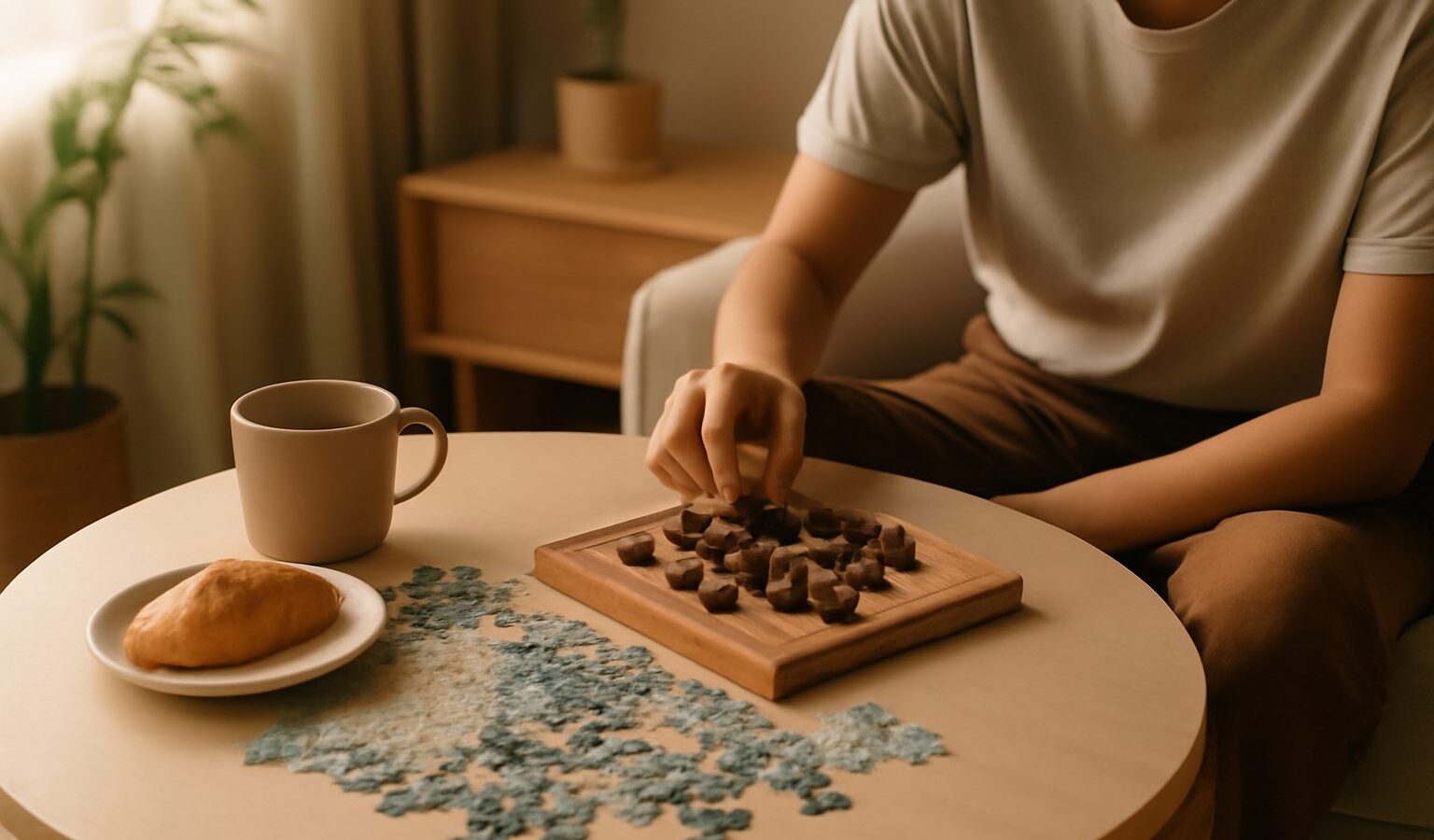
Not every hobby needs a crowd. Some of the most satisfying evenings are spent alone at the table, quietly solving a puzzle or steering a solo board game to a hard-won finish. If you live alone, keep odd hours, or simply crave a screen-free way to unwind, solo board games singapore players enjoy at home offer calm focus, a real sense of achievement and a gentle challenge you can pick up and put down whenever you like.
This guide covers how solo gaming works, what to play, what you need to start and where to buy in Singapore. The aim is simple: help you picture a peaceful evening this week with nothing but a small table, a good light and a puzzle worth solving.
Why Solo Gaming Is Worth Your Time
Playing alone gets an unfair reputation, but it has quiet advantages that group games cannot match. There is no scheduling around other people, no waiting for a slow player, and no compromise on which game to play. You choose, you set your own pace, and you can pause the moment life interrupts.
Solo gaming also suits our busy, sometimes unpredictable lives. A jigsaw on the coffee table can be picked at over a week. A solo board game can fill twenty focused minutes before bed. Both offer a screen-free wind-down that leaves you calmer than another hour of scrolling, and both reward patience with a clear, tidy sense of “I finished that”.
There is a mental side too. Puzzles and solo games ask you to focus on one absorbing task, which many people find genuinely relaxing, a little like a moving meditation for the hands and mind.
The Main Types of Solo Play
Solo tabletop is broader than most people realise. It spans quiet jigsaw puzzles, brain-teasing logic puzzles, board games with a built-in solo mode, and games designed from the ground up for one player. Each suits a different mood and budget.
The table below compares the main options so you can find one that fits your space, your patience and your wallet.
| Type | What it is | Space needed | Rough budget | Good if you want |
|---|---|---|---|---|
| Jigsaw puzzles | Piecing a picture together | A table you can leave set up | Low | A calm, low-thinking wind-down |
| Logic and number puzzles | Sudoku, nonograms, brain teasers | A book and a pencil | Very low | A quick daily mental workout |
| Board games with solo modes | Group games that add a one-player challenge | Shelf and table space | Mid | Playing your favourites alone too |
| Dedicated solo board games | Games built only for one player | A small table | Low to mid | A designed, replayable challenge |
| Puzzle and escape-room kits | Single-use solve-at-home mysteries | A table for an evening | Low to mid | A one-off narrative puzzle night |
Notice how many of these start cheap. A pencil and a puzzle book cost almost nothing, and a good jigsaw is an affordable way to test whether solo play suits you before spending more.
What You Need to Start
One of the joys of solo gaming is how little it asks of you. There is no group to gather and no big kit to buy. For most solo play, the real starter kit is small:
- One puzzle or game that matches your mood, bought cheaply or borrowed.
- A flat, stable surface, even a tray you can move if the table is needed for meals.
- Good lighting, so you are not squinting at small pieces or fine print.
- A little regular time, even fifteen quiet minutes a few evenings a week.
- A box, tray or ziplock bags to keep pieces safe between sessions.
That is genuinely all. If you are unsure whether you will enjoy it, start with a cheap jigsaw or a puzzle book rather than an expensive game. Borrow a game from a friend, or try a title at a board game cafe first. It is completely fine to begin small and add more only once you know you love it.
Small-Flat and Tropical Realities
Solo play fits HDB and small-space living beautifully, but a jigsaw does raise one classic problem: where do you leave a half-finished puzzle when the table is needed for dinner? A puzzle mat that rolls up, or a large board or tray you can slide under the sofa, solves this neatly and keeps the pieces in place. For logic puzzles and card-based solo games, a shoebox on a shelf is all the storage you need.
Our climate deserves a moment of planning. Humidity is hard on cardboard and paper: puzzle pieces can swell and warp, and card decks grow soft or musty in a damp cupboard. A few simple habits protect your collection:
- Store puzzles and games somewhere dry, away from windows and bathrooms.
- Add a few silica gel packets to the shelf or box to soak up moisture.
- Keep pieces in sealed bags or the original box rather than loose.
- Avoid leaving a puzzle in direct sun, which fades the picture and curls the pieces.
Do that, and a good jigsaw or game will stay crisp for years and survive being solved again and again.
Where to Buy and Learn in Singapore
You have plenty of options here. For jigsaw puzzles, the larger bookshops, department stores and toy shops carry a wide range, and Daiso is unbeatable for cheap puzzles and puzzle books when you are just starting out. Specialist board game shops stock dedicated solo games and titles with solo modes, and staff are usually happy to recommend something for a first-time solo player. Plenty of sellers also trade new and second-hand puzzles and games on Shopee, Lazada and Carousell, which is a friendly, low-cost way to try a few.
To go deeper, board game cafes across the island let you try games, including many with solo modes, from a large library for a small table charge, so you can test a title before buying. Fees vary, so check the cafe for current rates. Online, solo gaming has a warm and welcoming community: look for solo board game groups and forums, along with local hobby groups on Facebook and Telegram, where players share recommendations and swap puzzles.
If you enjoy the quiet focus of jigsaws in particular, our sibling guide below goes much deeper into that hobby, from picking your first puzzle to displaying a finished one.
Building a Gentle Habit
The secret to enjoying solo play is to keep it low pressure. There is no clock and no opponent, so let it be slow. Choose puzzles a touch easier than you think you need at first, so early sessions feel rewarding rather than frustrating. Leave a jigsaw out where you pass it, and add a few pieces whenever you have a spare moment. Celebrate finishing, even take a photo before you break it apart. Over time you will find a rhythm that fits your evenings, and a small, satisfying habit that is entirely your own.
Explore more
If the quiet focus of piecing a picture together appeals most, dive into our guide to jigsaw puzzles as a hobby. To bring others in sometimes, see our beginner’s guide to board games and tips on how to host a game night at home. For a classic solo brain workout, our guide to getting started with chess is a great next step.