
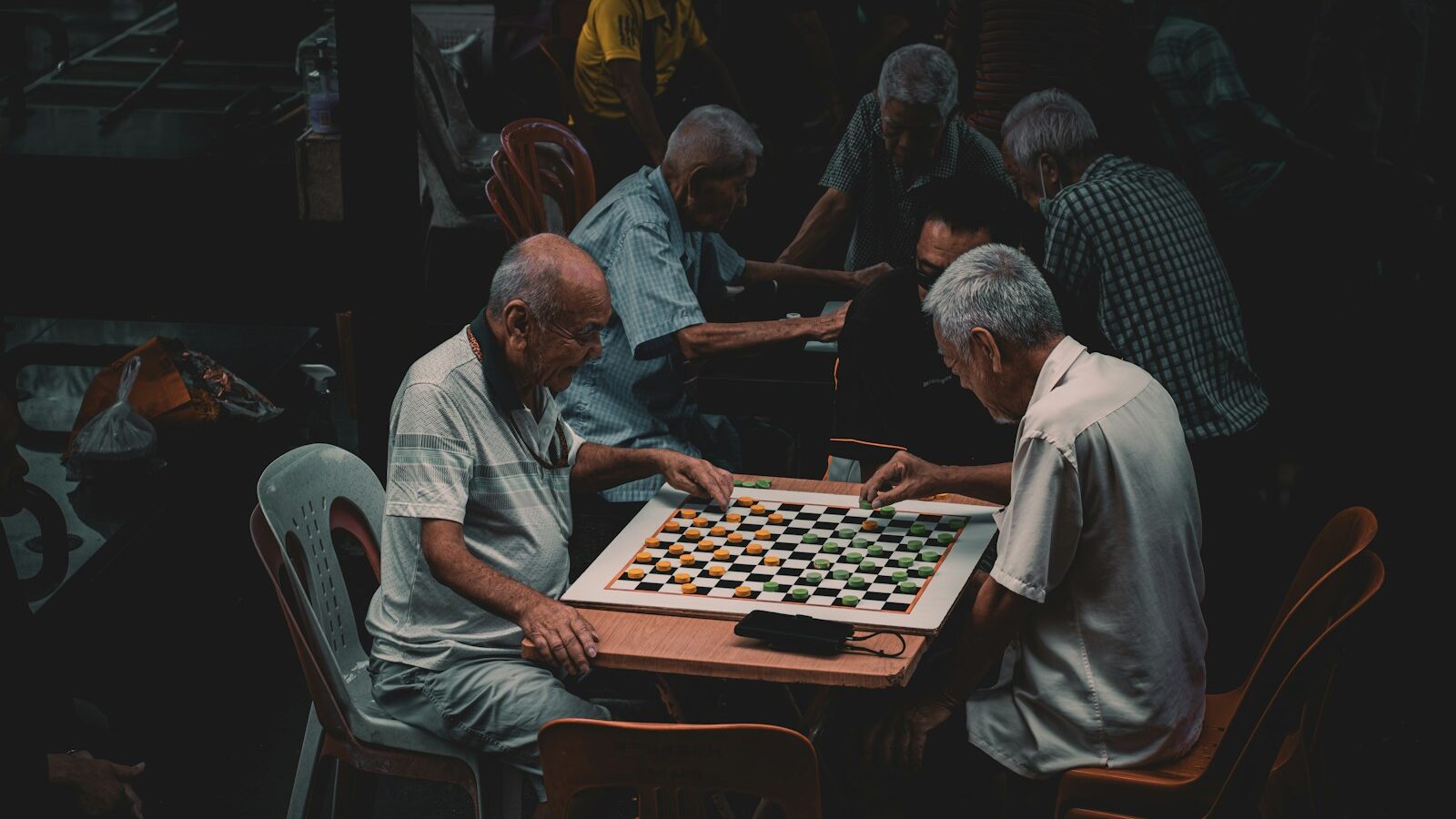
If you love the push and pull of a good two-player duel, backgammon might be the hobby you did not know you were missing. It is one of the oldest board games in the world, roughly five thousand years old, and it still holds up because every game is a fresh mix of luck and skill. You roll the dice, but you decide what to do with them, and that small choice is where all the drama lives. Backgammon is easy to learn in an afternoon and genuinely deep enough to enjoy for years, which is exactly what makes it such a rewarding tabletop hobby for beginners in Singapore.
Tile games sit right alongside it. Dominoes, mahjong, Rummikub and their cousins share the same friendly appeal: a compact set, a clear board or table, and a game that rewards a bit of thinking without demanding you memorise a rulebook. This guide covers what these games are, what you need to start, how to play your first rounds, and where to find people to play with locally.
What Backgammon and Tile Games Are
Backgammon is played on a board of twenty-four narrow triangles called points, split into four quadrants. Each player has fifteen checkers, and you race them around the board and off the other side. You move according to two dice, so a roll of five and three lets you move one checker five points and another three, or the same checker eight in total. Land two or more checkers on a point and you control it. Leave a single checker alone, a “blot”, and your opponent can hit it and send it back to the start. That tension between racing ahead and staying safe is the whole game.
Tile games swap dice for tiles you draw or place. A few worth knowing:
- Dominoes: matching numbered tiles end to end. Simple to grasp, endlessly variable, and travel-friendly.
- Mahjong: a four-player game of drawing and discarding tiles to build a winning hand. Hugely popular across Chinese communities here, with its own etiquette and rhythm.
- Rummikub: numbered tiles arranged into runs and groups, a bit like rummy with tiles instead of cards.
They all share backgammon’s charm: quick to set up, easy to teach, and social by nature. If you enjoy the mental sparring of these games, you may also like our guides to Scrabble and word games and playing bridge as a hobby.
What You Need to Start
The lovely thing about these hobbies is how little kit they demand. For backgammon you need a single set, which folds up like a briefcase and stores easily even in a compact HDB flat.
A basic backgammon set includes:
- The board, usually hinged so it closes into a case
- Thirty checkers, fifteen per colour
- Four dice, two per player, plus two dice cups for fair rolling
- A doubling cube, marked 2, 4, 8, 16, 32 and 64, used to raise the stakes of a game
For tile games, a domino set or a mahjong set is a one-off buy that lasts for years. Buy generically from any games or hobby shop and you will be fine; you do not need an expensive set to start, and there are no brands worth chasing as a beginner. A felt mat or a soft cloth keeps tiles quiet and protects your table, which matters if you have neighbours close by.
Learning Your First Games
Start with the race, not the strategy. For your first few backgammon games, just focus on moving your checkers around the board and bearing them off. Once the flow feels natural, add the tactical layer: making points to block your opponent, and choosing when to leave a blot exposed. The doubling cube can wait until you are comfortable; ignore it entirely for your first sessions.
A few beginner-friendly starting points:
- Play the opening rolls by the book. There are well-known best moves for each opening dice combination. Learning a handful gives you a solid, confident start.
- Count the race. Add up how many points each side needs to move to bear off. If you are ahead, race; if behind, play a blocking game and wait for a hit.
- Do not over-stack. Piling many checkers on one point wastes flexibility. Spread out so you always have useful moves.
For tile games, learn one well before you branch out. Rummikub and dominoes are the gentlest entry points; mahjong rewards patience because the scoring and hand-building take a few sessions to click. Playing with someone experienced is the fastest way to learn any of them.
Choosing Your First Game
Not sure which to start with? This quick comparison helps you match a game to what you want out of an evening.
| Game | Players | Learning curve | Best for |
|---|---|---|---|
| Backgammon | 2 | Easy to learn, deep to master | Head-to-head duels with luck and skill |
| Dominoes | 2 to 4 | Very easy | Relaxed, family-friendly play |
| Mahjong | 4 | Moderate, takes practice | Social evenings and rich strategy |
| Rummikub | 2 to 4 | Easy | Quick, flexible group games |
Common Mistakes Beginners Make
Most early frustration comes from a few habits that are simple to fix:
- Playing too safely. Never leaving a blot feels prudent, but it stops you making aggressive, board-controlling moves. Calculated risks win games.
- Ignoring the pip count. If you do not know whether you are ahead or behind in the race, you cannot choose the right strategy.
- Blaming the dice. Bad rolls happen, but good players squeeze value from mediocre rolls. Focus on your decisions, not your luck.
- In tile games, hoarding tiles. Holding too long for the perfect hand often means someone else finishes first. Learn when to commit.
Cost, Space and Playing Responsibly
These are among the most affordable hobbies you can pick up. A decent backgammon or tile set is a modest one-time purchase, and after that the games cost nothing to play. Storage is easy too, since a folded set slips onto a shelf, which suits smaller flats well. The heat and humidity here can warp cheaper wooden boards over time, so keep sets out of direct sun and away from damp, and a plastic or leatherette set travels and lasts better in our climate.
One honest note on money. Backgammon, mahjong and similar games are sometimes played for stakes, and in Singapore gambling is regulated. Keep your games social and friendly, play for fun rather than money, and be aware of the law if stakes ever come up. The hobby is at its best as a contest of wits, not wallets.
Where to Play and Find Community in Singapore
You are never far from a game here. Community centres and CCs often run board game and mahjong sessions, and many public libraries host casual game days. A growing number of board game cafes let you rent tables and try sets before you buy, which is a low-pressure way to learn backgammon with a friend. Look for hobby and tabletop meetup groups online, where players organise regular sessions for everything from backgammon to Rummikub, and check current schedules and any fees directly before you go.
Family and friends are the easiest starting point of all. Teach someone the race in ten minutes, play a few rounds, and you will both be hooked. From there, the depth reveals itself naturally. If your taste runs to other thinking games, our guides to getting into poker are a natural next step. Backgammon and tile games ask almost nothing to begin and give back plenty, which is the mark of a hobby worth keeping.