

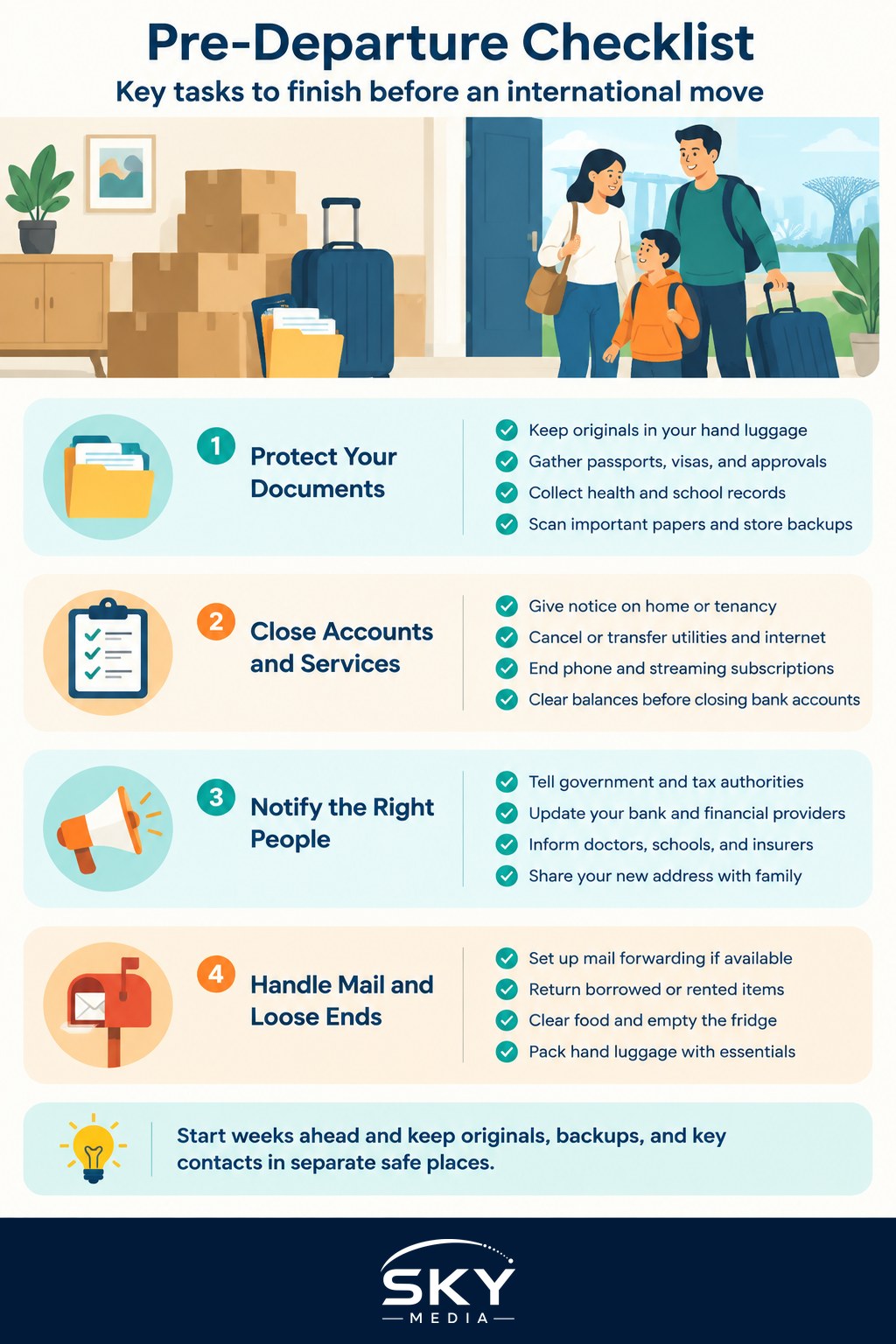
The final weeks before an international move are the busiest, and they are also when small oversights turn into big headaches later. A thorough pre departure checklist singapore relocators can work through keeps the important tasks in view so nothing slips between packing boxes and booking flights. This guide organises the essentials into clear groups, from the documents you must not lose to the accounts you need to close and the people you need to tell. Adapt it to your own situation, and start early so the last week is calm rather than chaotic.
Documents to Gather and Protect
Your paperwork is the most important thing you will carry, and replacing lost documents from abroad is slow and stressful. Assemble everything well ahead of departure and keep the originals together in a secure folder that travels in your hand luggage, never in your shipped goods.
Gather passports for every family member and check that each has plenty of validity remaining. Keep your visa or pass approval, employment documents, and any letters from your employer close at hand. Collect birth certificates, marriage certificates, and academic qualifications, and consider having key documents officially translated or certified if you will need them for administrative tasks after you arrive.
Health records are easy to overlook. Ask for copies of medical and dental records, immunisation histories, and prescriptions, and make sure any regular medication is documented by your doctor. If you have children, request school records and reports, which schools in your new city may ask to see.
Finally, make digital backups. Scan every important document and store the copies securely, so that even if the originals are misplaced you have a reference. Note down key account numbers and contacts in the same protected place, and share access with a trusted family member in case you cannot reach your own files during the journey. A second set of copies, kept separately from the originals, is a small effort that can save weeks of trouble if a bag goes astray.
Cancellations and Closing Accounts
Leaving a country means unwinding the everyday arrangements that quietly renew themselves. Work through them methodically, because a forgotten subscription or an unclosed account can keep charging you long after you have gone.
The table below groups the common tasks and a sensible timeframe for each.
| Task | When to handle it |
|---|---|
| Give notice on your home or tenancy | As early as your contract requires |
| Cancel or transfer utilities and internet | Close to your departure date |
| End phone and streaming subscriptions | Final week, once no longer needed |
| Settle and close local bank accounts | After final bills clear, see below |
| Cancel insurance policies | Once cover is no longer required |
| Return borrowed or rented items | Before you leave |
Take particular care with utilities. Arrange for electricity, gas, water, and internet to be disconnected or transferred around your moving date, and take final meter readings so you are not billed for a period after you leave. Ask each provider to confirm your account is closed and settled in writing.
Bank accounts deserve thought rather than haste. You may want to keep an account open for a while to settle final payments or maintain a financial footprint at home, so do not rush to close everything at once. Clear outstanding balances, cancel recurring payments, and only then decide what to close and what to keep.
People and Organisations to Notify
Plenty of people need your new details, and telling them before you go prevents missed correspondence. Work through a notification list so nothing important goes to an address you no longer occupy.
Tell government departments and tax authorities as required, since your obligations may continue for a time after you leave. Inform your bank and any financial providers of your move, update your details, and ask how they will contact you abroad. Notify your insurers, your doctor and dentist, your children’s school, and any professional bodies you belong to.
Do not forget the practical everyday contacts. Let close family and friends know your new address and phone arrangements, update any online shopping and delivery accounts, and inform any clubs, memberships, or loyalty schemes you wish to keep. Employers, both old and new, will need up-to-date contact information for the handover period.
Mail Forwarding and Loose Ends
Even with careful notification, some post will keep arriving at your old address, and a forwarding arrangement catches what you missed. Where a redirection service is available, set it up to run for several months so late letters, renewals, and official correspondence reach you rather than a stranger. If forwarding is not practical, ask a trusted relative or friend to collect and scan anything that arrives.
Tie up the smaller loose ends in the final days. Return library books, borrowed tools, and any rented equipment. Collect anything left with dry cleaners, repair shops, or storage. Empty and defrost the refrigerator, dispose of food you cannot take, and do a final walkthrough of your emptied home to check cupboards, lofts, and the backs of drawers.
Prepare a well-thought-out hand luggage bag for the journey itself. It should hold your documents, medication, chargers, a change of clothes, and the essentials you would need if your checked bags or shipment were delayed. Keep a small amount of local currency for your first day in Singapore too, along with a printed copy of your key contacts and addresses in case your phone runs flat or loses signal on arrival.
Give yourself a realistic runway. The tasks above are far easier spread across several weeks than crammed into a frantic final day, so set milestones and tackle a few items at a time. A calm, staged departure means you are less likely to forget something important in the rush.
Working through a checklist like this turns a daunting departure into a series of manageable tasks. Start weeks ahead, tick items off as you go, and you will board your flight knowing the loose ends are tied and your new chapter can begin cleanly.
Explore more
Further reading: Leaving Singapore for Good: A Practical Exit Checklist