
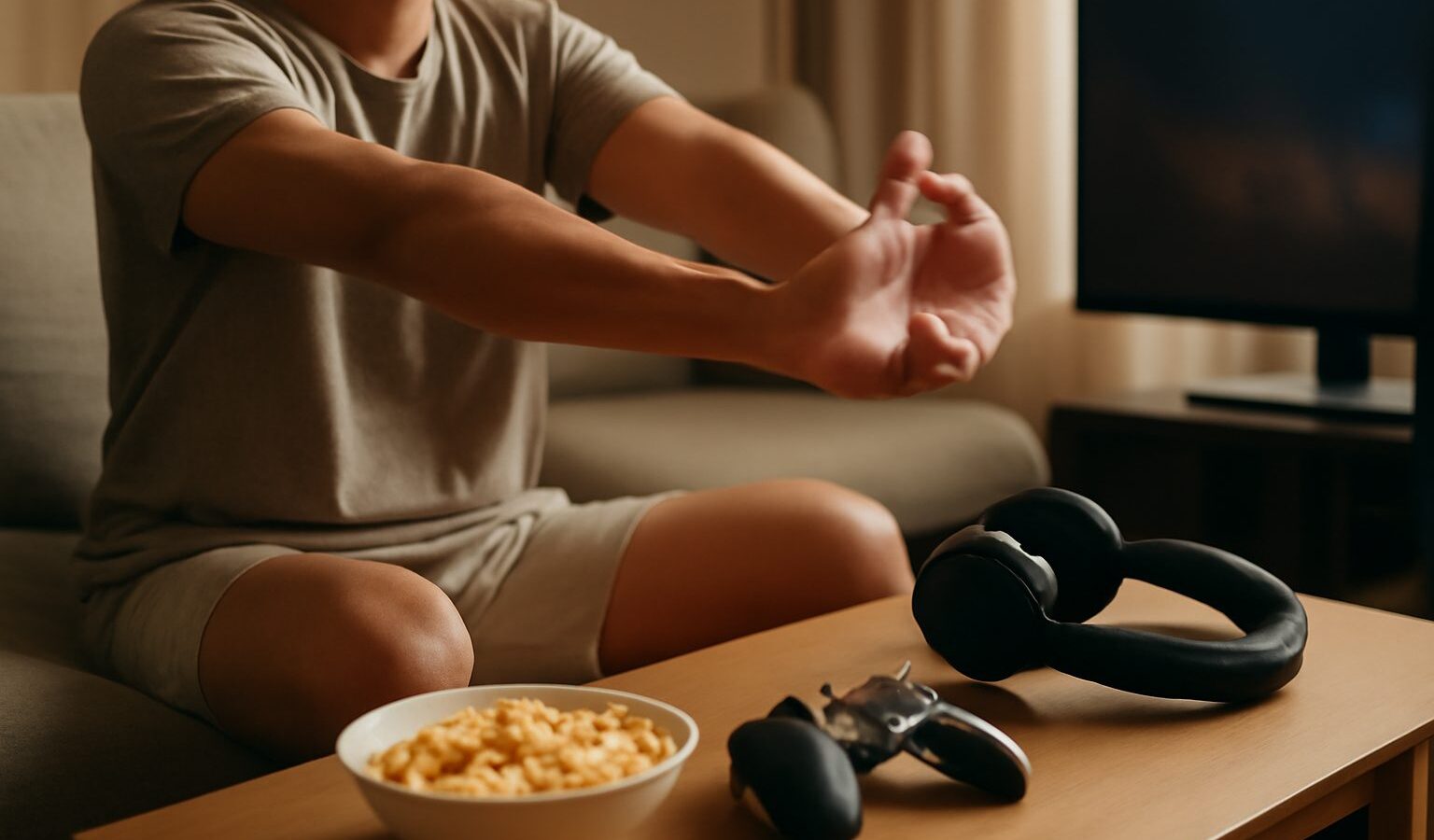
Most players sit down and jump straight into ranked play, then wonder why the first few matches feel clumsy. A gaming warm-up fixes that. Just as an athlete stretches before a match, a few minutes of preparation wakes up your hands, eyes and focus so your first game is not your warm-up game. It also protects your body during long sessions, which matters just as much as your rank. This guide gives you a simple, repeatable routine that fits a busy Singapore schedule, whether you play on a PC in a small HDB room or on a phone between classes.
A warm-up does two jobs. It primes your skills so you play well sooner, and it looks after your body so you can keep playing comfortably. Skipping the second half is how people end up with sore wrists and tired, dry eyes. This is general wellbeing information, not medical advice, but a little care goes a long way.
Start With Your Body: Wrists, Hands and Posture
Before you touch a single control, spend two or three minutes loosening the parts you are about to use hard. Gentle is the word. None of this should hurt, and if anything does, ease off.
- Wrist circles and stretches. Slowly roll each wrist in circles both ways. Then gently extend one arm, palm up, and use the other hand to draw the fingers back for a light stretch, and repeat palm down. Hold each for a few easy seconds.
- Finger and hand loosening. Open and close your hands a few times, spread the fingers wide, then make a loose fist. Give your hands a gentle shake as if flicking off water.
- Shoulders and neck. Roll your shoulders back a few times and slowly tilt your head side to side. A lot of gaming tension sits here without you noticing.
- Sort your posture. Sit back in the chair with feet flat, screen roughly at eye level, and elbows supported so your wrists stay neutral rather than bent up. Fix this now and you will ache less later.
In an air-conditioned room, cold hands feel stiff and slow, so warming them up matters even more. If the room is warm and stuffy instead, put on a fan, since a sweaty grip drags and tires your hands faster.
Wake Up Your Eyes and Focus
Your eyes work hard in games and deserve a moment of preparation too. Before you start, look around the room, focus on something far away for a while, then something near, a few times, to get them adjusting smoothly. Blink deliberately a few times, because people blink far less while gaming and end up with dry, tired eyes.
Set the room up kindly for your eyes as well. Do not game in a fully dark room with a blazing screen, since that contrast tires you quickly. A little ambient light behind or beside the monitor is gentler. Nudge your screen brightness to a comfortable level rather than the maximum. These small choices make a long session far more pleasant.
The Skill Warm-Up: Ten to Fifteen Minutes
Now prime the actual game skills. The idea is to rehearse the movements you are about to use, not to exhaust yourself before you have even started. Keep it short and purposeful.
- Easy aim or control drills. In a practice range or trainer, do a few minutes of gentle target practice, starting slow and clean rather than fast and wild. For shooters, our guide on aim training gives you drills to slot in here.
- Movement and inputs. Run through the basic movements, dodges or combos your game relies on, so your hands remember the timing.
- One or two casual or practice games. A relaxed match at low stakes warms up your decision-making without the pressure of your rank riding on it.
- A quick mental cue. Take a slow breath and remind yourself of one simple focus for the session, such as “play steady” or “watch the map”. This settles your head so you start calm rather than rushed.
If you play mostly on mobile, the same idea applies: a couple of casual rounds, a few practice inputs, and loose thumbs beat diving straight into ranked cold.
Build in Breaks From the Start
A warm-up is not only what you do before playing. Planning your breaks is part of the same routine, because your hands and eyes need to stay warm and rested, not worn out. Decide up front that you will pause regularly rather than hoping you will remember mid-match.
A simple rhythm that works:
- Every hour or so, stand up, stretch, and shake out your wrists and fingers again, just like your warm-up.
- Rest your eyes often by looking at something far away for twenty seconds or so. It is easy to forget when a match is tense.
- Keep water within reach and actually drink it, especially in the local heat, and keep the room ventilated.
- If your hands, wrists or eyes start to ache, stop for a proper break. Discomfort is a signal, not something to push through.
Breaks are not lost time. They keep you sharp and comfortable, so you play better in the sessions that follow.
Match the Warm-Up to Your Session
You do not need the same warm-up every time. Scale it to what you are about to play, so a quick casual session is not front-loaded with a long routine, and a serious ranked night gets the preparation it deserves.
| Part of routine | Quick casual session | Serious ranked session |
|---|---|---|
| Body and wrists | Quick shake-out and posture check | Full wrist, hand and shoulder stretches |
| Eyes | A few blinks and a distance look | Deliberate focus shifts and light setup |
| Skill drills | Skip or one easy round | Ten to fifteen minutes of drills |
| Mental cue | None needed | One clear focus for the session |
| Breaks | Whenever you feel like it | Planned, roughly every hour |
Use the right column when it matters and the left when you just want to relax. Both are valid ways to play, and neither is more “serious” than the other.
Make It a Habit
The best warm-up routine is the one you will actually do, so keep it short enough that skipping it feels silly. Over a few weeks, the wrist stretches, the eye reset and the easy drills will become as automatic as switching on your console. Your first games will feel sharper, your body will thank you on long nights, and you will tilt less because you are not starting cold and frustrated.
A good warm-up sits nicely alongside the rest of your habits. Pair it with staying calm through how to deal with tilt in gaming, sharpening your gaming reflexes, and learning from how to review your own gameplay. A few quiet minutes before you play is one of the easiest upgrades you can give yourself.