

If you are starting work here, getting a feel for Singapore workplace culture will help you settle in faster than any org chart can. Offices in Singapore blend efficiency, politeness, and a genuinely multicultural mix of people, and most teams are welcoming once you understand the unwritten rules. This guide walks through the norms you are likely to meet, from how decisions get made to how people talk in meetings, so you can show up prepared rather than guessing.
None of this is set in stone. A young tech startup in a co-working space feels very different from an established bank or a government-linked company. Treat the patterns below as a starting map, then adjust as you read your own team.
Hierarchy and Respect for Seniority
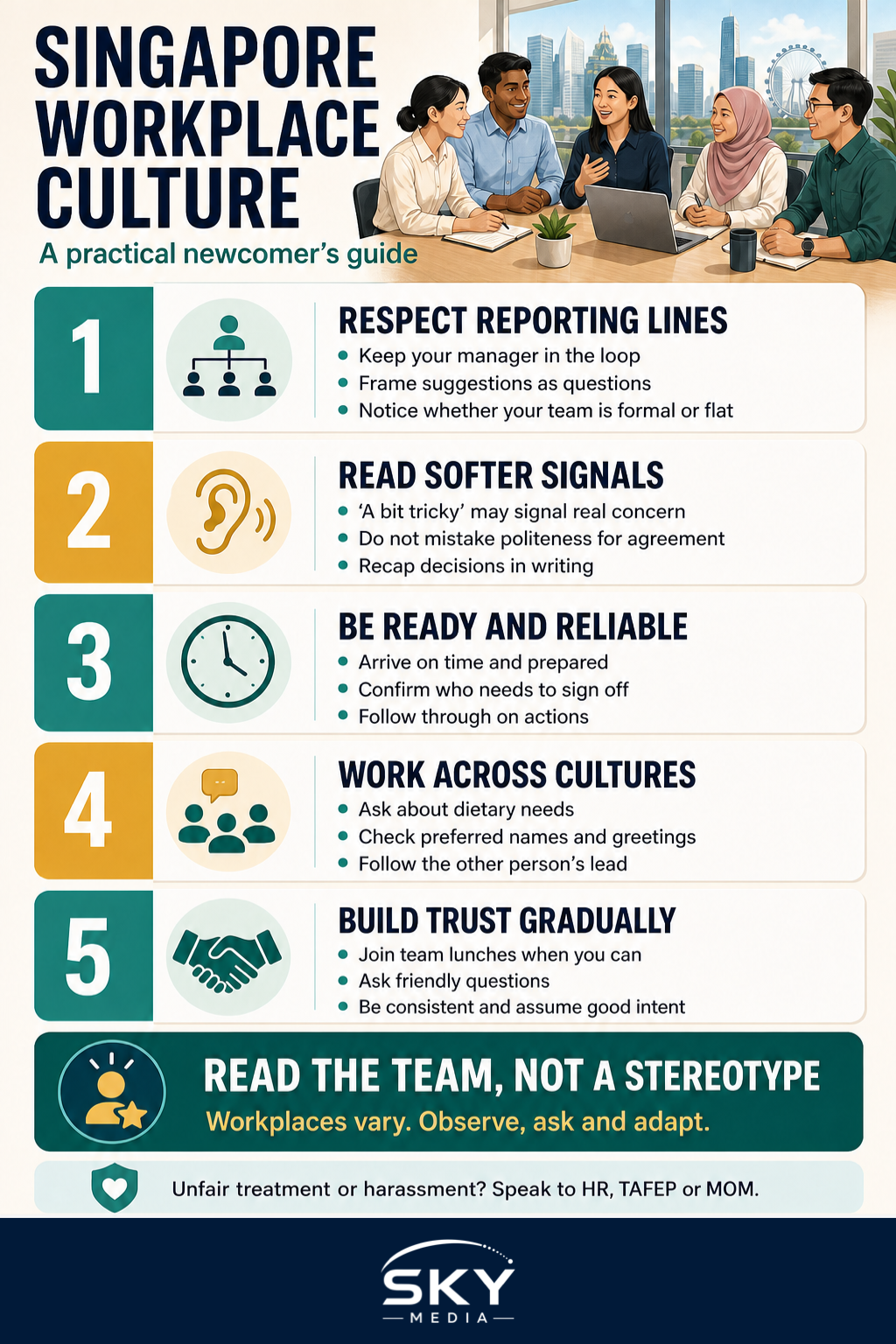
Many Singapore workplaces carry a respect for seniority that shapes daily interactions. Titles matter, and people often defer to those who are older or more senior, especially in front of others. This does not mean you cannot share ideas. It means the packaging matters. A suggestion framed as a question (“Would it help if we tried…?”) often lands better than a blunt correction of someone senior.
You will notice this in small ways. People may wait for the most senior person to start eating at a team lunch, or hold back a differing view in a big meeting and raise it privately afterwards. Reporting lines tend to be taken seriously, so going over your manager’s head to their boss is usually seen as a misstep. When in doubt, keep your immediate manager in the loop.
That said, flatter cultures are common in startups and creative teams, where first names and open debate are the norm. Watch how colleagues address leaders, then follow the room.
Understanding “Kiasu” Without the Stereotype
You will hear the word “kiasu”, a Hokkien term that literally means “afraid to lose”. People use it, often with a laugh, to describe the instinct to not miss out or fall behind, like queueing early for a freebie or over-preparing for a meeting. At work it can show up as thoroughness, wanting every detail covered before a launch, or as a keenness to grab opportunities.
It is easy to hear “kiasu” as a criticism, but locals often use it about themselves with warm humour. The healthy version is diligence and preparation, which are real assets on a team. The less helpful version is anxiety that stops people from delegating or taking sensible risks. If a colleague seems to over-check, they may just be conscientious. Meet that with reassurance rather than judgement, and you will build trust quickly.
Communication Style: Reading Between the Lines
Singapore communication often leans indirect, especially around disagreement or bad news. A “let me check and get back to you” can sometimes mean the answer is likely no. “Can, can” usually means yes, while a hesitant “should be okay” may signal doubt. Learning to hear the softer signals saves a lot of confusion.
A few habits help:
- Listen for hedges. Words like “maybe”, “quite hard”, or “a bit tricky” often carry more weight than they seem.
- Give people a graceful exit. Instead of demanding a yes or no on the spot, offer options so no one loses face.
- Follow up in writing. A short recap email confirms what was actually agreed.
- Do not mistake politeness for full agreement. Check in later to be sure.
You will also meet Singlish in casual chat, sprinkled with “lah”, “leh”, and “meh”. It is friendly shorthand among colleagues. You do not need to adopt it, and formal emails and client work stay in standard English.
Meetings, Punctuality, and Getting Things Done
Meetings tend to start reasonably on time, and punctuality is valued as a sign of respect. Come prepared, since being ready with your numbers or updates signals reliability. In more hierarchical settings, decisions may be confirmed by the senior person even after a group discussion, so read who actually needs to sign off.
Group harmony often matters, so open confrontation in meetings is rare. If you disagree, raising it calmly, or one to one afterwards, is usually more effective than pushing hard in the room. After meetings, action items and timelines are taken seriously, and following through on what you promised is one of the fastest ways to earn a good name.
Multicultural Etiquette at Work
Singapore is home to Chinese, Malay, Indian, and many other communities, alongside colleagues from around the world. This diversity is one of the best parts of working here, and a little awareness goes a long way.
| Situation | A thoughtful approach |
|---|---|
| Team meals | Ask about dietary needs. Some colleagues are halal, vegetarian, or avoid certain foods, so check before ordering for the group. |
| Festive periods | Wish colleagues well during Chinese New Year, Hari Raya, Deepavali, and Christmas. A simple, sincere greeting is appreciated. |
| Names and greetings | Ask how someone prefers to be addressed. Naming customs vary across cultures, so it is fine to check. |
| Small talk | Food, travel, and weekend plans are safe and friendly. Go easy on politics, race, and religion unless a colleague opens the door. |
| Physical greetings | A handshake is common, but some may prefer a nod. Follow the other person’s lead. |
Fair and respectful treatment at work is also backed by the tripartite guidelines. If you ever face unfair treatment or harassment, you can seek support from your HR team, from TAFEP (Tripartite Alliance for Fair and Progressive Employment Practices), or from MOM (Ministry of Manpower). You do not have to handle a serious problem alone, and reaching out is a sensible step, not an overreaction.
Building Relationships and Reading the Room
Trust here is often built slowly and through small consistencies: turning up on time, doing what you said, and being easy to work with. Joining team lunches, saying yes to the occasional after-work gathering, and remembering colleagues’ preferences all help you become part of the group. Networking matters too, both inside and outside the office, and it tends to work best when it is genuine rather than transactional.
Be patient with yourself in the first few months. Every team has its own rhythm, and you will pick up the local shorthand faster than you expect. Observe more than you speak at first, ask friendly questions, and assume good intent, and most colleagues will meet you halfway.
This article is general information about workplace norms, not legal or financial advice. Your specific rights and entitlements depend on your contract and current rules, so verify anything formal with MOM or your employer.
Explore More
Settling into a new role is easier with the right groundwork. If you are still job hunting, start with our guide to finding a job in Singapore, then get the day-to-day details right with office etiquette in Singapore. For building your circle, our take on networking in Singapore pairs nicely with everything above.