
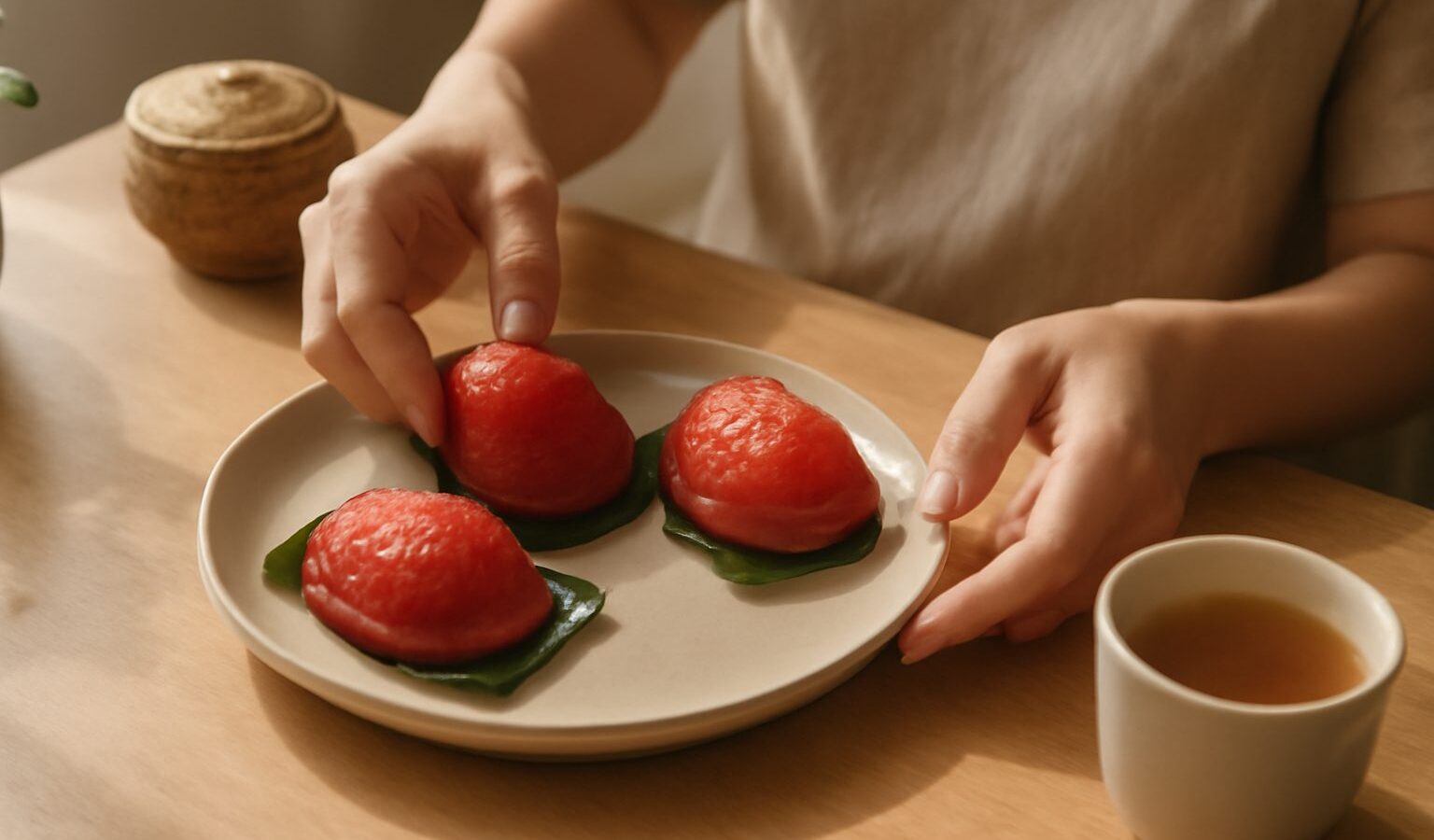
Glossy, domed and stamped with a tortoise shell, ang ku kueh is one of the most recognisable snacks in any Singapore kueh display. The name means “red tortoise cake” in Hokkien, and each little parcel wraps a soft, chewy glutinous skin around a sweet or savoury filling. It turns up at full-month celebrations, temple offerings, birthdays and ordinary weekday tea breaks alike. This guide walks through what ang ku kueh is, how it is made, what the colours and shapes signify, and how to choose, keep and enjoy it well.
What Ang Ku Kueh Actually Is
At its heart, ang ku kueh is a steamed dumpling. The outer skin is made from glutinous rice flour, often blended with a little sweet potato or ordinary wheat starch to soften the bite, then coloured and pressed into a wooden mould carved with a tortoise motif. Inside sits a firm, smooth filling that is rolled into a ball before the skin is wrapped around it.
The tortoise is the point. In Chinese tradition the tortoise stands for longevity, and red is the colour of luck and celebration, so a red tortoise kueh is essentially an edible good-luck charm. That is why it appears at a baby’s full-month party, at a grandparent’s birthday, and on ancestral altars during prayers. The kueh is usually steamed on a small square of banana leaf, which stops it sticking and lends a faint grassy fragrance.
A well-made piece has a skin that is tender and slightly stretchy without being gummy, a filling that is sweet but not cloying, and a clean release from the leaf. When the balance is right, the first bite gives a gentle chew, then a soft, fragrant centre.
The Skin, The Filling And The Mould
Three elements decide whether a piece of ang ku kueh is memorable: the skin, the filling and the imprint.
The skin should be thin enough to show the shape of the mould yet strong enough to hold together. Makers work the dough while warm, tint it, and often brush the finished kueh with a light film of oil so it glistens. That sheen is partly for looks and partly to keep the surface from drying out.
The filling is where stalls show their personality. Classic versions lean on smooth, sweetened mung bean paste, though many other fillings have become just as common:
- Mung bean: the traditional standard, mild, buttery and sweet.
- Peanut: ground roasted peanuts with sugar, fragrant and slightly coarse.
- Red bean: deeper and earthier than mung bean.
- Salted savoury: a mix built around cooked glutinous rice, dried shrimp and seasonings for those who prefer something not sweet.
- Coconut: shredded coconut cooked with gula melaka for a darker, caramel note.
The mould gives the kueh its identity. Traditional versions are hand carved from wood, and the depth and detail of the carving show up in the finished imprint. A crisp, clean tortoise pattern is a small sign of care.
Colours, Shapes And What They Mean
Red is the default, but ang ku kueh comes in a small rainbow, and the variations carry meaning as much as flavour.
- Red is the everyday celebratory colour, used for birthdays, festivals and prayers.
- Yellow or gold often signals a richer or premium filling and reads as prosperous.
- Green frequently points to a pandan-scented skin or filling.
- A peach or ang ku “tortoise egg” shape, rounded rather than domed, sometimes marks a baby’s full-month gift, especially for a newborn.
You may also notice size differences. Larger pieces are common for offerings and gifting, while smaller, bite-sized ones suit tea time and snacking. None of this is fixed law across every stall, so treat colour as a friendly hint rather than a strict code, and ask the stallholder if you want a particular filling.
Where To Find Good Ang Ku Kueh In Singapore
Ang ku kueh is a heartland staple, so you rarely have to look far. The most reliable hunting grounds are the traditional kueh stalls tucked into wet markets and older hawker centres, where a single vendor may lay out a dozen kinds of Nyonya and Teochew kueh side by side. Neighbourhood bakeries and dedicated kueh shops in the housing estates are another dependable option, and some carry both sweet and savoury versions.
For gifting or celebrations, specialist kueh makers and confectioneries take orders for larger quantities and can prepare the peach-shaped or coloured pieces used for full-month parties. Because small stalls open, close and change hands often, it is worth checking current opening days and calling ahead for big orders rather than relying on old information.
When you are choosing, a few simple cues help:
- Look for a glossy, unbroken skin with a clear tortoise imprint.
- Ask which fillings were made that morning; freshly steamed kueh has the best texture.
- Give the leaf a gentle look; a clean, green banana leaf suggests recent preparation.
How To Choose, Store And Enjoy
Ang ku kueh is best on the day it is made, when the skin is at its softest. It does not keep like a biscuit, so buy what you will eat within a day or two and store the rest properly.
| Situation | What to do | Why it works |
|---|---|---|
| Eating same day | Keep at room temperature, loosely covered | Skin stays soft and chewy |
| Keeping 1 to 2 days | Refrigerate in a sealed container | Slows spoilage of the filling |
| Skin has hardened | Steam for a few minutes until soft | Reheats the glutinous skin gently |
| Longer storage | Freeze, then steam from frozen | Preserves texture better than chilling |
Avoid the microwave if you can; it tends to make the skin tough or rubbery, whereas a short steam brings it back close to fresh. Peel the banana leaf away just before eating so the base does not dry out.
To enjoy it at its best, eat ang ku kueh slightly warm with a pot of plain Chinese tea, which cuts the sweetness and complements the chew. A savoury piece pairs nicely with a black coffee or kopi o. If you are new to it, start with the classic mung bean version to understand the baseline, then branch out into peanut, coconut or the salted savoury style. A note on allergens: many fillings contain peanuts or are made near them, so ask if you need to avoid nuts.
Ang ku kueh rewards a little curiosity. Once you learn to read the colours, spot a well-pressed shell and time your purchase to a fresh batch, this humble red tortoise becomes one of the most satisfying traditional snacks Singapore has to offer.
Explore more
If you enjoy traditional steamed kueh, read our soon kueh and png kueh guide for the savoury and glutinous side of the kueh table. For sweeter classics, our ondeh ondeh and kueh dadar guide and our or nee yam paste dessert guide round out a proper local tea break.