
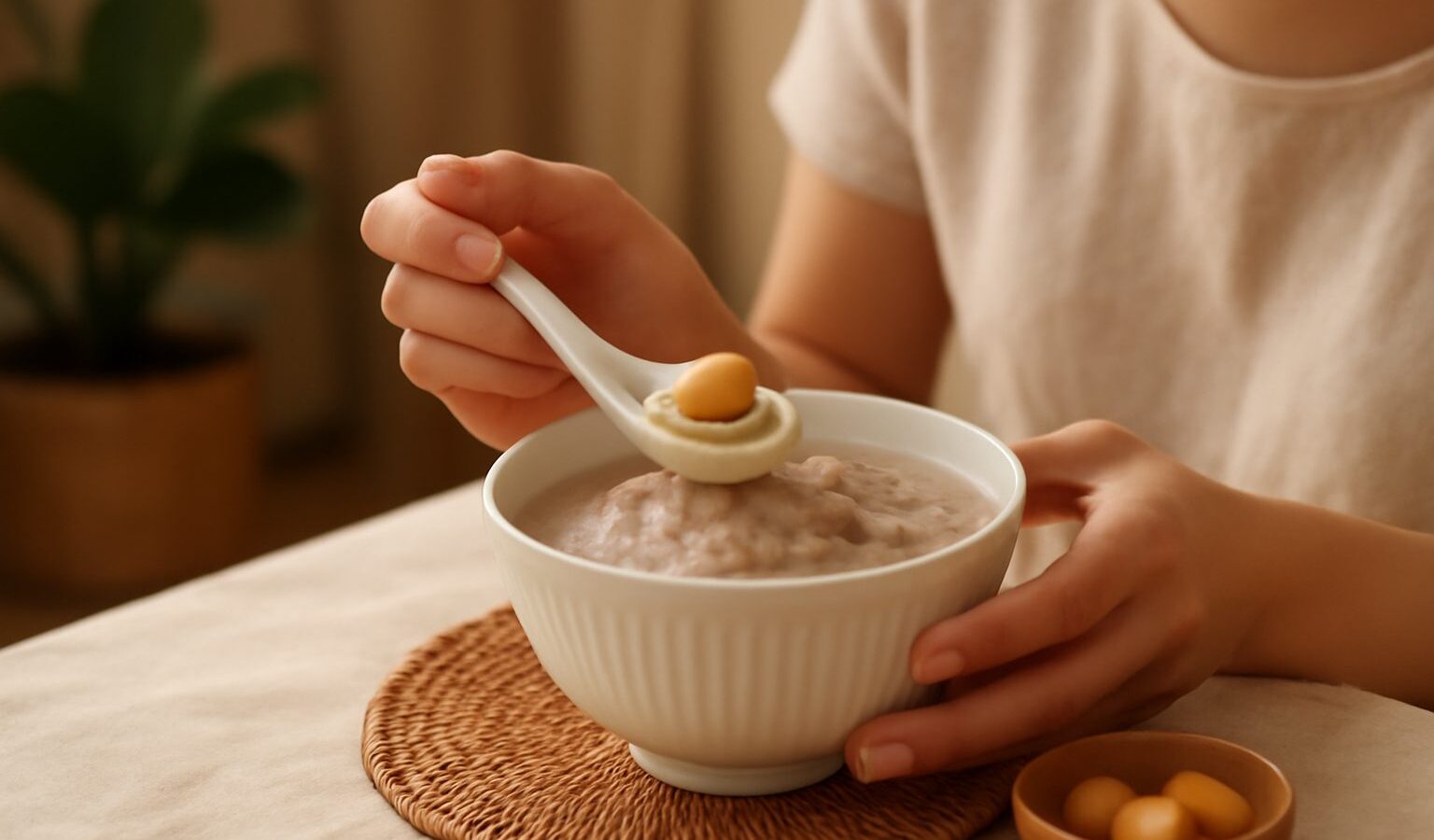
At the close of a good Teochew banquet, when everyone swears they cannot eat another bite, a bowl of glossy purple-grey paste appears and somehow disappears just as fast. That is or nee, the yam paste dessert that is arguably the finest sweet in the Teochew repertoire and one of the most soul-warming things you can eat in Singapore. Smooth, rich and warm, an or nee dessert is comfort in a bowl, the sort of dish that regulars will travel across the island for. This guide explains what or nee is, why it is so laborious to make well, how to tell a good bowl from a mediocre one, and where the curious eater can find it.
What Or Nee Is
Or nee, also spelled orh nee, means “yam paste” in Teochew. At its simplest it is steamed and mashed yam (taro) that has been cooked down with sugar and fat into a dense, silky paste, then served warm. Do not confuse the yam here with the sweet potato that some English speakers call a yam; this is taro, the pale purple-flecked tuber, and it gives the dessert its distinctive earthy, nutty sweetness and its soft lilac-grey colour.
A classic or nee is more than just mashed yam, though. It is traditionally enriched with shallot oil or lard, which is what gives a great version its remarkable glossy sheen and melting mouthfeel. It is then finished with a few classic toppings, most famously a scattering of gingko nuts and a spoonful of sweetened mashed pumpkin or a pool of coconut cream. The contrast of the smooth yam against the slightly chewy gingko and the bright pumpkin is central to the dish’s charm.
Because it is rich and warm, or nee is almost always served in small portions at the very end of a meal. It is a finale, not a snack.
Why a Good Or Nee Is So Hard to Make
Or nee has a reputation as one of the more demanding desserts to make properly, and that reputation is earned. The yam has to be steamed until fully tender, then mashed and pushed through a sieve or worked until it is completely smooth, with no fibrous lumps. It is then cooked patiently over gentle heat with sugar and fat, stirred almost constantly so it does not catch and burn. This slow cooking is what develops the silky, almost pudding-like texture that defines a great bowl.
Getting the balance right is a real skill:
- Too little fat or sugar and the paste turns stodgy and dull.
- Too much and it becomes cloying and heavy.
- Undercook the yam and you get a grainy, gluey texture.
- Rush the stirring and it scorches, leaving a bitter note.
This is precisely why or nee is more of a special-occasion dessert than an everyday one. It is labour-intensive, which is why you see it done best at Teochew restaurants and banquets rather than as a quick hawker sweet, though good hawker and dessert-stall versions certainly exist for those who know where to look.
A note for those watching their diet or with allergies: traditional or nee is often made with lard and can be very rich, and toppings like gingko and coconut are common. This is general information rather than dietary advice, so if you have specific needs, ask how a particular version is made.
How to Tell a Great Bowl From a So-So One
Once you have tasted a few, the differences become obvious. Use these cues to judge an or nee dessert:
- Texture. The paste should be exceptionally smooth and almost pourable when hot, with no grittiness or fibrous strands. This is the single biggest marker of skill.
- Sheen. A good or nee glistens. That glossy surface signals proper enrichment and careful cooking.
- Warmth. It should arrive genuinely warm, which is when the texture is at its most luxurious. A cold, set bowl has lost its magic.
- Balance of sweetness. It should be sweet but not sickly, with the earthy taro flavour still coming through.
- The toppings. Plump gingko nuts and a well-made pumpkin or coconut element show the kitchen cares about the whole bowl, not just the paste.
If the version in front of you is smooth, glossy, warm and not too sweet, you are in good hands.
Or Nee Compared With Other Warm Local Desserts
Or nee sits within a small family of warm, comforting local desserts, but it stands apart in richness and technique. The table below helps place it against a couple of other warm bowls you might meet on the same menu.
| Dessert | Main ingredient | Texture | Served |
|---|---|---|---|
| Or nee (yam paste) | Taro (yam) | Dense, silky, glossy | Warm, in small portions |
| Tau suan | Split mung beans | Thick, brothy with beans | Warm, often with you tiao |
| Pulut hitam | Black glutinous rice | Porridge-like with coconut | Warm or cold |
The takeaway is that or nee is the richest and most refined of the three. Where tau suan and pulut hitam are homely, everyday sweet soups, or nee is a smoother, more indulgent finish that feels like a treat.
Where to Find Or Nee in Singapore
The most dependable place to eat or nee is a proper Teochew restaurant, where it is a classic end to a multi-course meal and the kitchen has the skill and patience the dish demands. If you are ordering a Teochew banquet or set menu, look for it among the desserts and make sure to save room.
Beyond restaurants, or nee turns up in a few other settings around Singapore:
- Dedicated dessert stalls in hawker centres and coffeeshops, some of which specialise in traditional Teochew and Cantonese sweets.
- Older heartland eateries with a long-standing Teochew following.
- The occasional modern dessert cafe reinventing the classic in individual portions.
When you find a spot that does it well, it is worth returning to, because a reliably good or nee is not as common as you might hope. As always with eateries, stalls open, close and change their menus, and prices and hours shift, so check current details before making a special trip. If a place is known for its or nee, it may sell out, so going earlier in the evening is wise.
Or nee is one of those desserts that rewards patience, both from the cook who makes it and the eater who saves room for it. Order it warm at the end of a Teochew meal, take the first glossy spoonful slowly, and you will understand why generations have treasured this humble bowl of yam.
Explore more
Hungry for more heritage sweets and savoury bites? Pair this with our thunder tea rice (lei cha) guide for a green Hakka classic, then explore our ondeh ondeh and kueh dadar guide and putu piring guide for more traditional treats to track down across the island.