
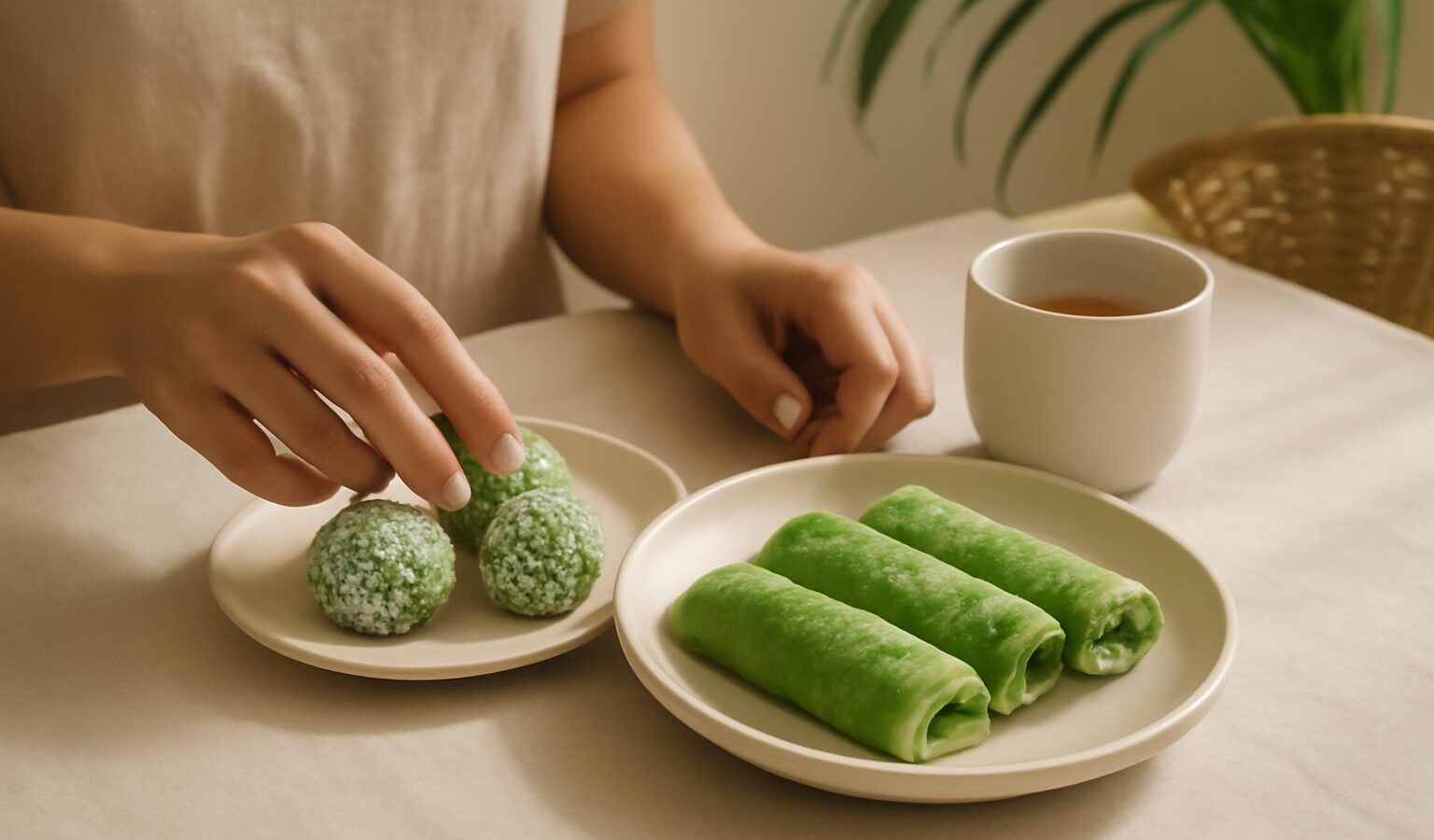
Two of Singapore’s most beloved green snacks share the same soul: pandan, coconut and a hit of dark palm sugar. Ondeh ondeh is the little ball that bursts with warm gula melaka the moment you bite it, while kueh dadar is the soft pandan crepe wrapped around sweet coconut. Both belong to the wider family of Nyonya and Malay kueh, both are naturally fragrant and colourful, and both are easy to love. This ondeh ondeh and kueh dadar guide explains what each one is, how they differ, and how to enjoy them at their best.
What Ondeh Ondeh Is
Ondeh ondeh, sometimes spelled onde onde, is a small round dumpling made from glutinous rice flour that is coloured and scented green with pandan. Each ball is filled with chopped gula melaka, then boiled until it floats and rolled in freshly grated coconut. The result is a bite sized snack with a chewy, springy skin, a savoury coconut coat, and a molten palm sugar centre that gives a little burst when you bite through.
The joy of ondeh ondeh is timing that burst. A well made piece holds its syrup until it reaches your mouth, so the safest way to eat one is whole, in a single bite, or you risk the gula melaka running down your chin. It is usually served at room temperature, which makes it a great snack to dabao and share.
Traditional versions lean on pandan for both colour and aroma, giving that grassy, faintly vanilla like fragrance. You may also see sweet potato worked into the dough for a softer texture, and some modern stalls tint the dumplings blue with butterfly pea flower for contrast against the white coconut.
What Kueh Dadar Is
Kueh dadar, also known as kuih ketayap, is a thin pandan crepe rolled around a filling of grated coconut cooked in gula melaka. The crepe is soft and pliable, stained green from pandan, and the filling inside is dark, moist and lightly sweet, sometimes called inti. Each roll is neat and cylindrical, cool to eat, and generous with that coconut and palm sugar mixture.
Where ondeh ondeh is about the burst, kueh dadar is about the fold. The pleasure is in the contrast between the tender wrapper and the rich, chewy coconut inside. Because the sweetness is spread through the filling rather than concentrated in a centre, it feels a touch gentler and is easy to eat in slices.
Both snacks show off the Nyonya kitchen’s love of pandan and gula melaka, which is why they so often sit side by side at the same counter, two green treats built from the same handful of ingredients. The pandan itself is worth a mention: real leaves, blended and squeezed for their juice, give a far deeper aroma and a more natural green than a bottle of essence ever can, and experienced makers can tell the difference at a sniff.
How They Differ
At a glance both are green and coconut rich, so it helps to know exactly what sets them apart before you order. The table below compares the two head to head.
| Feature | Ondeh Ondeh | Kueh Dadar |
|---|---|---|
| Form | Small round ball | Rolled pandan crepe |
| Base | Glutinous rice flour dough | Thin flour and pandan batter |
| Filling | Whole gula melaka that bursts | Coconut cooked in gula melaka |
| Coconut | Rolled on the outside | Wrapped on the inside |
| How to eat | Whole, in one bite | In slices or a few bites |
| Serving temperature | Room temperature | Room temperature |
The simplest way to keep them straight: ondeh ondeh is the ball that bursts, kueh dadar is the crepe that unrolls. Once you have tried both, the difference in texture is unmistakable, even though the flavours rhyme.
Where to Find Them in Singapore
These are classic kueh, so the best hunting grounds are the places that specialise in traditional cakes.
- Nyonya and Malay kueh stalls at hawker centres and wet markets, which usually carry both alongside other steamed and boiled cakes.
- Heartland dessert stalls and old school confectioneries, where trays are made fresh each morning and sell out by afternoon.
- Kueh specialists and small bakeries that focus on Peranakan sweets, often with a wider range of fillings and colours.
- Festive bazaars and pasar malam stalls, where you can watch ondeh ondeh being rolled and boiled to order.
Signs of quality are worth knowing. For ondeh ondeh, look for a generous, runny gula melaka centre, a chewy but not tough skin, and coconut that tastes fresh rather than sour. For kueh dadar, look for a soft, evenly green crepe that does not crack, and a moist, dark filling that is fragrant with palm sugar. Because coconut spoils quickly in our climate, freshness matters most, so buy from stalls with high turnover and eat on the day. Stalls open, close and move often, so check current locations before a special trip.
How to Enjoy Them at Their Best
A few small habits make these snacks even better.
- Eat ondeh ondeh whole so the gula melaka bursts in your mouth rather than on your shirt.
- Enjoy both on the day you buy them, while the coconut is fresh and the textures are at their peak.
- If you must keep them, store in a cool spot and eat within a few hours rather than chilling them hard, which can toughen the dough.
- Pair them with kopi o or teh, whose slight bitterness balances the sweet coconut and palm sugar beautifully.
A gentle note on enjoyment: both snacks are built on coconut, which is a common allergen, and stalls often handle nuts, gluten and soy nearby, so ask the vendor and check for cross contact if you have allergies or specific dietary needs. Otherwise, these are two of the friendliest introductions to local kueh you can find, humble, fragrant and quietly addictive.
Explore more
If you enjoy soft, coconut rich local sweets, read our putu piring guide and our ang ku kueh guide. For another gula melaka classic worth queueing for, see our or nee yam paste dessert guide.