
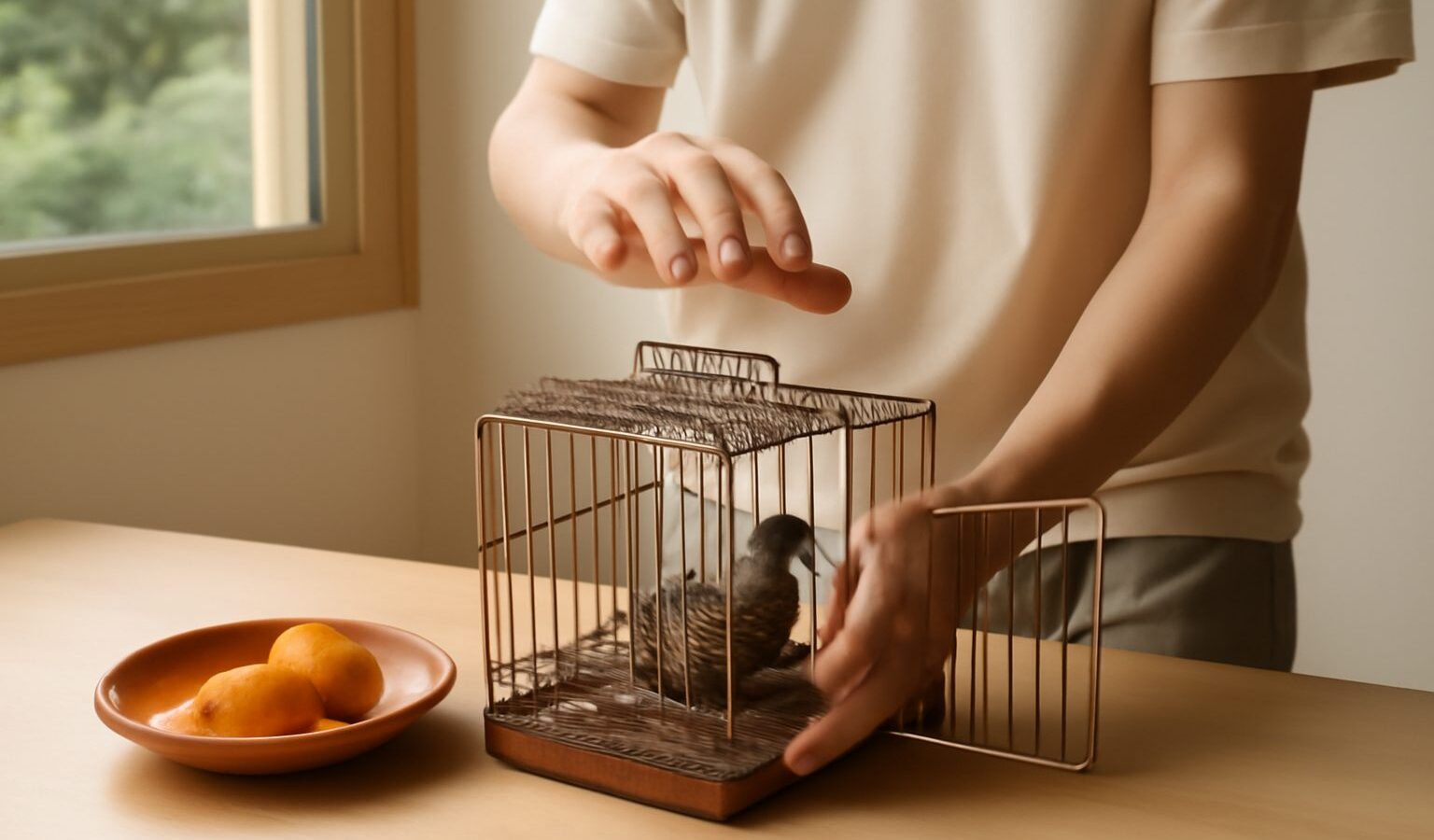
For many people, Vesak is a time for compassion, generosity and merit-making. One traditional way some devotees have expressed this is by releasing captive animals, such as birds, fish or turtles, back into the wild. The intention is kind. In practice, though, animal release on Vesak Day and at other times often causes suffering and damages Singapore’s natural environment.
This guide explains why authorities, conservation groups and many Buddhist organisations in Singapore now discourage the practice, what the rules broadly say, and how you can express the same compassion in ways that genuinely help.
Where the Practice Comes From
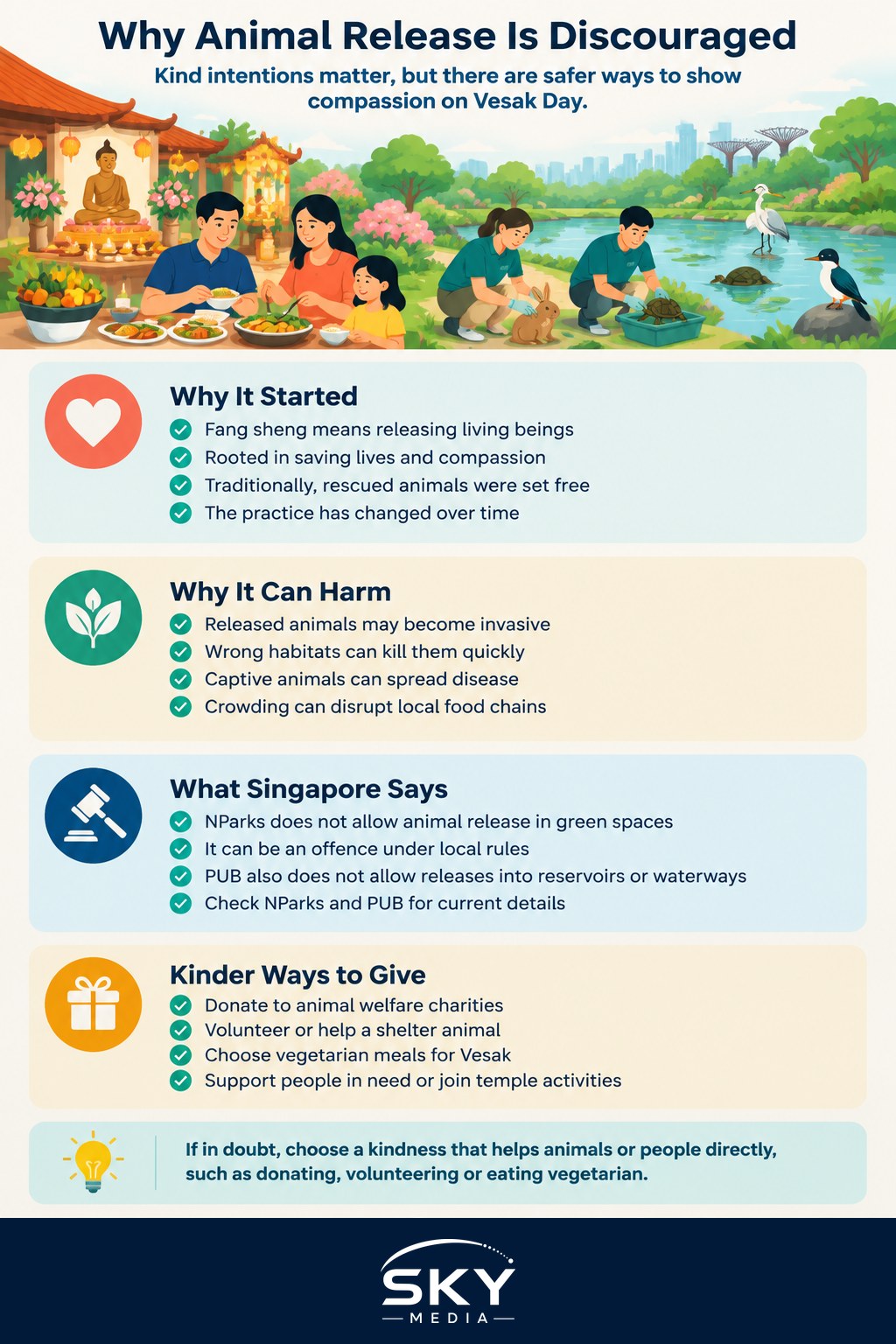
Releasing living beings, known in Chinese as fang sheng (放生), has a long history in several Buddhist cultures. It is rooted in the idea of saving lives and cultivating a compassionate heart. Traditionally, it meant rescuing an animal that was about to be killed, such as a fish bought from a market, and returning it to a suitable home.
Over time, in many places, the practice changed. Rather than rescuing animals already in danger, people began buying animals that were caught or bred specifically to be released. This created a cycle where demand for release fuels more capture, and many animals suffer before they are ever set free.
Many Buddhist teachers and organisations in Singapore have spoken about this, encouraging devotees to focus on the spirit of compassion rather than the act of release itself. Practices and views vary between temples and families, but the shift towards alternatives has grown steadily.
The Ecological Problems With Releasing Animals
Singapore is small, densely built and home to fragile habitats such as freshwater swamp forest, mangroves and reservoirs. Introducing animals that do not belong there can do real harm.
- Invasive species. Popular release animals, such as the red-eared slider turtle, are not native to Singapore. They compete with native species for food and space, and can now be found in many local waterways.
- Wrong habitat. Freshwater fish released into the sea, or marine creatures released into ponds, usually die quickly. Even fish released into the right type of water may not survive if they were raised in tanks.
- Disease. Captive animals can carry parasites and diseases that spread to wild populations.
- Disrupted food chains. Large numbers of released fish or birds in one spot can strip local food sources and attract predators.
The Welfare Problems for the Animals Themselves
Even where release does not damage the environment, it is often hard on the animals:
- Capture and transport stress. Birds sold for release are often trapped in the wild, packed tightly into cages and handled roughly. Many die before release day.
- Poor survival skills. Animals bred or kept in captivity may not know how to find food, shelter or avoid predators.
- Recapture. In some places, released birds are caught again and resold, so the same animals go through the cycle repeatedly.
- Dumped pets. Some people treat Vesak as a reason to release unwanted pets such as rabbits, hamsters, terrapins or fish. Domesticated pets rarely survive outdoors and can suffer badly.
What the Rules Say in Singapore
The National Parks Board (NParks) has made clear that releasing animals into parks, nature reserves and other green spaces is not allowed, and that doing so can be an offence. Rules on wildlife, parks and pets are set out in legislation that NParks and its Animal and Veterinary Service (AVS) enforce, and penalties can apply. Releasing animals into reservoirs and waterways managed by PUB, Singapore’s national water agency, is also not permitted.
This is general information, not legal advice. The exact laws, penalties and the places they cover can change, so check the current details on the NParks and PUB websites. If you have a pet you can no longer keep, contact AVS or an animal welfare group for rehoming advice rather than releasing it.
Animal Release vs Kinder Alternatives
If your goal is to make merit, show compassion or mark Vesak meaningfully, there are better options that achieve the same spirit without the harm.
| Approach | What actually happens | Better alternative |
|---|---|---|
| Buying caged birds to release | Fuels wild capture; many birds die in transit | Donate to a wildlife rescue or rehabilitation group |
| Releasing turtles or fish into ponds | Introduces invasive species; many animals die | Volunteer for a habitat clean-up or citizen science walk |
| Releasing an unwanted pet | Pet is likely to suffer or die outdoors | Contact AVS or a shelter about responsible rehoming |
| Releasing live seafood bought at a market | Often wrong habitat or water type | Choose vegetarian meals for the day instead |
Better Ways to Make Merit on Vesak
Many temples in Singapore promote acts of giving and kindness on Vesak. Some meaningful ways to honour the day include:
- Support animal welfare work. Donate to a registered animal welfare charity, sponsor a shelter animal’s care, or give your time. Our guide to volunteering at an animal shelter explains how to get started.
- Help animals already in need. Learn what to do if you find a stray or injured animal, so you can act if you come across one.
- Eat vegetarian. Choosing plant-based meals for the day, or the whole Vesak week, is a long-standing way of expressing compassion for all beings.
- Give blood. Blood donation drives are a common feature of Vesak in Singapore. Check eligibility and session details with the Health Sciences Authority.
- Donate to people in need. Food banks, eldercare groups and community charities welcome support. Look for registered charities on the Charity Portal.
- Adopt, do not shop. If your family is ready for a pet, consider adopting from a shelter. It is a lifelong commitment, so plan carefully.
- Join a temple activity. Many temples run charity drives, food distribution or community volunteering around Vesak.
Talking About It With Family
You may have older relatives who grew up releasing animals and see it as a cherished custom. Approaching the topic gently helps:
- Acknowledge the good intention behind the practice.
- Share that many Buddhist organisations themselves now encourage alternatives.
- Suggest doing something together instead, such as a vegetarian family meal or a donation made in the family’s name.
- Keep the tone respectful. Practices vary between families and traditions, and the aim is shared compassion, not winning an argument.
For more background on the festival itself, see Vesak Day in Singapore, Explained or our newcomer’s guide to Thaipusam and Vesak Day.
Key Points to Remember
- The spirit of animal release on Vesak Day is compassion, and that spirit can be expressed in many other ways.
- Released animals often suffer, die or become invasive species that harm native wildlife.
- Releasing animals into parks, nature reserves and reservoirs is not allowed in Singapore. Check NParks and PUB for current rules.
- Donating, volunteering, eating vegetarian and helping animals already in need are kinder, more lasting ways to make merit.
Frequently Asked Questions
Does Buddhism actually require releasing animals? Not in the form it is often practised today. The core idea is compassion and saving lives, and many Buddhist teachers stress that buying animals to free them can cause more captures. Views differ between temples and families, so a local monastic or teacher is the best person to ask.
What happens if someone is caught releasing animals into a park or reservoir? They could face enforcement action, because releasing animals in parks, nature reserves and waterways is not permitted. The penalties depend on the law that applies and can change, so look up the current position on the NParks and PUB websites rather than relying on a figure from memory.
Is buying live fish at the market to save them a good deed? It sounds compassionate, but every purchase tells sellers there is demand for more live animals. If you want to help, consider eating vegetarian, giving to a registered animal welfare charity or supporting rescue work instead. Those choices help animals without encouraging more capture.
Who should I contact if I see people dumping animals at a pond? Report it to NParks or its Animal and Veterinary Service, which oversee wildlife and animal rules, and PUB if it is a reservoir or waterway. Note the place and time, and keep your distance. Do not try to catch the animals yourself.
Further reading: Observing the Eight Precepts on Vesak Day in Singapore · Understanding Invasive Species