

Itchy, flaky skin between the toes, a stinging sensation after a sweaty day in covered shoes, or peeling on the soles are all very familiar complaints in our climate. Athlete’s foot in Singapore is extremely common, and no, you do not need to be an athlete to get it. Our warm, humid weather is close to ideal for the fungi that cause it. This article is general information to help you understand and manage the problem. It is not medical advice, and it is not a way to diagnose yourself.
What athlete’s foot is
Athlete’s foot is a fungal infection of the skin on the feet. The fungi responsible thrive in warm, moist, enclosed places, which is exactly what a foot inside a sock and a covered shoe on a hot Singapore day provides. It is part of a broader family of fungal skin infections that can also affect the groin, body, and nails.
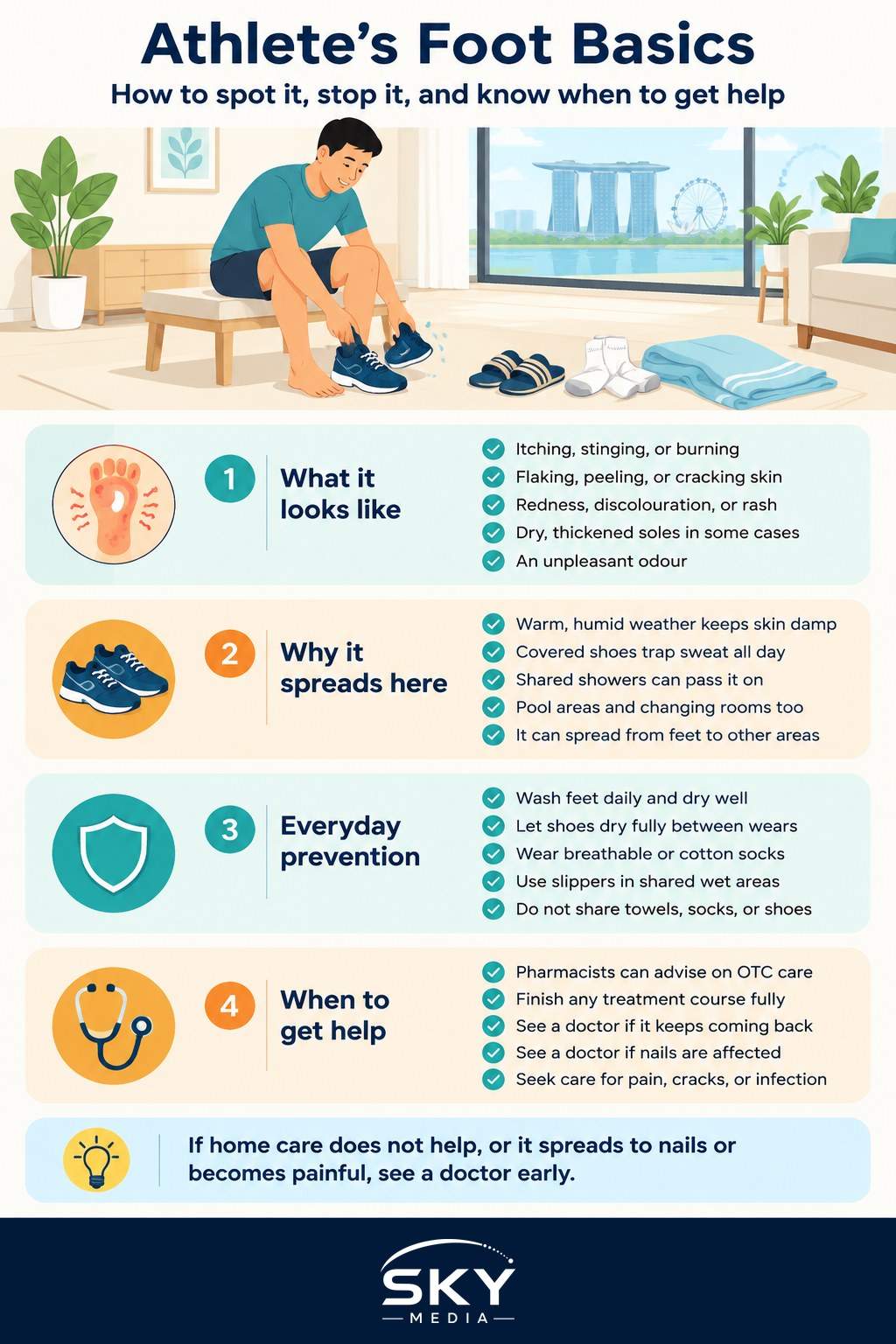
Typical signs include:
- Itching, stinging, or burning, often worst between the toes
- Flaking, peeling, or cracking skin
- Redness or discolouration and, sometimes, a scaly rash
- Dry, thickened skin on the soles in some cases
- An unpleasant odour
It is mildly contagious and spreads easily in shared damp spaces such as swimming pool surrounds, gym showers, and changing rooms, as well as via shared towels or footwear. The fungus can also spread from the feet to other parts of the body, so treating it and preventing spread go hand in hand.
Why Singapore is a hotspot
The reasons athlete’s foot is so common here are simply the conditions of daily life. Heat and humidity keep skin damp. Covered shoes and socks worn for long commutes and office hours trap sweat. Frequent use of shared facilities like ActiveSG pools and gym showers offers plenty of opportunity to pick it up. And feet that stay sweaty inside footwear all day rarely get the chance to dry out.
The upside is that once you understand the pattern, prevention becomes fairly logical. It is largely about keeping feet clean, dry, and airy. For broader foot care beyond fungal problems, our guide to looking after your feet is a good companion read.
Gentle self-care and prevention
Mild athlete’s foot often responds well to careful home care and good habits. None of the following involves specific medicine names or doses, which are best discussed with a pharmacist or doctor.
Keep feet clean and dry. Wash daily and, crucially, dry thoroughly, especially between the toes. Fungi love the moisture that gets missed there.
Air your feet out. Wear open footwear like sandals when you can, and let shoes fully dry between wears. Rotating between two pairs helps them dry out properly.
Choose breathable socks. Moisture-wicking or cotton socks, changed when damp, keep feet drier through a sweaty day.
Protect your feet in shared spaces. Wear slippers or flip-flops in public showers, changing rooms, and around pools.
Do not share. Keep towels, socks, and shoes to yourself to avoid passing the fungus around the household.
Treat shoes and socks. Wash socks in hot water where suitable, and keep footwear dry and aired.
A pharmacist is an excellent first stop for athlete’s foot. They can recommend suitable over-the-counter products and explain how to use them safely, without needing a doctor’s appointment for a straightforward case. Do finish any recommended course fully rather than stopping the moment the itch settles, as the infection can return if not fully cleared.
Because fungal infections and other skin conditions can look alike, it helps to be aware that not every itchy patch is athlete’s foot. Conditions such as eczema or psoriasis can cause similar-looking skin trouble on the feet. Our guides to managing eczema in adults and psoriasis explained give a sense of the differences, though only a professional can tell you which you actually have.
When to see a doctor
See a doctor if athlete’s foot does not improve with pharmacy care, keeps coming back, is severe, or spreads to your nails, which can become thickened and discoloured and are notoriously stubborn to clear. Also see a doctor if the skin becomes very cracked, painful, or shows signs of a secondary bacterial infection such as increasing redness, warmth, swelling, pus, or weeping, or if you feel unwell with it.
People with diabetes, poor circulation, or a weakened immune system should be especially careful and see a doctor early for any foot infection, since foot problems can become more serious for them. If you have diabetes, our guide to managing diabetes in Singapore covers why foot care matters so much. For any severe reaction, spreading infection with fever, or feeling very unwell, seek prompt medical care, and call 995 or go to A&E in an emergency.
To wrap up, athlete’s foot is common, usually mild, and very manageable, and our climate simply makes it more likely. Keep feet clean, dry, and aired, protect them in shared spaces, and lean on your pharmacist for over-the-counter help. See a doctor when it is stubborn, severe, spreading to the nails, or if you have a condition that makes foot infections riskier. A little daily care goes a long way to keeping your feet comfortable.
Frequently Asked Questions
How long does athlete’s foot take to clear up? It varies, and mild cases often improve within a few weeks of consistent care, while stubborn ones take longer. Finish any course your pharmacist recommends even when the itch fades. If it is not improving, see a doctor.
Can athlete’s foot spread to my nails or other body parts? Yes, the fungus can spread to the nails, groin and other areas, and nail infections are notoriously stubborn. Treating the feet promptly, keeping them dry and not sharing towels lowers the risk. Persistent nail changes are worth showing a doctor.
Is it okay to go to the gym or swim with athlete’s foot? You can, but wear slippers in showers and changing rooms and dry your feet well, since the fungus spreads in damp shared spaces. Keep your towel and footwear to yourself. Treating it early also protects other people.
Do I need to throw away my shoes and socks? Not usually. Wash socks in hot water where suitable, and let shoes dry fully between wears, rotating between two pairs. If shoes stay damp inside, the fungus can linger. Keeping footwear aired matters more than replacing it.
Why does my athlete’s foot keep coming back? Reinfection from damp shoes, sweaty socks or shared floors is common, particularly in our humidity. If feet are not fully dried between the toes or the course was stopped early, it can return. A doctor can check for something else.
Official sources: HealthHub
Further reading: Impetigo and Childhood Skin Infections