
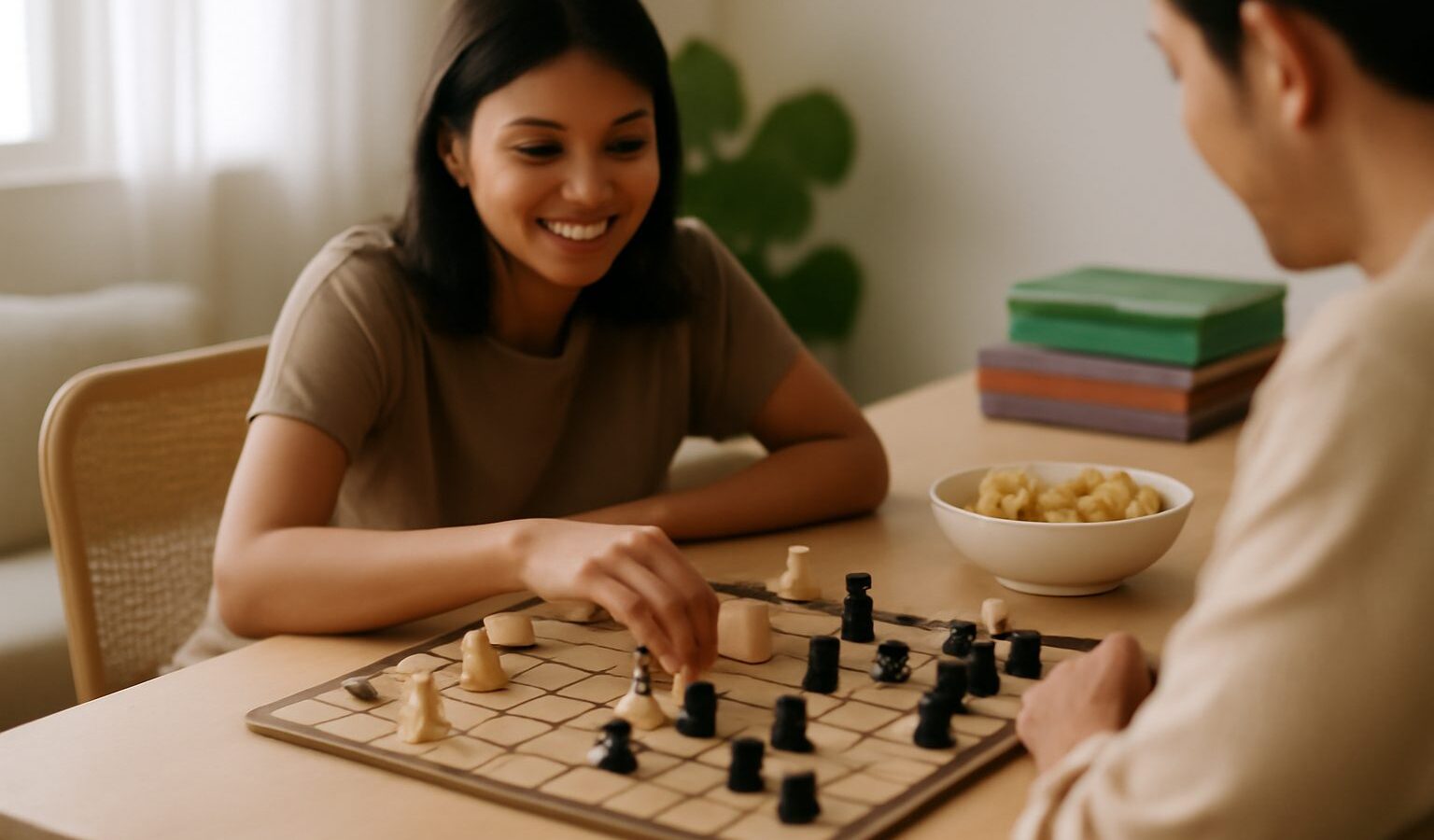
You have caught the tabletop bug, or maybe you just want a fun, screen-free night out. The good news is that you do not need to own a single game to get started. Board game cafes in Singapore, along with clubs, libraries and community groups, give you a whole shelf to try and a table to play at. This guide is a friendly map to the different places you can play, what each is like, and how to walk in as a total beginner without feeling lost.
Playing out is the best way to discover the hobby. You get to try dozens of games before buying any, learn the rules from people who already know them, and meet others who love the same thing. Whether you want a lively group or a quiet two-player evening, there is a spot that suits.
Board Game Cafes: The Easiest Place to Start
A board game cafe is exactly what it sounds like: a cafe with a large library of games you can borrow and play while you eat and drink. Most work on a simple model where you pay to play, sometimes as a flat fee, sometimes tied to food and drinks. Fees and menus vary from place to place and change over time, so check each venue’s current rates before you go.
What makes cafes so welcoming for beginners is the staff. Good venues have team members who can recommend a game for your group size and mood, then teach you the rules in a few minutes. You do not need to have read anything in advance.
- Huge variety. Try light party games, quick card games, or meaty strategy titles all in one evening.
- No commitment. Play a game once and never think about it again, or fall in love and buy your own copy later.
- Sociable by design. Tables, snacks and a relaxed pace make conversation easy.
- Rules help on tap. Staff can explain and get you started fast.
If you are nervous, go on a quieter weekday evening rather than a busy weekend, and tell the staff you are new. Being a beginner is completely normal, and most players are delighted to welcome someone fresh to the table.
Community Groups, Clubs and Meet-Ups
Beyond cafes, Singapore has a warm and active board gaming community. Regular meet-ups and clubs gather in cafes, community spaces and members’ homes to play together, often for free or the cost of your own food. These are wonderful once you have played a little and want to go deeper or find a regular crew.
You can find groups through hobby forums, social media groups, and event listings. Many organise around a theme: heavy strategy games, cooperative games, tabletop role-playing, or specific popular titles. Some run open sessions where anyone can turn up; others are smaller and more regular.
A few tips for joining a group for the first time:
- Read the group description so you know the vibe and skill level.
- Message the organiser and say you are new; they will point you to a beginner-friendly session.
- Arrive on time and be ready to learn or teach a game.
- Bring an open mind rather than a specific game you must play.
Clubs are also a great way to try games that are too long, too complex, or too expensive to justify buying, because someone in the group usually owns a copy and knows how to run it.
Libraries, Community Centres and Free Options
Playing board games does not have to cost anything. Public libraries sometimes host board game sessions or keep games for on-site play, and community centres and residents’ networks run casual game afternoons, especially for families and seniors. These are relaxed, all-ages spaces and a gentle way to start.
Schools, universities and workplaces often have their own board game clubs too. If you are a student or new to a workplace, ask around; there is a decent chance a group already exists. And of course, the cheapest venue of all is a friend’s dining table. Hosting your own night is often where the hobby really takes hold.
Matching the Venue to Your Group
Different places suit different moods and groups. Here is a rough comparison to help you choose. Costs vary by venue, so always check current details before you visit.
| Venue type | Best for | Cost | Good to know |
|---|---|---|---|
| Board game cafe | Beginners, trying many games | Usually a play fee plus food | Staff teach rules; book ahead on weekends |
| Community meet-up or club | Regular play, meeting people | Often free or your own food | Great for deeper or longer games |
| Library or community centre | Families, seniors, casual play | Often free | All-ages and relaxed |
| A friend’s home | Comfort and close friends | Just snacks | You choose the games and the pace |
Board Game Etiquette for Beginners
A little courtesy makes every table more fun, and it helps a nervous first-timer relax. None of this is complicated; most of it is common sense.
- Handle games with care. Cards, tokens and boards belong to the venue or the owner, so keep food and drink at a safe distance.
- Be patient while learning. Everyone was new once. Ask questions; a good teacher expects them.
- Play at a friendly pace. Think ahead on others’ turns so the game keeps moving.
- Be a gracious winner and loser. It is a game; the point is the shared time.
- Help pack up. Sorting pieces back into the box at the end is part of the deal.
Follow those and you will be invited back anywhere. The community here is genuinely welcoming, and turning up with a good attitude matters far more than being good at any particular game.
Making It a Regular Thing
The easiest way to keep the hobby alive is to build a small routine: a monthly cafe visit, a regular club night, or a rotating game night among friends. Mix venues to keep things fresh, and let your tastes guide you. If you love quick party games, lean into cafes and casual meet-ups; if you crave deep strategy, a dedicated club will serve you better.
Once you know which games you keep reaching for, you can start a small collection of your own and host at home. Until then, playing out is the smart, low-cost way to explore. Pick one spot near you, tell them you are new, and go and play. That first evening is usually all it takes.
Explore more
Ready to dive in? Start with our beginner’s guide to board games, then learn how to host a game night at home when you want to gather your own crew. For quieter evenings, browse our guide to solo board games and puzzles.