

Planning Banff from Singapore opens the door to some of the most spectacular mountain scenery on earth, a world of turquoise lakes, glaciers and jagged peaks in the heart of the Canadian Rockies. Set within a national park in the province of Alberta, Banff pairs postcard wilderness with a charming, easygoing town, so you can hike beneath towering summits by day and enjoy a hot meal and a soak in a hot spring by night. For Singaporeans craving fresh mountain air, big landscapes and genuine outdoors adventure, it is one of the great bucket-list destinations.
This guide covers why Banff and the Canadian Rockies are worth the journey, when to visit, the highlights you should not miss, how to get there and get around, and who the region suits best.
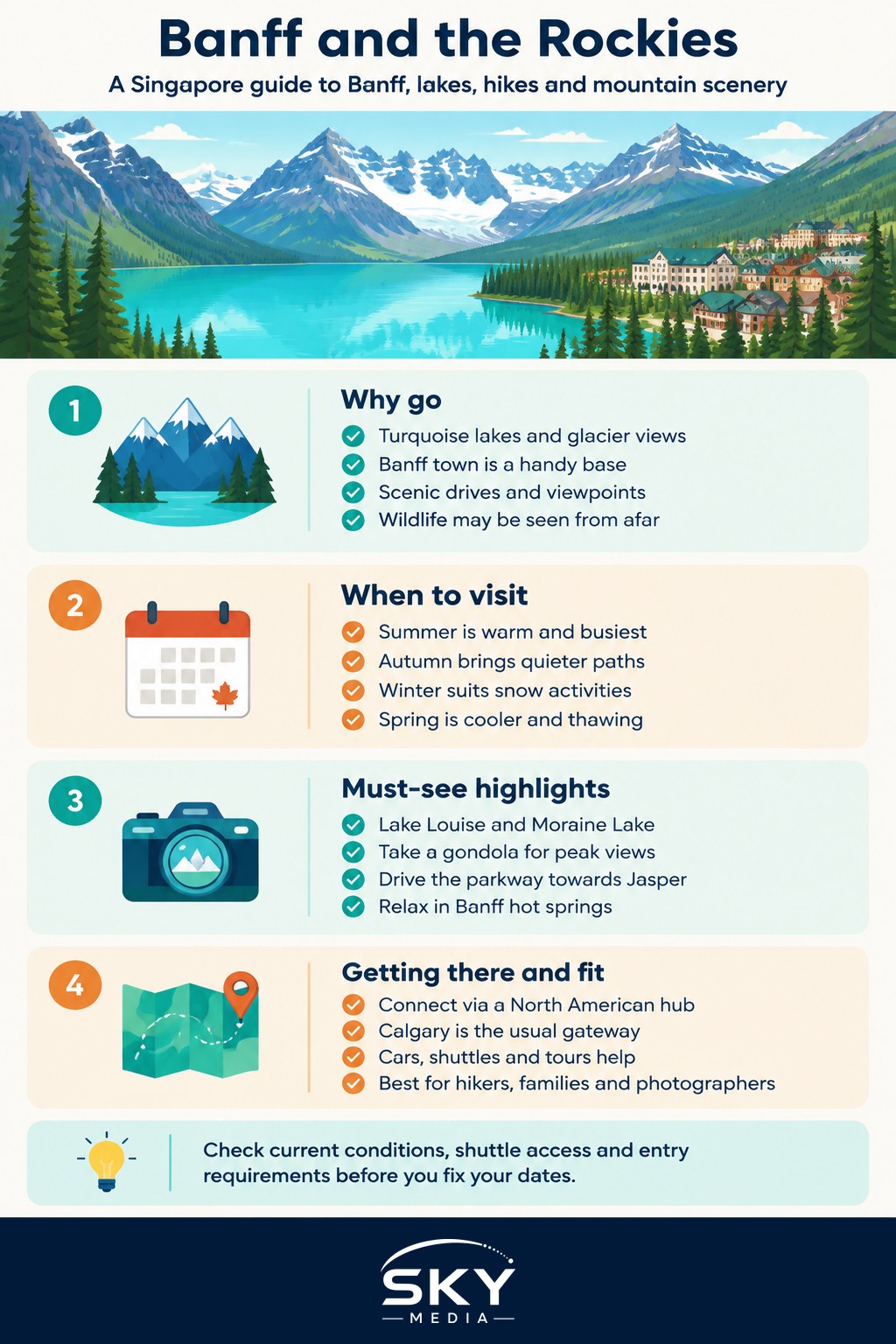
Why go to Banff and the Canadian Rockies
The scale and colour of the Canadian Rockies are hard to overstate. Glacier-fed lakes glow in impossible shades of turquoise and jade, framed by dark forests and snow-streaked peaks, and the light shifts through the day to keep the views constantly fresh. Lake Louise, with its iconic emerald water beneath a hanging glacier, and Moraine Lake, cradled in a valley of rugged summits, are among the most photographed scenes in the world, and they somehow still exceed expectations in person.
Banff town anchors it all, a compact and welcoming base with cafes, shops and easy access to trailheads, gondolas and hot springs. Nearby, a legendary mountain parkway threads north past waterfalls, glaciers and viewpoints towards Jasper, delivering one of the finest scenic drives anywhere. Wildlife is part of the appeal too, with the chance to spot elk, bighorn sheep, deer and, if you are lucky and cautious, bears in the distance.
What makes the region special is the balance of accessibility and true wilderness. You can ride a gondola to a summit view or set off on a demanding backcountry hike, and both leave you humbled by the mountains. It suits gentle sightseers and serious adventurers alike.
When to visit
The Canadian Rockies transform completely with the seasons, so decide what kind of trip you want first. Summer is peak season, with long days, accessible trails, boat rentals and the lakes at their most vivid, but it is also the busiest and most expensive time, and popular spots fill early. Late spring and early autumn offer thinner crowds and beautiful conditions, with autumn bringing golden larch trees to certain valleys.
Winter turns the region into a snow-covered wonderland for skiing, snowshoeing and frozen-lake scenery, though many high roads and trails close or require care, and the cold is serious. Here is a simple seasonal comparison to help you plan.
| Season | Conditions | What stands out | Crowds |
|---|---|---|---|
| Summer | Warm days, cool nights | Turquoise lakes, open trails, boating | Busy, peak |
| Autumn | Crisp, cooling | Golden larches, quieter paths | Moderate |
| Winter | Cold, snowy | Skiing, snowshoeing, frozen lakes | Varies |
| Spring | Cool, thawing | Fewer crowds, waterfalls in flow | Quieter |
Some iconic lakes only thaw to their famous colour later in the warm season and freeze again early, and access roads can be restricted, so check current conditions and opening information before you fix your dates.
Highlights not to miss
Lake Louise and Moraine Lake are the essential sights, best enjoyed early to beat both crowds and the harsher midday light. Access to Moraine Lake in particular is often managed, so plan ahead and use official shuttles or booked transport where required rather than assuming you can drive up. A gondola ride above Banff town rewards you with a panoramic sweep of surrounding peaks and easy ridge walks.
The scenic parkway towards Jasper is a highlight in itself, dotted with waterfalls, viewpoints and a famous glacier you can visit up close on guided outings. Around Banff, relax tired legs in the mountain hot springs, wander the town, and take an easy lakeside stroll or a tougher alpine hike to match your energy. Wherever you roam, follow Parks Canada rules, keep well back from all wildlife, never feed animals, and learn basic bear safety before you hike, carrying deterrents and making noise on the trail as advised. This is general guidance, and park authorities are the authority to follow on the ground.
How to get there and get around
There are no guaranteed direct flights from Singapore, and services change, so the reliable approach is to connect through a transpacific or major North American hub and continue to Calgary, the usual gateway, then travel on to Banff by road. Check current flights and connections close to your travel dates, and confirm entry requirements for Canada, including whether you need an electronic travel authorisation known as an eTA or a visa, through official Canadian channels and Singapore’s MFA travel advisories before you book.
From Calgary, the drive to Banff is straightforward and scenic, and many visitors hire a car for the freedom to explore the lakes and the parkway at their own pace, though winter driving in the mountains demands experience and the right vehicle. If you prefer not to drive, shuttles, coach tours and local transport link the airport, Banff, Lake Louise and major sights. Within the parks, use official shuttles for the busiest lakes, allow generous time for stops, and always carry warm layers, water and snacks, as mountain weather changes fast.
Who it suits and budget
Banff and the Canadian Rockies suit nature lovers, hikers, photographers and families who enjoy the outdoors, as well as honeymooners drawn to those dreamlike lake views. The region works well as a three to five night stay, long enough to see the marquee lakes, drive part of the parkway, ride a gondola and fit in hikes to suit your fitness. It also pairs naturally with a wider western Canada trip.
Budget is flexible, from campsites and hostels to grand mountain lodges, and peak summer pushes prices and demand high, so book ahead for that period. As always, avoid locking in fixed figures far in advance and check live prices when you plan. Bring layered clothing, sturdy footwear, sun protection and a sense of adventure, respect the wildlife and the wilderness, and Banff will reward you with memories that many Singaporean travellers rank among their finest.
Explore more
- Vancouver from Singapore
- Toronto from Singapore
- Queenstown from Singapore
- Long-Haul Flight Comfort Tips
Frequently Asked Questions
Do I need to rent a car to explore Banff and the Canadian Rockies? Not necessarily, but a car gives the most freedom. If you prefer not to drive, airport shuttles, coach tours and local transport connect Banff, Lake Louise and the main sights. Winter mountain driving needs experience and a suitable vehicle, so many visitors skip the car in the cold months.
Is Banff safe for bears and other wildlife? Banff is safe if you follow Parks Canada guidance. Keep well back from all wildlife, never feed animals, make noise on trails and learn basic bear safety before hiking. Carry deterrents as advised, and treat park authorities as the final word on conditions.
Why is it hard to get to Moraine Lake? Access to Moraine Lake is often managed because it is so popular. That usually means official shuttles or pre-booked transport rather than driving up yourself. Check the current arrangements on official park channels before your trip so you are not caught out.
What can I do in Banff in winter? Winter turns the region into a snowy playground for skiing, snowshoeing and admiring frozen lakes. Some high roads and trails close, and the cold is serious, so pack proper insulation. Check current road and trail conditions before heading out.
Do Singapore passport holders need an eTA or visa for Canada? Check this before booking, because entry rules for Canada are set by official Canadian authorities. Depending on your situation, you may need an electronic travel authorisation known as an eTA or a visa. Singapore’s MFA travel advisories are also worth a look.