
There is a particular kind of guilt that comes from opening the fridge on a Thursday night and finding a bag of vegetables gone soft and a half packet of tofu past its best. Batch cooking in Singapore is one of the simplest fixes for that everyday waste, and it does not need a huge kitchen or hours of free time. By cooking a few things ahead when you have the energy, you use up ingredients before they spoil, spend less on last minute food, and give yourself a gentler week.
This guide keeps things realistic for HDB and condo life, where freezer space and counter room are often tight, and where the tropical climate means food turns quickly if you are not careful.
Why Batch Cooking Cuts Waste
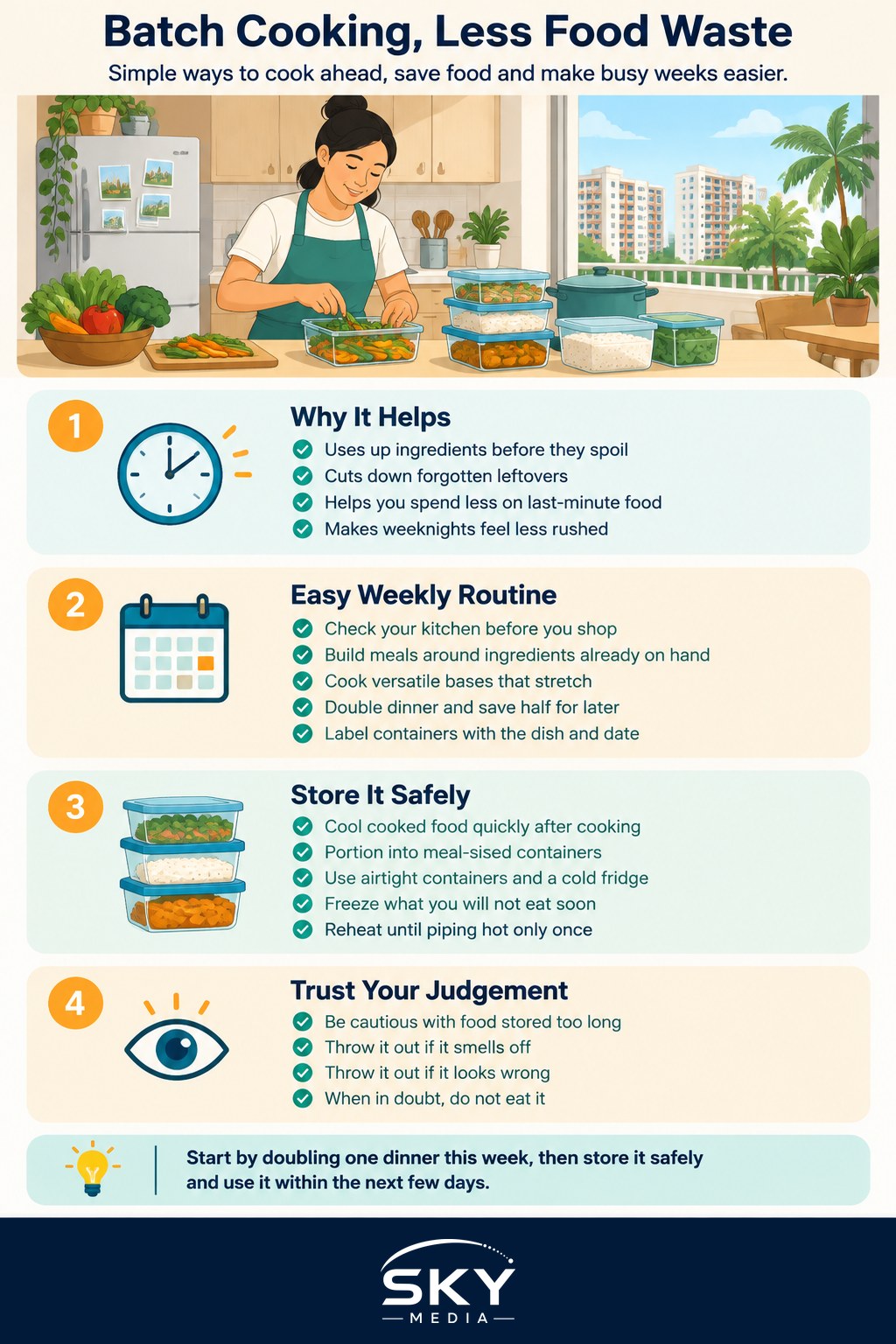
Most household food waste is not dramatic. It is the slow drip of forgotten leftovers, produce bought with good intentions, and portions cooked larger than anyone finished. Batch cooking tackles all three at once. When you plan a couple of meals around what you already have, fewer ingredients get stranded. When you cook in one go, you tend to use whole bunches, whole packets and near-the-edge produce rather than letting the last third rot.
It also saves money and time, which is the honest reason most people stick with it. A pot of curry or a tray of roasted vegetables made on Sunday can carry you through several midweek meals, meaning fewer impulse deliveries and less spending. If you would like the wider view, our guide to reducing food waste at home sets out the bigger picture, and meal planning to cut food waste pairs beautifully with a batch cooking habit.
A Simple Weekly Approach
You do not need to cook everything for the week in one marathon session. A lighter rhythm works better for most people and is easier to keep up.
- Shop your kitchen first. Before buying anything, look at what needs using. Build your batch around those items so nothing gets left behind.
- Pick versatile bases. Cook things that stretch across meals, such as a big pot of rice or grains, a batch of stewed protein, and a tray of roasted vegetables. Mix and match through the week.
- Cook once, eat twice. When you make dinner, simply double it. Half tonight, half stored for later. This is batch cooking without a special session.
- Label everything. A piece of masking tape with the dish and the date saves you from mystery containers and the “is this still okay” moment.
Prep bits also help. Washing and chopping vegetables when you get home, or freezing herbs and aromatics, means the actual cooking is faster and you are more likely to follow through.
Storing Food Safely
This is the part where a little care really matters, because reducing waste should never mean eating something that has turned. In Singapore’s heat, food left out spoils fast, so cool cooked dishes reasonably quickly and get them into the fridge or freezer rather than leaving them on the counter for hours.
A few sensible habits:
- Divide big batches into meal sized portions before chilling, so you only reheat what you need.
- Use airtight containers, and keep the fridge properly cold. Our guide to eco-friendly food storage that lasts has ideas for reusable, low waste options.
- Freeze anything you will not eat within a few days. Most cooked dishes freeze well and thaw overnight in the fridge.
- Reheat food thoroughly until piping hot, and try not to reheat the same portion more than once.
When it comes to whether something is still good, trust your judgement and lean cautious. If a dish smells off, looks wrong or has been stored too long, throw it out. When in doubt, throw it out is the right rule, because the small saving is never worth feeling unwell. For questions about dates on packaged food, our piece on what to do with expired food explains use-by versus best-before.
Batch cooking is not about becoming a meal-prep influencer with a fridge full of matching containers. It is about cooking a little ahead, wasting a little less, and giving your future self a break. Start with doubling one dinner this week, store it well, and enjoy how much calmer the busy nights feel. Your wallet and the bin will both thank you.
Official sources: National Environment Agency (NEA)
Further reading: How to Build a Zero-Waste Pantry in Singapore · Root to Stem and Nose to Tail Cooking