

Our grandparents rarely threw away the “ugly” bits of a vegetable or the odd cuts of a chicken. Making the most of every part of an ingredient is an old idea coming back into fashion, and root to stem cooking in Singapore fits both our thrifty heritage and our growing wish to waste less. The phrase “root to stem” means using the whole plant, from leafy tops to knobbly ends, while “nose to tail” applies the same thinking to meat. Together they are about respect: getting the full value, flavour, and nourishment from food we have already paid for and that took resources to produce. Best of all, it saves money and often tastes wonderful.
Root to Stem: Using the Whole Vegetable
So many parts of vegetables that usually hit the bin are perfectly edible and often delicious. Once you start looking, the offcuts become ingredients in their own right.
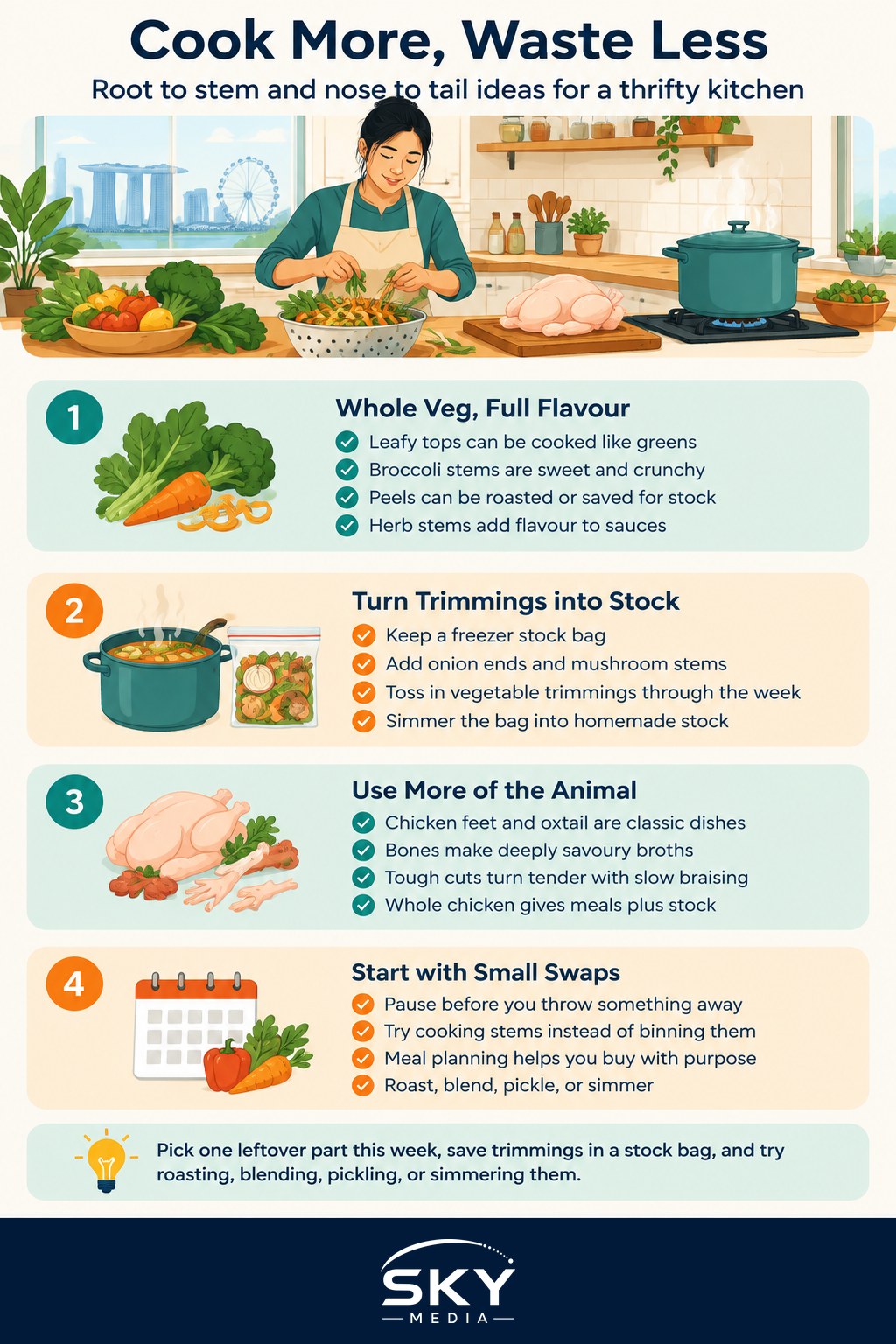
- Leafy tops. Radish, beetroot, and carrot leaves can be treated like other greens, stir-fried with garlic or blended into a pesto or chutney.
- Broccoli and cauliflower stems. The stalks are sweet and crunchy once peeled and sliced, lovely in a stir-fry or grated into a slaw.
- Vegetable peels. Potato and carrot peels can be roasted with a little oil into crisps, or saved for stock.
- Herb stems. The stalks of coriander and other soft herbs carry plenty of flavour and can be finely chopped into sauces and marinades.
- Broccoli and pumpkin leaves. Many gourd and squash leaves are eaten across the region and cook down nicely.
A brilliant habit is keeping a “stock bag” in the freezer. Toss in onion ends, mushroom stems, and vegetable trimmings through the week, and when the bag is full, simmer it into a homemade stock. It costs nothing extra and beats a shop-bought cube. If you grow any of your own produce, this pairs naturally with the spirit of our guide to growing your own food in Singapore.
Nose to Tail: Making the Most of Meat
Nose to tail cooking is deeply familiar in Singapore, even if we do not always call it that. Think of a comforting bowl of chicken feet, the richness of oxtail stew, kway chap with its assorted cuts, or a pork stock built from bones. Our hawker heritage has long celebrated the flavour in cuts that other cuisines discard.
Cooking this way stretches your food budget and honours the animal by wasting less of it. Bones make deeply savoury broths, tougher cuts turn meltingly tender with slow braising, and organ meats feature in many treasured local dishes. If you buy a whole chicken, breaking it down yourself gives you portions for several meals plus a carcass for stock.
A quick note on balance and health: variety is key, and richer cuts and offal are best enjoyed as part of a balanced diet rather than every day. This is general information, not medical or dietary advice, so anyone with specific health needs or conditions should speak with a doctor or dietitian about what suits them.
Simple Ways to Start at Home
You do not need to overhaul your cooking overnight. Pick one or two easy wins and build from there.
Start by pausing before you toss something and asking whether a part of it could be used. Keep that freezer stock bag going. When a recipe tells you to discard the stems or peel, try a quick search for how to cook them instead. Roast, blend, pickle, or simmer are your four friendly techniques for turning offcuts into something tasty.
Planning your meals helps enormously, because it means you buy with a purpose and use up what you have. Our guide to meal planning to cut food waste pairs beautifully with this way of cooking, and for the wider habit of a thrifty kitchen, see how to run a low waste kitchen.
A Tastier Kind of Thrift
Root to stem and nose to tail cooking is not about deprivation or forcing down food you dislike. It is a creative, flavourful, and money-saving way to cook that also happens to be kinder to the planet, since food that is grown and raised only to be wasted is a loss on every front.
Try one new thing this week, whether that is a stir-fry of broccoli stems or a broth from last night’s chicken bones. You may discover, as many home cooks have, that some of the best flavours were hiding in the parts you used to throw away.
Further reading: What to Cook With Leftover Pumpkin After Halloween