
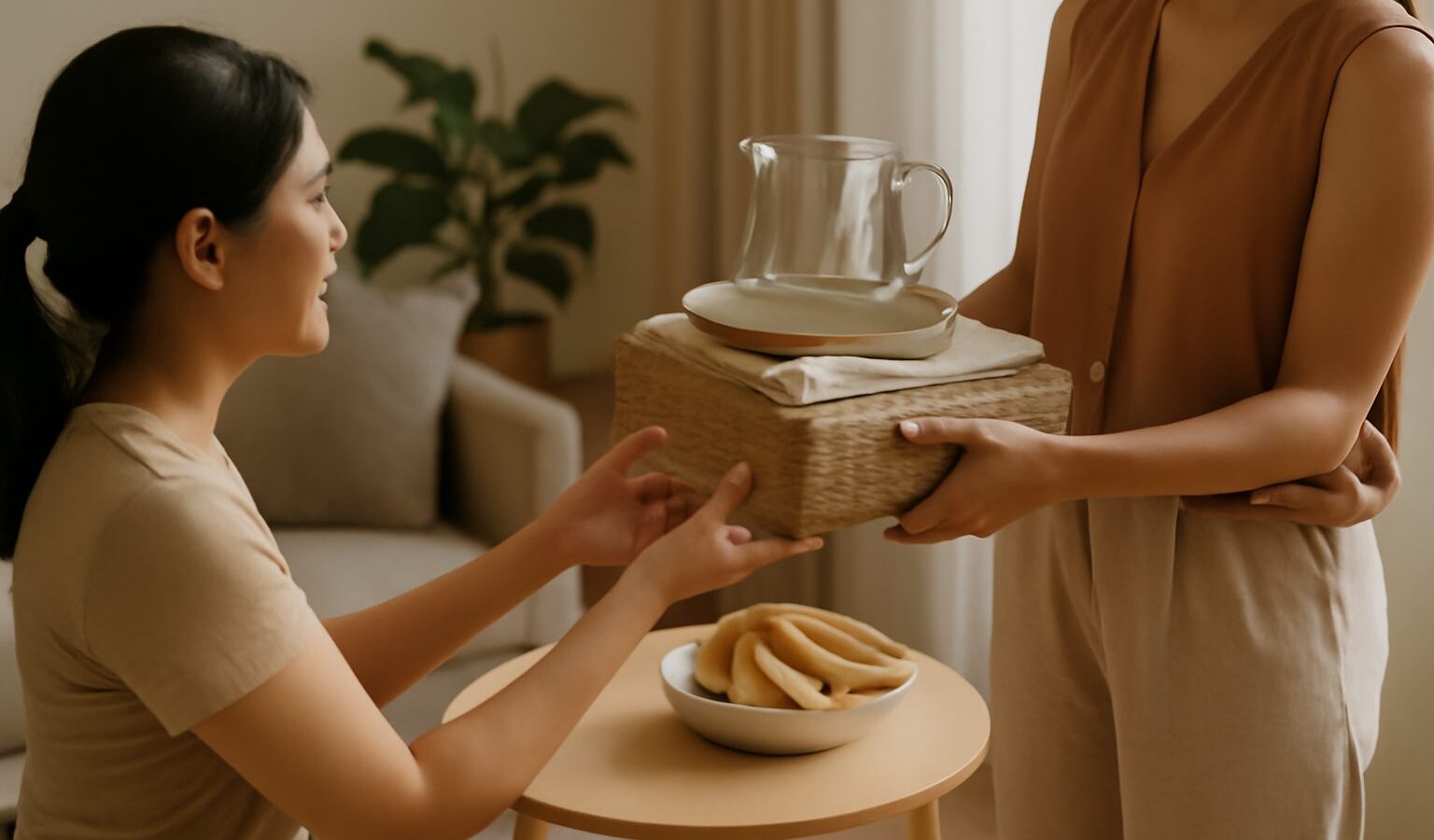
Most homes in Singapore hold more than the family needs. A spare kettle in the store cupboard, a stack of children’s books nobody reads any more, a bag of clothes waiting for a trip to the bin that never quite feels right. A buy nothing group offers a gentler home for those things. Instead of throwing them out or letting them gather dust, you offer them to neighbours who can actually use them, and you ask for what you need in return. No money changes hands. It is one of the easiest, warmest ways to keep good things in use and out of the incinerator.
If you have never joined one, the idea can sound almost too simple. This guide walks through what a buy nothing group is, how to find or start one near you, how to give and receive without stress, and how to stay safe and sensible while doing it.
What a Buy Nothing Group Actually Is
A buy nothing group is a small, local giving community, usually run through a free Facebook group, a Telegram or WhatsApp chat, or a neighbourhood app. Members post items they no longer want, and other members reply to ask for them. The person giving chooses who receives. Everything is free, and the group is deliberately kept to one area, often a single estate, a cluster of blocks or a town, so that pickups are a short walk or a quick lift-lobby handover.
The point is not only decluttering. It is a gift economy, meaning value flows through generosity rather than payment. You give because you have something spare, and you receive because you have a genuine need or use. Over time the group builds a quiet kind of trust between neighbours who might otherwise never speak. A retiree passes on gardening pots, a young family collects a barely used baby carrier, a student picks up a desk lamp before exams. Each swap keeps one more usable object in circulation and out of the waste stream.
It helps to be clear about what a buy nothing group is not. It is not a marketplace, so reselling what you were given free is frowned upon. It is not a rubbish clearance service, so broken or filthy items do not belong there. And it is not a competition, even when a popular item draws many replies.
Finding or Starting a Group Near You
Start by searching for your town or estate name together with terms like “buy nothing”, “free”, “giveaway” or “pass it on”. Many Singapore neighbourhoods already have an active group, sometimes several. Residents’ committees, parenting circles and estate chat groups often run informal giving threads too. If you live in an HDB estate, ask at the void deck noticeboard or in your block’s chat, since a group may already exist under a different name.
If nothing exists near you, starting one is straightforward:
- Pick the smallest sensible area. A single estate or a few neighbouring blocks keeps pickups easy and members familiar.
- Choose one platform your neighbours already use, rather than spreading across several.
- Write three or four simple rules: free only, keep it local, be honest about an item’s condition, and be kind.
- Seed the group with a few of your own giveaways so early members see how it works.
- Invite through existing channels, the lift lobby, the parents’ chat, the community garden.
Growth is usually slow at first and then steady once a handful of happy handovers get people talking. You do not need many members for a group to be useful. Even twenty active neighbours can keep a surprising amount of stuff moving.
Giving and Receiving Without the Stress
The mechanics are easy, but a few habits make everything smoother for everyone.
When you give, photograph the item in good light and describe it honestly, including any wear, stains or missing parts. Say roughly where you are, for example which block or which MRT it is near, and how pickup will work. Many givers simply leave the item outside their door or at the lift lobby at an agreed time, which avoids waiting around. Choosing a recipient is your call. Picking the first person who replied is common and fair, but so is choosing someone with a clear need. There is no wrong method as long as you are consistent and gracious.
When you receive, only ask for what you will genuinely use. Turn up when you say you will, and a quick thank-you message closes the loop nicely. If your plans change, tell the giver early so they can offer the item to someone else.
A recurring source of friction is the no-show, where someone claims an item and never collects it. Keep it low-drama: give a reasonable window, then move on to the next person. Most groups run happily on goodwill rather than strict rules.
Here is a quick sense of what tends to move well through a buy nothing group and what is better sent elsewhere.
| Item type | Buy nothing group? | Better route if not |
|---|---|---|
| Clean clothes, kitchenware, books, toys | Yes, these are the staples | Charity bins or a clothes swap for garments |
| Working small appliances and furniture | Yes, if honestly described | Karung guni or resale platforms |
| Broken electronics and old batteries | No | NEA e-waste bins and rechargeable battery drop-off points |
| Expired food, medicines, damaged goods | No | General waste, or food banks for in-date surplus |
| Leftover cooked food | No | Share with neighbours directly, not the group |
Staying Safe and Keeping It Sustainable
Because most handovers happen between strangers, a little common sense goes a long way. Meet in shared, visible spaces such as the void deck, the lift lobby or a coffee shop rather than inside your flat, especially for a first exchange. Contactless pickup, where the item is left out at an agreed spot, suits many people and sidesteps awkward waiting. Trust your instincts, and there is no obligation to give to anyone who makes you uncomfortable.
For anything that touches health or safety, apply the same care you would with any second-hand item. Wash clothing and kitchenware before use. Check that electrical items work and look sound before plugging them in. Be cautious with mattresses and soft furnishings, which can carry pests, and be honest if you are passing such things on. For baby items, a used cot or carrier can be a real gift to a family on a budget, but the receiver should check current safety guidance themselves, since standards change. Our guide to raising an eco-friendly baby on a budget has more on this.
It is also worth being honest about the limits. A buy nothing group is brilliant for keeping usable things in use, which is exactly where the environmental benefit lies. It is not a reason to accumulate more than you need simply because it is free. The greenest item is still the one you never acquire. Think of the group as one tool among several for living with less waste, alongside borrowing rather than buying through a library of things, rescuing surplus through food-sharing apps and groups, and understanding what happens to your recycling once it leaves the blue bin.
Small Gifts, Real Difference
You do not need to overhaul your life to make a buy nothing group work. Start by giving away one thing this week, the spare fan, the outgrown shoes, the duplicate rice cooker. Notice how good it feels to see it go to a neighbour rather than the chute. Ask for one thing you actually need before you buy it new. Say thank you, keep it local, keep it kind.
The impact of any single handover is small, and that is fine. Multiplied across a block, an estate and a town, all those small gifts add up to a lot of things kept in use, a little less waste sent to be burned, and neighbours who know each other slightly better than before. In a dense, fast-moving city, that quiet web of generosity is worth building, one free kettle at a time. For more ways to weave these habits together, see our guide to building a sustainable daily routine.