
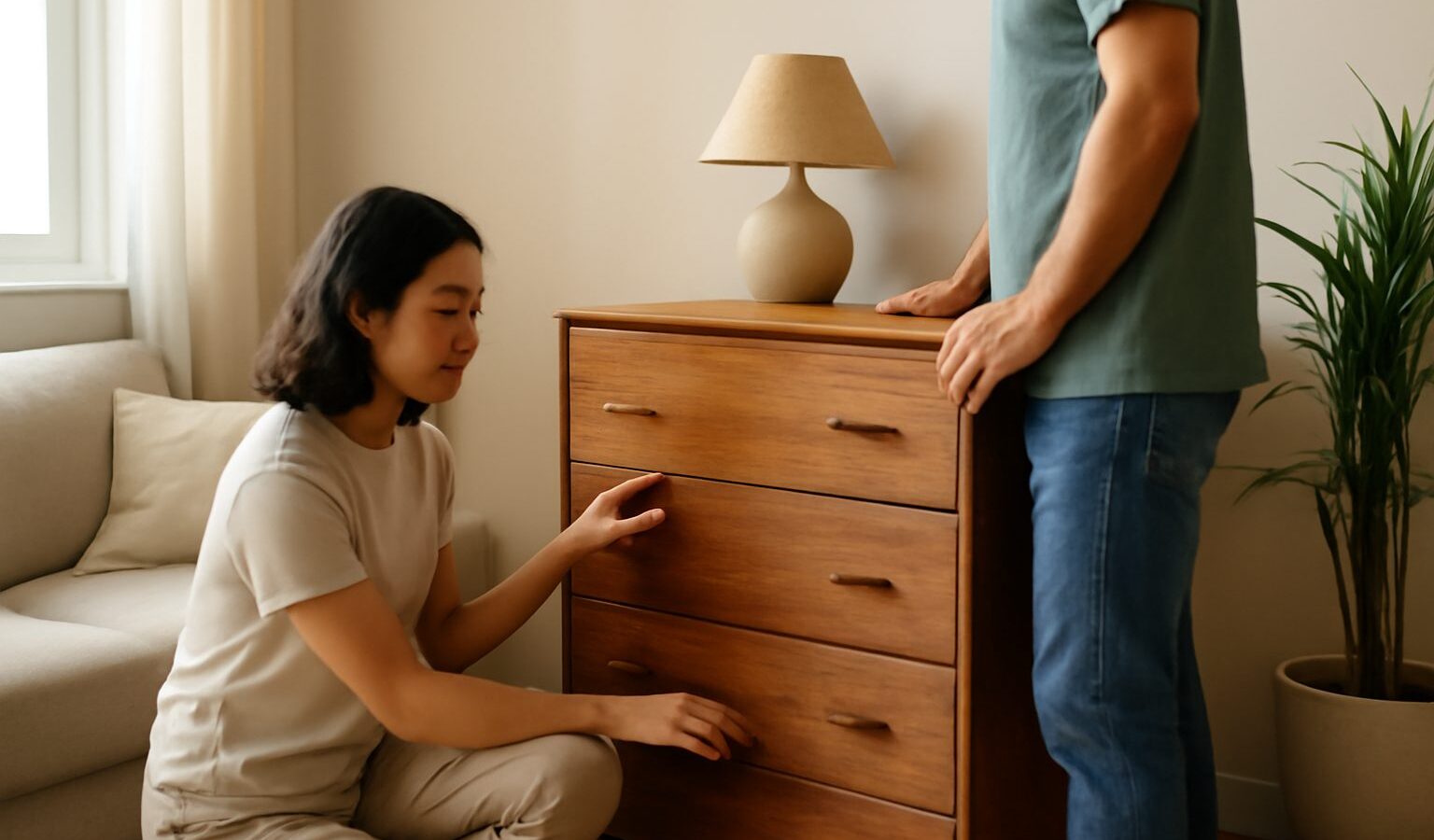
Kitting out an HDB flat or condo with brand new pieces adds up fast, and a lot of what gets tossed out is still perfectly usable. Shopping for second hand furniture in Singapore is one of the easiest green wins there is: you keep a solid sofa or dining table out of the incinerator, you save money, and you often end up with better build quality than flat pack. This guide walks through where to look, how to check a piece is worth buying, and how to get it home without the hassle putting you off.
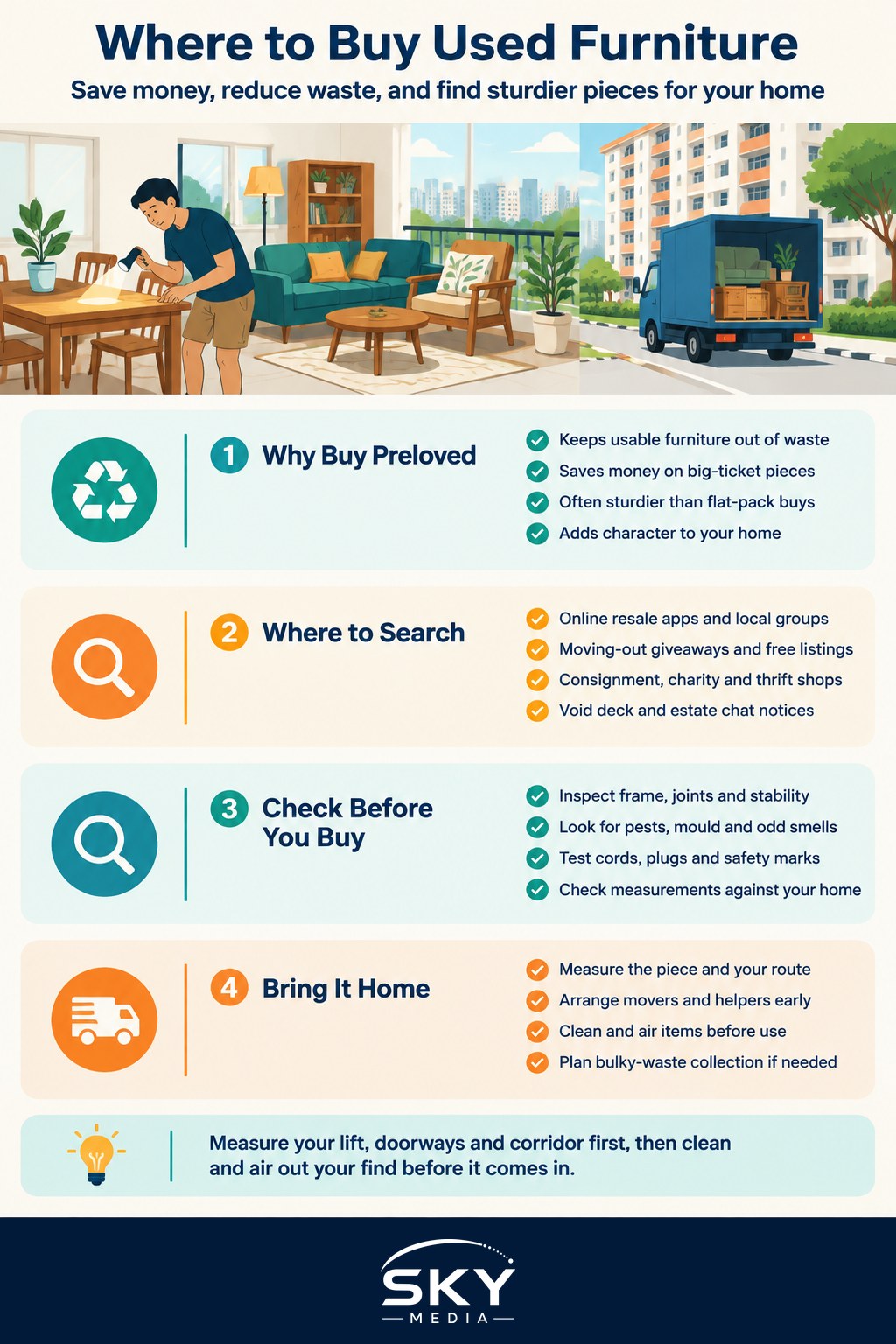
Why Preloved Furniture Is A Genuine Green Win
Furniture is heavy, resource intensive to make, and awkward to recycle. A single timber wardrobe represents felled wood, glue, transport and packaging, and once it reaches an HDB bulky waste collection it usually ends up incinerated rather than reborn. Every table, shelf or bed frame you buy used is one that does not need to be manufactured from scratch, which is exactly the kind of “reduce and reuse” thinking the Singapore Green Plan 2030 leans on.
There is a quality angle too. Older solid wood and metal pieces were often built to last decades, whereas some new budget furniture is chipboard wrapped in laminate that swells the moment it meets our humidity. Buying preloved lets you snap up sturdier construction for less, and it slows the throwaway cycle that fills our limited landfill space on Semakau.
You also get character. A teak sideboard or a well worn rattan chair carries a warmth that mass produced items rarely match, and mixing a few second hand finds with what you already own makes a home feel personal rather than showroom flat.
Where To Look For Second-Hand Furniture
You have more options here than most people realise, and each suits a different budget and level of patience.
- Online second-hand marketplaces and community groups. The biggest pool of listings sits on general resale apps and neighbourhood buy-and-sell groups. Filter by your area so collection is a short lift-and-carry rather than a cross-island trek.
- Moving-out and “free to a good home” giveaways. Expats and tenants leaving Singapore often give away good furniture for free or next to nothing near the end of a lease. These go quickly, so watch listings in the evenings.
- Consignment and thrift-style stores. Some charities and social enterprises run warehouses of donated furniture at low prices, and buying there sends money to a good cause as well.
- Void deck and estate notices. Neighbours sometimes post a photo in the block chat group when they are rehoming a cabinet before a renovation.
- Office and hotel clearances. When businesses refit, they offload chairs, desks and shelving in bulk, which is ideal if you are setting up a home office or a study corner.
Whichever route you pick, message early, be polite, and turn up when you say you will. Sellers giving furniture away for free especially appreciate a buyer who does not flake.
How To Check A Piece Before You Buy
The whole point is to bring home something that lasts, so a quick inspection saves you regret. Take a torch, sit on things, open every drawer, and do not be shy about asking the age and why it is being sold.
| What to check | Why it matters | Walk away if |
|---|---|---|
| Frame and joints | Wobble means a short life ahead | It rocks, creaks badly or has cracked joints |
| Signs of pests | Bed bugs and borers spread to your home | You see tiny holes, droppings or live insects |
| Upholstery and smell | Stains and damp are hard to fix | Deep mould, strong musty or smoke odour |
| Electrical parts | Faulty wiring is a safety risk | Frayed cords, no safety mark, sparking |
| Real dimensions | Lifts and doorways are unforgiving | It will not fit your flat or the lift |
Soft furnishings deserve extra caution. Mattresses and heavily padded sofas can hide bed bugs, so inspect seams and corners closely, and when in doubt give these a miss. For anything with a plug, such as a second hand lamp, fan or powered recliner, check the cord, plug and any safety mark, and test it before you commit. If a piece needs rewiring, factor in a proper electrician rather than a risky DIY job.
Getting It Home Without The Headache
Transport is the part that scares people off, but it is manageable with a little planning.
- Measure twice. Note the piece’s dimensions and check them against your lift, corridor and doorway. A sofa that will not fit the lift may still go up the stairs, but confirm before you pay.
- Sort out movers early. Plenty of independent movers and van drivers handle single-item jobs affordably. Agree the price, the number of helpers and any stairs charge upfront.
- Clean before it comes in. Wipe down hard surfaces, vacuum upholstery seams, and let items air out, ideally in a breezy corridor, before they cross your threshold.
- Time your bulky-waste swap. If the new-to-you piece replaces an old one, arrange your Town Council bulky waste collection so you are not storing junk for weeks.
A modest budget for cleaning supplies and transport still leaves most second hand buys far cheaper than new.
Small Fixes That Make Old Furniture Shine
Half the fun of buying preloved is the small revival afterwards. A loose screw tightened, a squeaky hinge oiled, or a tired timber top rubbed with a little furniture oil can take a piece from dated to lovely in an afternoon. Scratches on wood often disappear with a matching wax stick, fabric can be brightened with a proper upholstery clean, and dated knobs are a cheap swap that transforms a whole cabinet.
If something needs more than you can manage, a repair service or a community repair session can often bring it back rather than sending it to waste. And if you enjoy the process, an old drawer unit or crate is a perfect base for a simple upcycling project. The goal is progress, not perfection, so start with one room, one piece, and build from there.
Explore More
Ready to keep the reuse habit going? Learn to pass on your own pieces in our guide to selling preloved items online, extend it to gadgets with buying refurbished electronics, and see when owning is not the answer at all in borrowing and renting instead of buying. For quick revivals, try an easy upcycling project or find a local repair cafe or repair service.
Related across Sky Media: Buying Second Hand to Save in Singapore: A Practical Guide · Buying a Second Property in Singapore
Frequently Asked Questions
How do I check a second-hand sofa or mattress for bed bugs? Look closely at seams, tags, corners and the underside with a torch for tiny dark spots, shed skins or live insects. Be cautious with mattresses and heavily padded pieces, and skip them if you see anything suspicious. Hard furniture is generally lower risk.
What should I negotiate or ask the seller before buying? Ask the age, why it is being sold, any repairs and whether it comes from a smoke-free, pet-free home. Request more photos and measure the item. Be polite when asking for a lower price, and agree the collection time and who helps move it.
Is second-hand furniture safe for babies and kids’ rooms? Be extra careful. Cots, high chairs and anything children climb or sleep on should meet current safety standards, with no loose parts, missing slats or damaged finishes. Check recall information and the manufacturer’s guidance, and clean thoroughly. When in doubt, buy new for sleep items.
What are the best pieces to buy second-hand and which to avoid? Solid wood tables, shelves, cabinets and chairs are generally good buys. Be more careful with mattresses, soft sofas and anything electrical. Items with strong odours, mould or loose frames are best avoided. Prioritise pieces that are sturdy and easy to clean.
How do I get rid of the old furniture I am replacing? Try passing it on first through giveaways, charity donations or online listings if it is in good condition. For broken pieces, arrange a bulky waste collection through your town council or HDB, following their steps. Check the current arrangements, as these can change.