
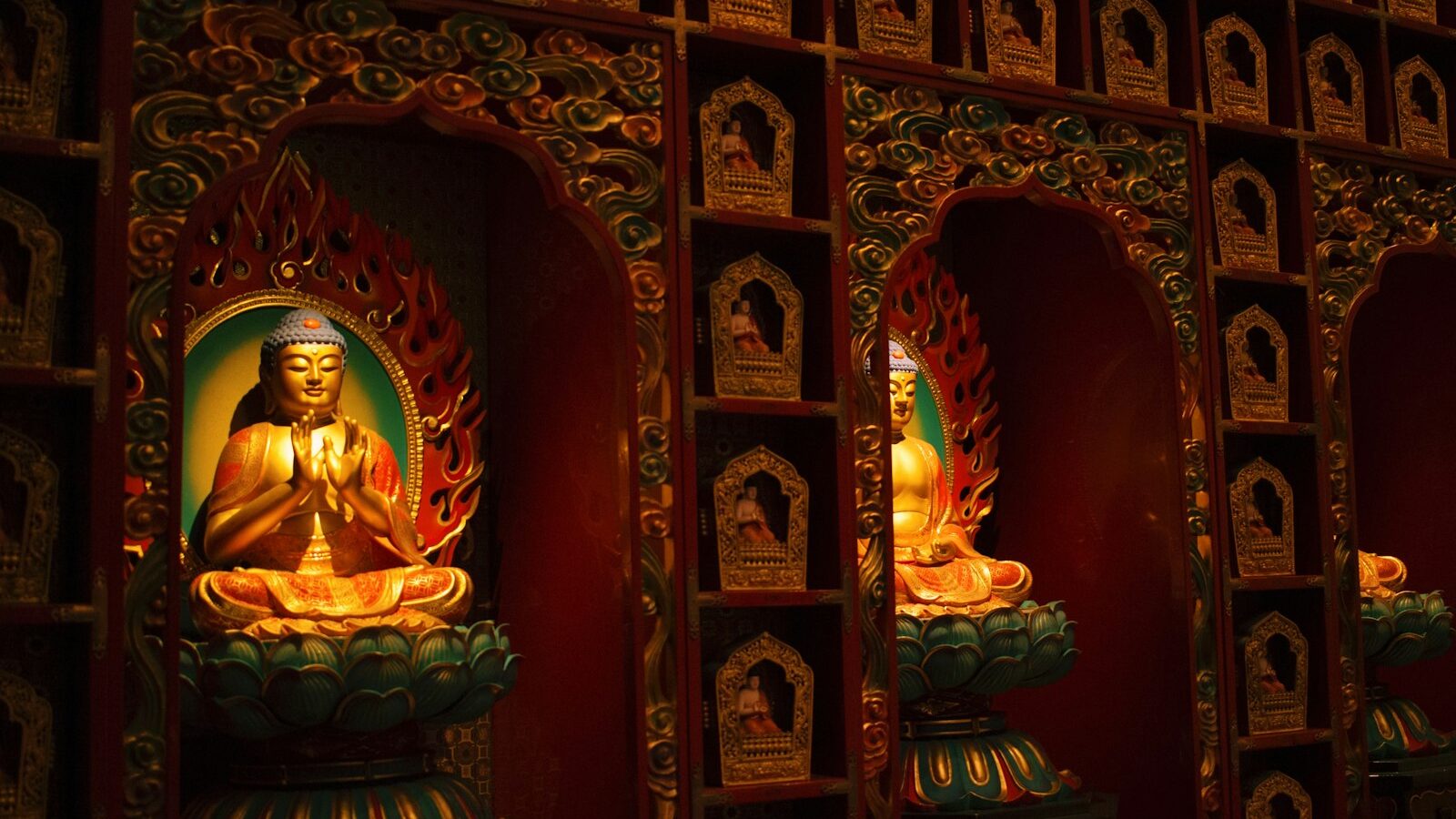
Rising over the busy streets of Chinatown, the Buddha Tooth Relic Temple is one of Singapore’s most recognisable places of Buddhist worship. This heritage guide introduces its significance, its striking architecture and the everyday devotion that fills its halls, so that visitors can explore with knowledge and respect.
Significance and history
The temple takes its name from a sacred relic that is venerated by devotees as an object of deep spiritual importance. For practising Buddhists, relics are not simply artefacts but focal points for reverence, reflection and merit. The temple was established in the early years of this century as a place where the local Buddhist community could gather, learn and practise, and it quickly became a landmark within the historic Chinatown precinct.
Because founding details and dates vary between sources, treat any specific figures you read elsewhere with care and verify them with the temple directly. What matters most for a respectful visit is understanding that this is a living centre of faith. Monks reside and study here, daily rituals are observed, and thousands of devotees pass through its doors each week to pray, make offerings and take part in communal ceremonies.
The temple also serves an educational and cultural role. It houses collections related to Buddhist art and heritage, and it hosts talks, chanting sessions and community programmes. In this way it functions as both a spiritual home and a cultural institution that helps keep Buddhist traditions alive in a modern city.
Its position within Chinatown is part of its character. The precinct has long been a gathering point for communities of different origins, and the temple sits comfortably among older shophouses, food stalls and neighbouring places of worship. For many families the temple is woven into the ordinary rhythm of the district, a place to step into for a few quiet minutes amid a day of errands as much as a destination for formal ceremony.
What to see
A visit usually begins in the main prayer hall on the ground floor, where a large central Buddha image presides over rows of smaller figures lining the walls. The atmosphere is solemn, lit by soft lighting and the warm glow of countless votive lamps. Devotees kneel on cushions, offer incense outside and move quietly through the space.
Upper floors hold a museum devoted to Buddhist culture, where sculptures, manuscripts and ceremonial objects are displayed with explanatory panels. The relic itself is enshrined in a dedicated hall that is treated with the highest reverence; access and viewing arrangements are set by the temple and may change, so check on arrival.
One of the quieter highlights sits on the rooftop, where a landscaped garden offers a peaceful contrast to the streets below. A large prayer wheel housed in a pavilion is a focal point for contemplation. From here you gain a calmer perspective on Chinatown and a moment of stillness before returning to the bustle outside.
Architecture
The building draws heavily on the aesthetic of Tang dynasty design, expressed through a red and gold colour palette, deep sweeping eaves and richly ornamented timber detailing. The effect is grand yet warm, and it stands out clearly against the shophouses and modern towers that surround it.
Inside, craftsmanship is everywhere. Carved panels, gilded surfaces and painted motifs draw on centuries of Buddhist artistic tradition. The layout follows a logic familiar from many temples, moving from public prayer halls upward and inward towards spaces of greater sanctity. Even visitors with no background in temple architecture will sense how the design guides movement and encourages a shift from noise to quiet, from the ordinary to the sacred.
Festivals and observances
The temple observes the major dates of the Buddhist calendar, and these are the busiest and most vibrant times to witness devotion in full flow. Vesak, which commemorates the birth, enlightenment and passing of the Buddha, is especially significant, and the temple typically holds special ceremonies, chanting and community activities around it.
Lunar New Year also brings large crowds, as families visit to pray for blessings in the year ahead. During such periods the halls can be extremely full, incense offerings increase, and queues may form. If you wish to observe rather than take part, come early and remain unobtrusive. Because exact dates shift with the lunar calendar and programmes are set each year, confirm timings with the temple before planning a festival visit.
| Feature | Buddha Tooth Relic Temple |
|---|---|
| Tradition | Buddhist |
| Location | Chinatown, central Singapore |
| Architectural style | Tang dynasty inspired |
| Best known for | Enshrined sacred relic and rooftop garden |
| Quietest time to visit | Early morning on weekdays |
| Dress code | Modest; cover shoulders and knees |
Visiting etiquette
This is a working place of worship, so treat every visit as you would a solemn ceremony rather than a sightseeing stop.
- Dress modestly. Cover your shoulders and knees, and choose clothing that is neat and unobtrusive.
- Remove headwear where indicated, and follow any signs about footwear and restricted areas.
- Keep your voice low. Silence your phone and avoid conversations near people who are praying.
- Do not touch statues, offerings or ceremonial objects unless you are clearly invited to do so.
- Switch off your camera flash. Ask before photographing individuals, and never photograph inside halls where signs forbid it.
- Never interrupt worship or step in front of someone in prayer to take a photo.
- Be especially mindful during prayer times and festivals, when the space is crowded and emotions are heightened.
- Donations are welcome but never required; give quietly if you wish to.
Because visiting hours, photography rules and access to the relic hall can change, always check the temple’s own guidance when you arrive.
A respectful close
The Buddha Tooth Relic Temple rewards a slow, attentive visit. Approach it not as a backdrop for photographs but as a place where faith is lived daily. Move gently, observe with humility, and you will carry away something more lasting than an image: a genuine sense of the devotion that gives this landmark its meaning.
Explore more: Buddhist temples in Singapore · Temple worship etiquette for newcomers · Religious harmony and festivals in Singapore