

Some moments hit hard and fast: a frightening message, a painful argument, bad news at work, or a wave of panic on a crowded train. In those minutes, the urge to do something, anything, to make the feeling stop can be overwhelming. Distress tolerance is the skill of getting through those intense moments without making the situation worse.
This is different from managing everyday stress or planning your life to reduce overload. Distress tolerance is about the short term: the next ten minutes, the next hour, until the emotional wave passes enough for you to think clearly.
This article is general information, not medical or psychological advice. If you are in crisis or worried about your safety, please see the section on getting help below.
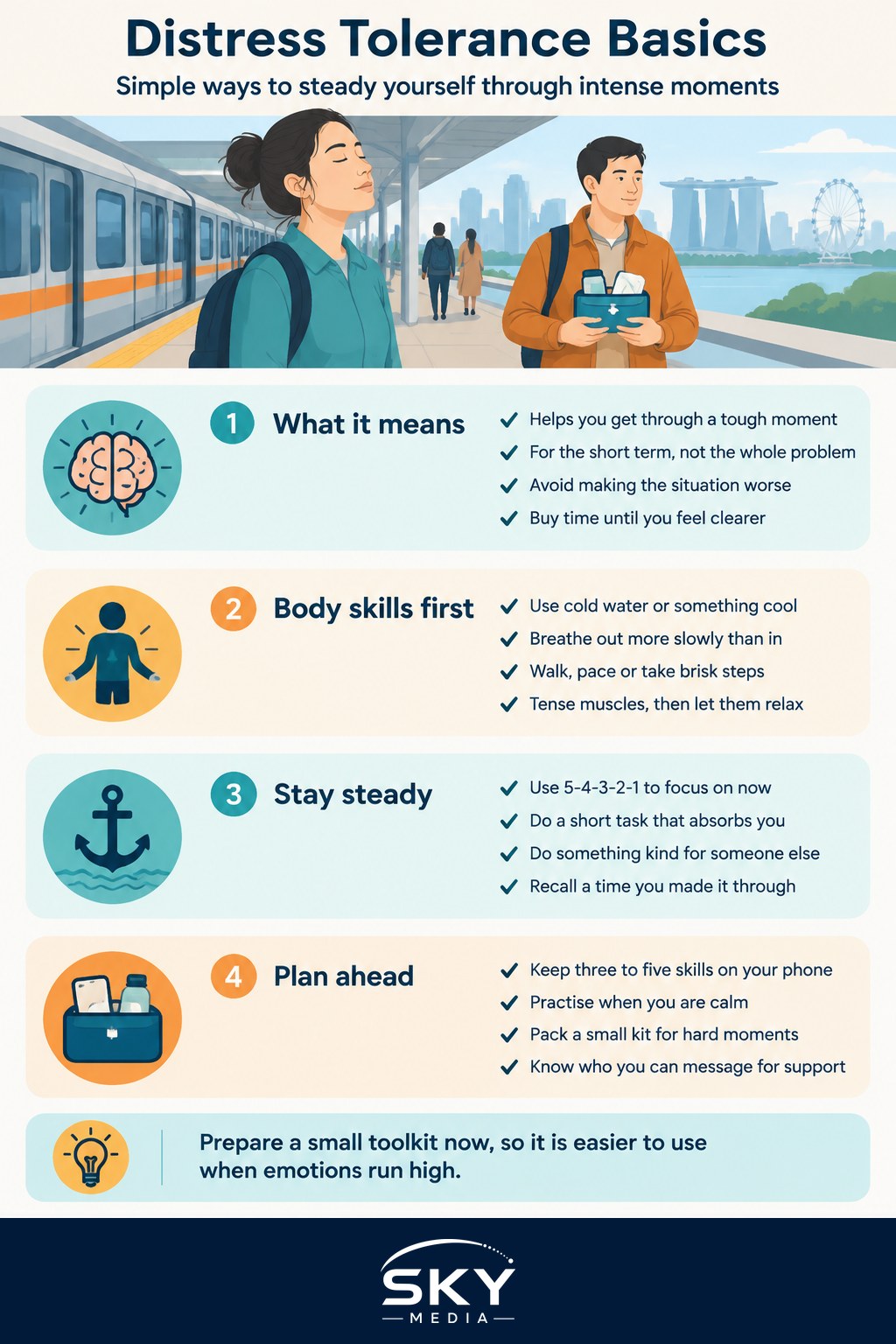
What Distress Tolerance Means
The term comes from therapy approaches such as dialectical behaviour therapy (DBT), where it describes a set of skills for surviving emotional crises. The core idea is simple: intense emotions rise, peak and fall. If you can avoid acting on the most destructive urges during the peak, the feeling usually eases on its own.
Distress tolerance is not about:
- Pretending you feel fine.
- Solving the underlying problem in the moment.
- Never feeling upset again.
It is about buying time safely, so that decisions are made when you are calmer.
How It Differs From Related Skills
People often confuse distress tolerance with other emotional skills. The table below shows how they fit together.
| Skill | Timeframe | Main goal | Example |
|---|---|---|---|
| Distress tolerance | Minutes to hours | Get through an intense moment without making things worse | Cold water on your face during a panic surge |
| Stress management | Days to months | Reduce ongoing pressure and build resilience | Regular exercise, better sleep, workload planning |
| Handling overwhelm | Hours to days | Break down too many demands into manageable parts | Writing a list and choosing one task |
| Radical acceptance | Ongoing | Stop fighting a reality you cannot change | Acknowledging a loss rather than replaying “it shouldn’t have happened” |
All of these are useful. Distress tolerance is the emergency kit you reach for first.
Body-Based Skills for the Peak of the Wave
When emotions are at their most intense, thinking your way out is hard. Working through the body is often quicker.
Change your temperature
Splashing cold water on your face, holding something cool against your wrists or face, or stepping into an air-conditioned space can help many people feel calmer quickly. If you have a heart condition or other health concern, check with your doctor before using strong cold exposure.
Slow your breathing
Breathe in gently through your nose, then breathe out more slowly than you breathed in. A longer out-breath tends to help the body settle. Repeat for a few minutes without forcing it.
Move your body
Brisk walking, climbing stairs, or a few minutes of vigorous movement can burn off some of the physical charge of anger or panic. Even pacing a corridor or void deck can help.
Tense and release
Squeeze the muscles in your hands, shoulders or legs for a few seconds, then let go. Notice the difference between tension and release. Work through a few muscle groups.
Grounding and Distraction Skills
Once the sharpest edge has passed, these skills help you stay steady.
- The 5-4-3-2-1 technique. Name five things you can see, four you can touch, three you can hear, two you can smell and one you can taste. This pulls attention back to the present.
- Purposeful distraction. Do something that fully occupies your mind for a short while: a puzzle, counting backwards in sevens, a game, organising a drawer, or a short video you find absorbing.
- Contribute. Doing something small for someone else, such as replying kindly to a friend’s message, can shift focus away from your own pain.
- Comparisons. Recall a time you got through something difficult. Reminding yourself “I survived that, I can survive this hour” can be steadying.
- Self-soothe with the senses. A favourite song, a warm drink, a familiar scent, a soft blanket or looking at photos you love.
Distraction here is temporary and intentional. It is not avoiding the problem forever; it is waiting until you can face it more calmly.
Weighing Up Your Urges
In intense moments, it helps to pause before acting on an urge, such as sending an angry message, quitting a job on the spot or doing something harmful. A quick mental check:
- Pause. Do nothing for a moment. Physically step back if you can.
- Name the urge. “I want to send a furious reply right now.”
- Think short and long term. What would happen in the next hour if you acted? What about next week?
- Choose the option your calmer self would thank you for. Often, that means waiting.
Writing the angry message in a notes app without sending it, then reviewing it the next day, is a practical version of this.
Building Your Personal Toolkit in Advance
Distress tolerance works best when you prepare before you need it. During a crisis, it is hard to remember options.
- Make a list of three to five skills that work for you, and keep it on your phone.
- Practise when calm. Try breathing or grounding exercises on ordinary days so they feel familiar.
- Prepare a small kit. Some people keep a calming playlist, a stress ball, mints or a photo in their bag.
- Identify safe people you can message when things feel too much.
Building other foundations, such as self-discipline and a steady exercise habit, can also make tough moments easier to weather over time. After a painful breakup, for example, our guide on rebuilding self-esteem after a tough relationship may help once the immediate storm has passed.
When to Seek Professional Help
Distress tolerance skills are helpful, but they are not a substitute for professional support. Consider speaking with a GP, polyclinic doctor, counsellor or psychologist if intense distress happens often, lasts a long time, or affects your work, relationships or sleep.
If you are having thoughts of harming yourself or feel unsafe, contact emergency services on 995 or go to the nearest hospital emergency department. You can also reach out to the Samaritans of Singapore (SOS) or the national mental health helplines listed on the HealthHub and Ministry of Health websites. Reaching out is a strength, not a weakness.
Frequently Asked Questions
Is distress tolerance just suppressing my emotions? No. The goal is not to push feelings away or pretend they are not there, but to get through the peak without acting in ways you will regret. You still acknowledge the emotion, and you return to the underlying problem once you are calmer.
What can I do during a panic surge on the MRT? Breathe out slowly, press your feet into the floor and name things you can see around you. If you can, get off at the next stop and find a quiet spot. If panic happens often, speak to a doctor, as there are effective treatments.
How can I help a friend who is in intense distress? Stay calm, listen without rushing to fix things, and ask what would help right now. Offer simple company or a glass of water instead of advice. If they talk about harming themselves or seem unsafe, contact emergency services or a helpline and do not leave them alone.
Can teenagers learn distress tolerance skills? Yes, and many of the skills, such as slow breathing, grounding and pausing before acting, are simple enough for teens. Practise together when calm so the tools feel familiar. If a teen’s distress is frequent or severe, a school counsellor or doctor can guide next steps.
Where can I learn dialectical behaviour therapy skills in Singapore? Start with a GP, polyclinic doctor or counsellor, who can advise on suitable options and refer you where needed. Some mental health professionals teach DBT-based skills individually or in groups. Check the HealthHub and Ministry of Health websites for current services and helplines.