

Sooner or later, many teenagers ask for a job. They want their own pocket money, a taste of independence, or simply something to do in the school holidays. Before you say yes, it helps to understand the minimum working age Singapore law sets and the extra protections that apply to anyone under 16. The rules are not complicated, but they are stricter than many parents expect, and they put most of the responsibility on the employer rather than the child.
This guide explains, in plain terms, how the law treats children and young persons at work, what kinds of jobs are generally suitable, and the questions to ask before your teen signs up. It is general information, not legal advice. The Ministry of Manpower (MOM) sets and updates these rules, so check its page on the employment of children and young persons for current details.
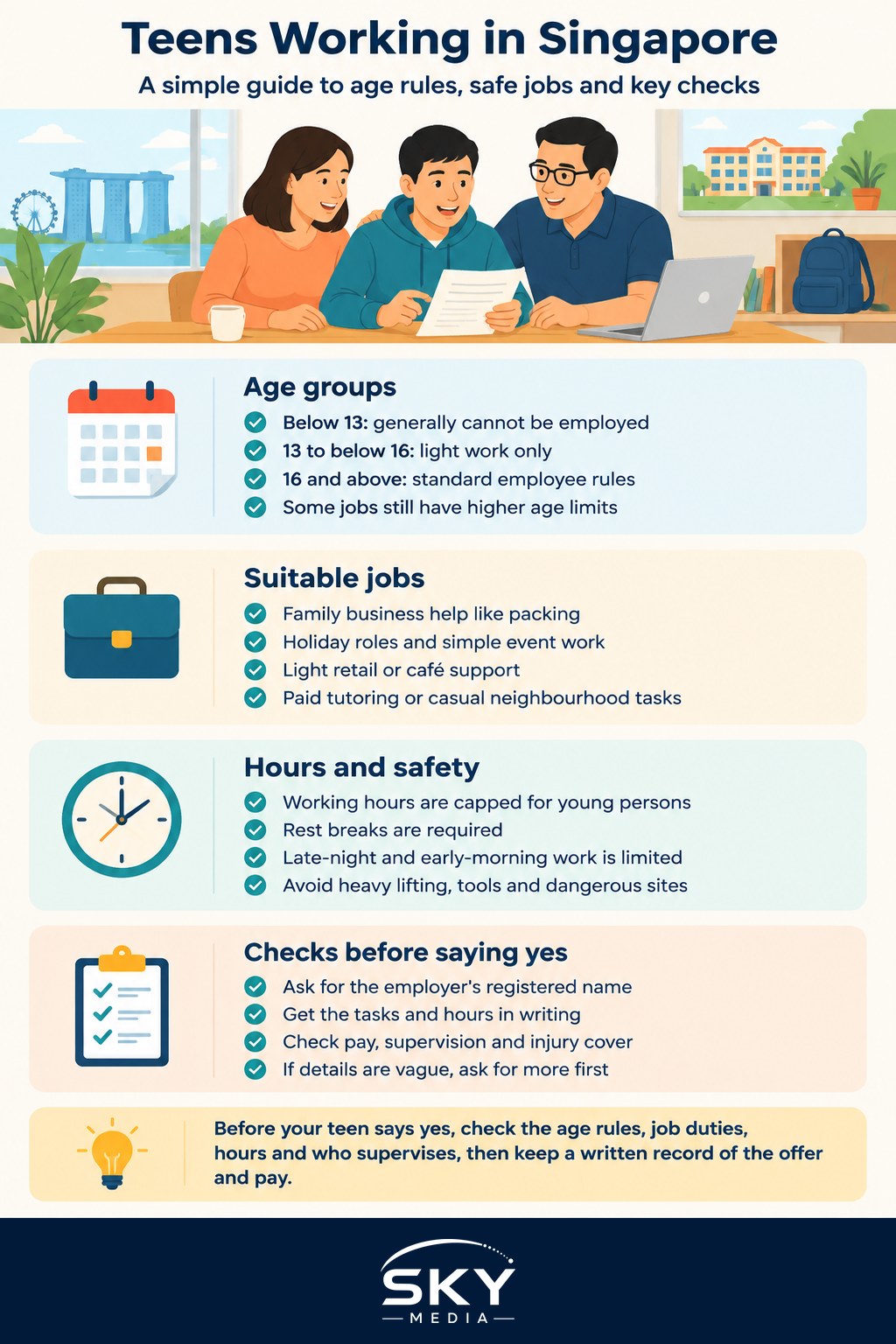
How the Law Groups Young Workers by Age
Singapore’s Employment Act has a specific set of regulations for workers who are still below 16. Within that, it uses two age groups:
- A child is a person below 13 years old for this purpose, and as a rule cannot be employed.
- A young person is generally someone aged 13 to below 16, who may be employed, but only under conditions.
Once your teen turns 16, these special regulations no longer apply in the same way, and they are treated much more like any other employee under the Employment Act. That does not mean every job is open to a 16 year old. Some sectors, licences and workplaces set their own higher minimum ages, for example for serving alcohol, operating certain machinery or working late at entertainment venues.
The age bands and exact wording can change when MOM amends the regulations, so treat the outline here as a starting point and confirm the latest definitions on the MOM website.
What Work 13 to 15 Year Olds May Do
The idea behind the rules is simple: younger teens may do light work that suits their age and physical ability, and that does not get in the way of school, health or rest. In practice, the kinds of roles parents commonly see include:
- Helping out at a family business, such as packing, simple stock counting or greeting customers.
- Short-term holiday roles like event helpers, promoters handing out flyers, or assistants at enrichment centres.
- Simple retail or café support where the tasks are light and supervision is close.
- Paid tutoring of younger children, or casual tasks for neighbours such as pet sitting.
Industrial work is far more restricted. Factories, construction sites, shipyards and similar workplaces involve machinery, heights and heavy loads, and the regulations either bar younger teens or impose strict conditions such as medical checks and employer notification to MOM. As a parent, the safe rule of thumb is that anything involving heavy lifting, dangerous tools, chemicals or working near moving vehicles is not a job for a 13 to 15 year old.
Hours, Rest Breaks and Night Work Limits
Young persons cannot simply be rostered like adults. The regulations cap how long they may work in a day, require rest breaks after a set number of continuous hours, and restrict work late at night and in the very early morning. Rules also limit working on a weekly rest day and combining school hours with job hours.
MOM publishes the exact daily limits, break rules and night work hours, and they differ between the younger and older groups. Rather than rely on a figure you heard from another parent, look up the current numbers and compare them against the roster your teen is offered. If an employer suggests a long closing shift on a school night, or back-to-back shifts without breaks, that is a red flag.
Here is a quick way to think about the main age bands:
| Age of your teen | General position | What to check |
|---|---|---|
| Below 13 | Generally cannot be employed | Unpaid help in the family home is different from a job |
| 13 to below 16 | Light, suitable work only, with hour and night limits | Daily hours, breaks, night work, task safety, MOM rules |
| 16 and above | Covered as an employee under the Employment Act | Sector age limits, licences, overtime and contract terms |
| Any age in industrial work | Strict extra conditions or not allowed for younger teens | Medical checks, employer notification, supervision |
Teens who do take on later shifts will feel the effects on sleep and schoolwork. Our guide on staying healthy as a shift worker is written for adults but covers useful habits around rest and meals.
Jobs That Are Usually a Poor Fit
Even when a role is technically allowed, some jobs are simply not good for a young teen. Be cautious about:
- Delivery and transport work. Riding on public roads for long hours carries real risk. Transport of workers also comes with its own rules, as our explainer on carrying workers in the back of a lorry shows.
- Late night F&B and entertainment. Bars, nightspots and venues serving alcohol often have age limits and are not suitable for under 16s.
- Commission-only sales. Door to door or street sales with no basic pay can put pressure on young people and blur the line between a job and a scheme.
- Unclear online gigs. Social media “brand ambassador” offers that ask for payment, personal documents or bank details should be avoided entirely.
If a job description is vague about who the employer is, where the work takes place or how pay works, ask for details in writing before agreeing.
Questions to Ask Before Your Teen Says Yes
A short conversation with the employer, or at least a careful read of the offer, can prevent most problems. Useful questions include:
- Who is the employer? Ask for the registered business name so you can look it up.
- What exactly will my child do? Get a list of tasks, not just a job title.
- What are the hours? Check start and end times, breaks and whether shifts run late.
- How and when is pay given? Ask whether pay is hourly or per day, and whether payslips are provided.
- Who supervises? Younger teens should have a named adult in charge on site.
- What happens if they are injured? Ask whether the employer has the insurance cover expected for staff.
It is also worth agreeing ground rules at home. Many families set limits such as no work during exam periods, a cap on weekly hours during term, and a rule that grades and sleep come first.
Pay, Contracts and Your Teen’s Rights
Young workers are still workers. They should know what they will be paid, receive it on time, and be treated fairly. Encourage your teen to keep a simple record of hours worked and money received, and to tell you straight away if something feels wrong, such as being asked to stay late without pay or being shouted at.
For disputes, MOM and the Tripartite Alliance for Dispute Management (TADM), which helps resolve salary and employment disputes, are the official channels. In most cases, a calm word from a parent is enough, but it helps to know where to turn.
Teens aged 16 and over who finish their national exams often look for fuller part-time roles. That stage brings different questions about contracts, CPF and longer hours, which are covered separately from these under-16 rules.
A Good First Job Builds More Than Pocket Money
Handled well, a first job teaches time management, money sense and how to deal with customers and colleagues. The key is to match the job to your child’s age, keep hours sensible, and stay involved without hovering. If you are juggling your own work alongside a teen’s new schedule, our tips on work-life balance for working parents may help the whole household find a rhythm.
Explore more: Can You Bring Kids to Concerts in Singapore? Age Rules and Tips
Frequently Asked Questions
Can a 15-year-old work during the school holidays in Singapore? A young person aged 13 to below 16 may be employed only for light, suitable work under conditions on hours, breaks and night work. Check MOM’s page on employing children and young persons for the current rules, and compare them with the roster the employer offers.
Are there jobs a 16-year-old still cannot do? Yes, turning 16 does not open every job. Some sectors, licences and workplaces set their own higher minimum ages, such as serving alcohol, operating certain machinery or working late at entertainment venues. Check the specific requirement for the role.
Is it safe for a teen to take a delivery or rider job? It is a poor fit for a young teen, since riding on public roads for long hours carries real risk and the work may have its own age requirements. Heavy lifting, dangerous tools and working near moving vehicles are better avoided for a 13 to 15 year old.
How can I tell whether an online part-time job offer for my teen is a scam? Be wary if a vague gig asks for payment, personal documents or bank details, or does not say who the employer is, where the work takes place or how pay works. Ask for details in writing and look up the registered business name before agreeing.
Where can my teen get help if the employer does not pay? MOM and the Tripartite Alliance for Dispute Management are the official channels for salary and employment disputes. Encourage your teen to keep a simple record of hours worked and money received, and to tell you straight away if something feels wrong.
Official sources: Ministry of Manpower (MOM)
Further reading: Helping Your Teen With a Resume and First Interview