

The Basenji is one of the most distinctive dogs you can meet. Often called the “barkless” dog, this ancient African hound does not bark in the usual way, though it is far from silent. It is neat, catlike, and fiercely intelligent, with a short coat and an independent mind. For anyone weighing up a basenji singapore side of ownership, the honest picture is a dog that is fascinating and low on grooming but high on independence and prey drive, which makes it a poor fit for some homes and a delight in others. This guide lays out what daily life with the breed is really like here.
Temperament, the “barkless” myth and prey drive
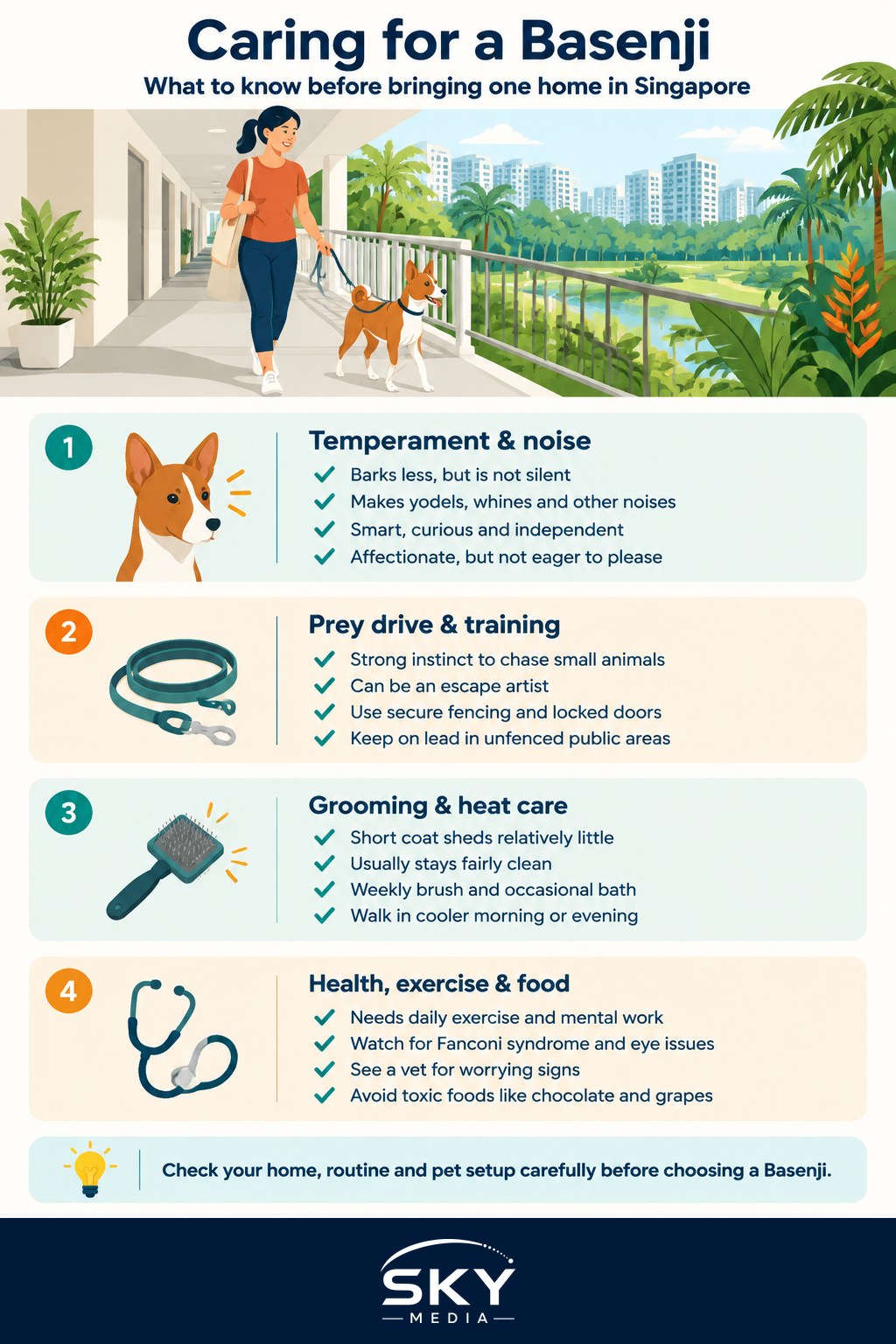
Let us clear up the barkless label first. Basenjis lack the typical bark, but they are vocal in their own way, making a yodel like sound sometimes called a “baroo”, along with whines and other noises. So they are quieter than many breeds, not soundless. In close flat or condo living this can be a plus, though individual dogs vary.
Temperament wise, the Basenji is smart, curious, and famously independent. It bonds with its family and can be very affectionate, but it is not an eager to please people pleaser. It thinks for itself. Training takes patience, humour, and reward based methods, and even then this is not a dog that will obey purely to please you. Consistent, positive work in the spirit of good dog training and obedience practice helps, but set realistic expectations.
The bigger consideration is prey drive. As a hunting hound, the Basenji has a strong instinct to chase small, fast moving animals, and it can be an escape artist. This means secure fencing, a securely latched home, and a firm rule of keeping it on a lead in unfenced public areas. In HDB and condo settings, be mindful of cats, birds, and small pets nearby.
Coat, grooming and cleanliness
Grooming is the easy part. The Basenji has a short, fine coat that sheds relatively little and stays fairly clean. It is famously fastidious and often grooms itself like a cat, so it rarely has a strong doggy odour. A weekly brush and occasional bath are usually enough. This makes it a low maintenance breed on the grooming front, which appeals to busy Singapore households.
The short coat does not mean it is heat proof, though. It still needs the same sensible warm weather care as any dog here.
Living with Singapore’s heat
The Basenji originates from central Africa, so it tolerates warmth better than the thick coated northern breeds, and its short coat is an advantage in our climate. That said, no dog is immune to heatstroke, and Singapore’s humidity makes it harder for dogs to cool themselves. Walk during the cooler morning and evening hours, keep midday outings short, provide constant fresh water and shade, and use fans or air conditioning during the hottest periods. Our guide on keeping pets cool in Singapore’s heat has a practical routine you can follow.
Learn the warning signs of heatstroke, which is an emergency: heavy panting, drooling, bright red gums, weakness, vomiting, or collapse. Cool the dog gradually, offer water, and get to a vet urgently. And never leave your Basenji in a parked car, even briefly, since the temperature inside climbs to fatal levels within minutes.
The table below sums up the everyday commitment.
| Care area | What to expect |
|---|---|
| Coat | Short, low shedding, self cleaning, minimal grooming |
| Exercise | High energy, needs daily exercise and mental stimulation |
| Temperament | Smart, independent, affectionate, not naturally obedient |
| Prey drive | Strong, needs secure spaces and lead in open areas |
| Health watch | Fanconi syndrome, eye and kidney conditions, see a vet |
Health, exercise and food
Basenjis are generally healthy, but the breed has some inherited conditions worth knowing about, including Fanconi syndrome, a kidney disorder, along with certain eye and other genetic issues. This is general information, not veterinary advice. Work with a licensed vet for screening, diagnosis, and treatment, and treat red flag signs such as trouble breathing, collapse, seizures, a bloated hard abdomen, or refusing to eat or drink as an emergency requiring emergency vet care right away.
This is an athletic, energetic breed that needs real daily exercise and mental stimulation to stay content, so plan for active walks and play rather than a purely couch life. Feed a balanced diet suited to age and size, keep weight healthy, and remember that foods such as chocolate, grapes, raisins, onion, garlic, caffeine, and xylitol are toxic to dogs.
A caring, honest wrap-up
The Basenji is a clean, clever, low grooming companion that copes reasonably with our heat, but its independence, energy, and strong prey drive make it a demanding match, not an easy first dog for everyone. Please do not buy on novelty or the barkless label alone. Consider adoption, choose a responsible source if you buy, license your dog as required, and be honest about whether your home and lifestyle suit this spirited hound before you commit.
Frequently Asked Questions
Do Basenjis make noise that could bother neighbours in a flat? They rarely bark, but they can yodel, whine and make other sounds, especially when bored or excited. Most are quieter than many breeds, though individuals vary. Exercise and mental work keep the noise down.
How do I escape-proof my home for a Basenji? Basenjis are clever climbers and bolters, so latch doors and gates firmly, check window grilles and balcony gaps, and never rely on a casual closed door. Keep the dog on a lead outside, because a sudden chase can end in an escape.
Can a Basenji live with cats or small pets? It can be risky. A Basenji has a strong hunting instinct, so small, fast pets may trigger a chase. Some manage when raised together from puppyhood, but supervise closely and give small animals a safe retreat.
What is Fanconi syndrome in Basenjis, and how can I check for it? Fanconi syndrome is an inherited kidney disorder in the breed, in which the kidneys leak nutrients into the urine. Ask a breeder about screening, and tell your vet if the dog drinks and urinates more than usual or seems unwell.
Is a Basenji a sensible first dog for a new owner? Usually not. It is low on grooming but high on independence, energy and prey drive, and it will not obey just to please you. New owners who still want one should commit to patient training and secure fencing.
Further reading: Caring for a Whippet in Singapore · Caring for a Shiba Inu in Singapore