

With its glossy strap-like leaves and clusters of warm orange or yellow flowers, the clivia is a handsome plant that adds a touch of old-fashioned charm to a home. Good clivia plant care singapore style takes a little thought, because this plant hails from cooler, shadier South African woodlands rather than a steamy tropical balcony. The trick is to recreate the shady, gentle conditions it prefers, and to be patient when coaxing it to flower. Get those two things right and a clivia can be a long-lived, rewarding companion in a small home.
Light, Heat and the Right Spot
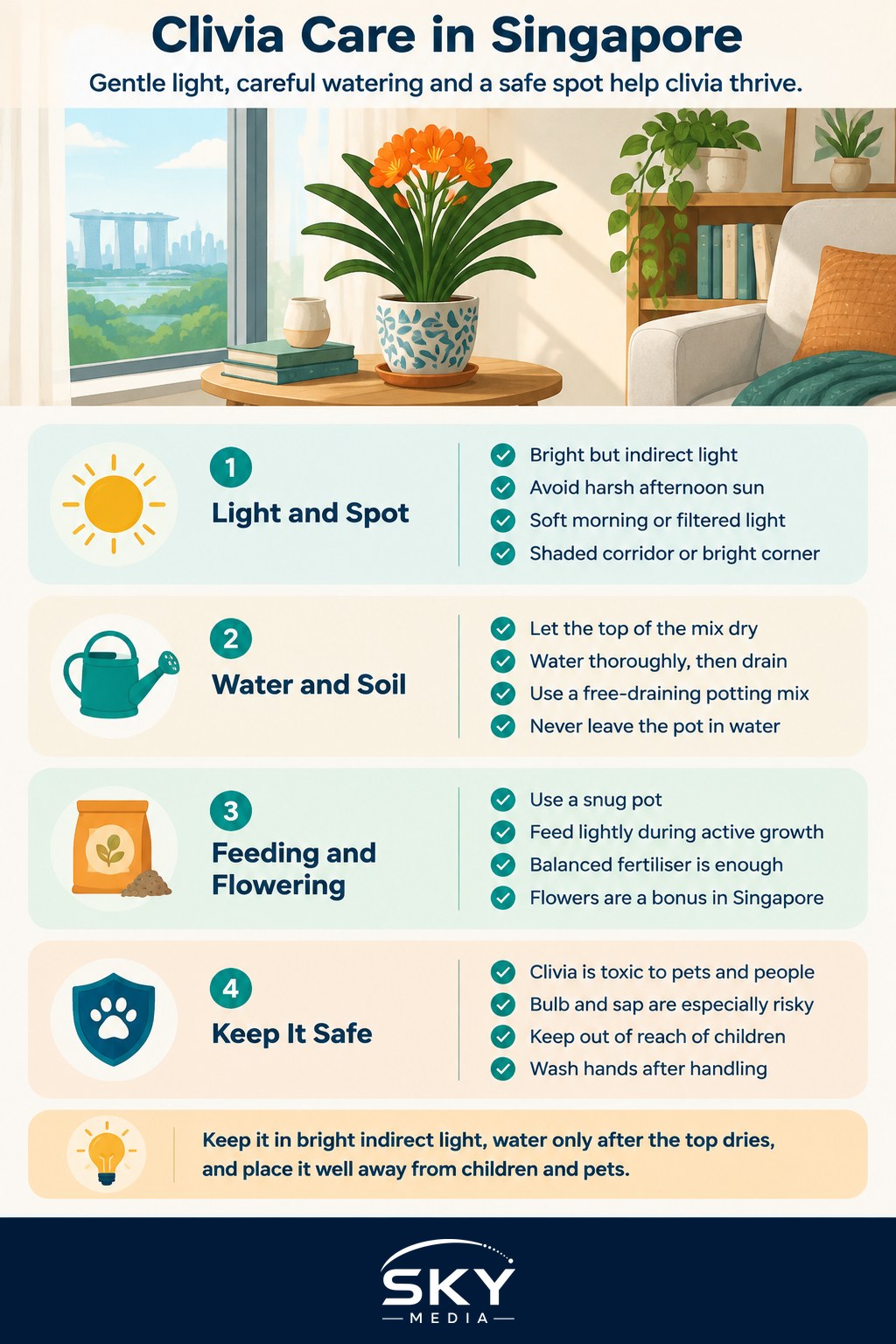
Clivias like bright but indirect light and dislike harsh direct sun. In our climate, the fierce afternoon glare can quickly scorch and bleach those thick green leaves, so keep the plant away from a hot, unshaded window or an exposed balcony ledge. A spot with soft morning light, or filtered light through a curtain, suits it far better. A shaded corridor or a bright interior corner often works well.
Because clivias naturally come from a cooler place, our constant heat can stress them. You cannot change the weather, but you can help by keeping the plant out of the hottest positions, giving it good air movement and not letting the roots cook in a sun-baked pot. If your home is very shady, our notes on the best plants for low light homes put clivia in good company with other forgiving choices.
Watering, Soil and Feeding
Clivias have fleshy roots that store water, so they cope far better with slightly dry conditions than with soggy ones. Overwatering is the quickest way to lose a clivia, since constantly wet roots rot easily in our humidity. Let the top of the soil dry out before you water again, then water thoroughly and let the excess drain away. Never leave the pot standing in a full saucer.
Use a well draining potting mix so water moves through freely rather than pooling. A snug pot is actually a plus, as clivias tend to flower better when their roots are a little crowded, so resist the urge to move yours into a huge container. When you do feed, a balanced fertiliser used sparingly during active growth is enough. Always read the label and follow the dosing instructions rather than overdoing it.
A simple routine keeps things easy:
- Water only when the top of the mix has dried, then drain fully.
- Keep the plant in a snug pot with a free-draining mix.
- Feed lightly with a balanced fertiliser during active growth.
- Wipe dust off the leaves now and then so they can breathe.
To help a clivia bloom, it traditionally needs a cool, drier rest period. That is hard to provide in Singapore, so many local growers simply enjoy the foliage and treat any flowering as a happy bonus. If you want to push for blooms, easing back on water for a while can sometimes help, and our guide on how to get your plants to flower has more gentle techniques to try.
Safety First: Clivia Is Toxic
This is important, so please do not skip it. The clivia is toxic to both pets and people, particularly the bulb and the sap. If a curious cat, dog or child chews on the plant, or if the sap is swallowed, it can cause unpleasant symptoms. Keep your clivia well out of reach of children and pets, place it where small hands and paws cannot easily grab a leaf, and wash your hands after handling or dividing it so the sap does not end up in eyes or mouths.
If you suspect a pet has eaten any part of the plant, contact a vet promptly, and if a child has swallowed some, seek medical advice or call a doctor. It is always better to check than to wait and see. Households with young children or nibbling pets may prefer to enjoy clivia only in a truly unreachable spot, or to choose something safer instead. Our roundups of pet-friendly and non-toxic plants and child-safe plants for family homes are the best places to look for safer alternatives.
None of this should put you off, though. Treated with a little respect and kept out of reach, a clivia is no more troublesome than many other beautiful houseplants. Give it gentle light, careful watering and a snug pot, keep it safely away from curious mouths, and you will have a striking, long-lasting plant that brings a quiet splash of colour to your tropical home.
Frequently Asked Questions
Why won’t my clivia flower in Singapore? Clivias traditionally need a cool, drier rest period that is hard to give in our constant warmth, so many local growers treat flowers as a bonus. Easing back on water for a while may help. Bright indirect light and a snug pot also matter.
How often should I repot a clivia? Not very often, since clivias tend to flower better when their roots are a little crowded. Move up only when the pot is truly packed, and use a free-draining mix. Wear gloves because the sap is toxic.
What should I do if my pet chews on my clivia? Remove the plant and any pieces from the animal’s mouth, then call a vet promptly. The bulb and sap are the main concern. Bring a piece of the plant for identification.
Can I grow a clivia on a shady HDB corridor? A shaded corridor can suit a clivia as long as it gets bright indirect light and good airflow. Keep pots in your own space and follow rules on obstruction and falling items. Remember it is toxic, so think about kids and pets nearby.
What does it mean when clivia leaves turn yellow or brown at the tips? Yellowing usually points to overwatering and rotting roots, while brown, scorched patches suggest too much direct sun. Check the soil moisture and move it to softer light. Always let the top of the mix dry before watering again.
Further reading: Caring for a Zebra Plant (Aphelandra) in Singapore