

The Devon Rex is one of the most distinctive cats you can meet, with its large ears, elfin face, and soft wavy coat. If you are thinking about a Devon Rex cat in Singapore, this guide walks you through what the breed is really like to live with, how to keep that unusual coat comfortable in our heat, and the health matters worth watching. Every cat is an individual, so treat this as a starting point rather than a promise about your particular kitten.
Temperament and What Daily Life Looks Like
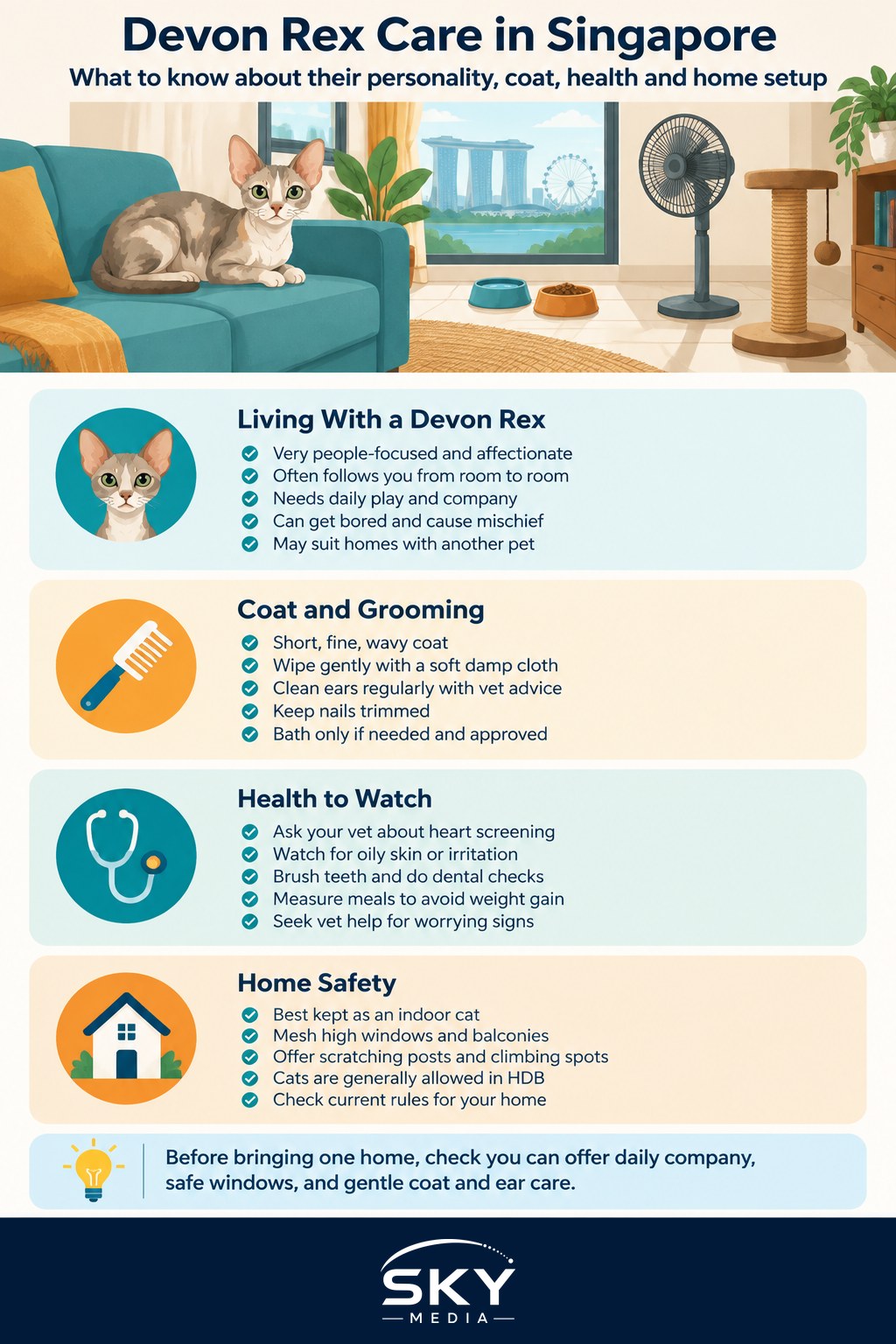
Devon Rex cats are famous for being people-focused. Many owners describe them as more dog-like than cat-like, following you from room to room, riding on a shoulder, and settling on your lap the moment you sit down. They are playful well into adulthood and tend to stay busy, so a bored Devon Rex can get into cupboards, knock things off shelves, and climb higher than you expect.
That personality has a flip side. This is not a breed that copes well with being left alone for long stretches every day. If your household is out from morning to night, think honestly about whether a Devon Rex will get the company it craves, and consider whether a second pet or plenty of enrichment will fill the gap. Interactive toys, food puzzles, and daily play sessions all help. Our guide to indoor cat enrichment and play has ideas that suit an active, curious cat like this one.
Because they are intelligent and food-motivated, many Devon Rex cats take well to gentle training, such as coming when called or learning to use a scratching post. Keep sessions short and reward-based.
Coat Care in Singapore’s Heat
The Devon Rex coat is short, fine, and wavy, and some cats have thinner fur in places. It sheds less noticeably than many breeds, but that does not mean the cat is maintenance-free. Because the coat is so fine, the natural oils the skin produces are not absorbed the way they are in a dense coat, so oils can build up on the skin and inside the large ears.
A gentle routine works best. Wipe the coat with a soft damp cloth rather than brushing hard, since aggressive brushing can damage the delicate fur. Check and clean the ears regularly, as they collect wax and grime quickly, and ask your vet to show you a safe way to do it. Keep nails trimmed. Some Devon Rex cats need an occasional bath if their skin feels greasy, but do this sparingly and use a product your vet approves.
Singapore’s heat and humidity matter here. A thin coat gives less protection from strong sun through a window, so make sure your cat can move between warmer and cooler spots. Keep fresh water available in more than one place, offer cool tiled floors and shade, and use fans or air conditioning on the hottest days. Never leave any cat in a parked car, and watch for signs of overheating such as heavy panting or lethargy. For a fuller rundown, see keeping pets cool in Singapore’s heat.
Health Matters to Watch
Like all breeds, the Devon Rex has some health issues that appear more often in the line. The information below is general and is not a substitute for veterinary care. Choose a good vet early and go for regular check-ups.
| Area | What to know |
|---|---|
| Heart | Some lines can carry heart conditions, so ask your vet about screening. |
| Skin and coat | Fine fur means more oil build-up and occasional skin irritation. |
| Ears | Large ears collect wax fast and need routine gentle cleaning. |
| Teeth | Dental care matters, so build in tooth brushing and vet dental checks. |
| Weight | A food-driven cat can gain weight, so measure meals. |
See a licensed vet promptly for anything that worries you. Treat trouble breathing, collapse, repeated vomiting, a cat that will not eat or drink, or signs of heatstroke as an emergency and get to a vet or emergency vet straight away. Do not rely on home remedies for serious signs. Our overview of common cat health issues in Singapore is a helpful companion read.
Feed a complete, balanced diet suited to your cat’s life stage, and introduce any diet change gradually. Remember that several common foods are dangerous to cats, including onion, garlic, chocolate, and caffeine, so keep those well out of reach. You can read more in our guide to foods that are toxic to pets.
Home Setup and HDB Suitability
A Devon Rex is an indoor cat and adapts well to flats and condos, which suits Singapore living. The main safety point is height. These cats climb and jump, so any high-rise window or balcony access must be meshed and secured. Never leave a cat with access to an open high-rise window, as falls are a real and preventable danger.
Set up scratching posts, safe climbing spots, and quiet resting places. Litter training is usually straightforward for this clever breed. If you rent or live in an HDB flat, cats are generally allowed, but always confirm current rules for your home type and be a considerate neighbour on noise and cleanliness.
If you are still deciding, take time over the choice rather than buying on impulse. Consider adopting, and pick a responsible source who lets you meet the kitten and its environment. Reading up on how to choose a cat or kitten, and weighing adopting against buying, can help you decide. A Devon Rex rewards an owner who wants a close, interactive companion and can offer the time, warmth, and steady care this affectionate breed thrives on.
Frequently Asked Questions
Can a Devon Rex be left alone while I am at work? Not for long stretches every day. The breed craves company, so think about a second pet, interactive toys, food puzzles and daily play if the household is out from morning to night.
How should I brush a Devon Rex’s delicate coat? Skip hard brushing and wipe the coat with a soft damp cloth instead, since aggressive brushing can damage the fine fur. Ask your vet to show you a safe approach.
Why does my Devon Rex have greasy skin and dirty ears? Fine fur does not absorb skin oils the way a dense coat does, so oil builds up on the skin and inside the large ears. Gentle regular cleaning helps, and an occasional vet-approved bath may be needed.
Does a thin Devon Rex coat make window sun a problem? It can, since a thin coat gives less protection from strong sun through glass. Let your cat move between warmer and cooler spots, and keep shade, fresh water and airflow available.
Can a Devon Rex be trained like a dog? Many take well to gentle training, such as coming when called or using a scratching post, because they are intelligent and food-motivated. Keep sessions short and reward-based.
Further reading: Caring for a Selkirk Rex Cat in Singapore · Caring for a Cornish Rex Cat in Singapore · Caring for a Sphynx Cat in Singapore