
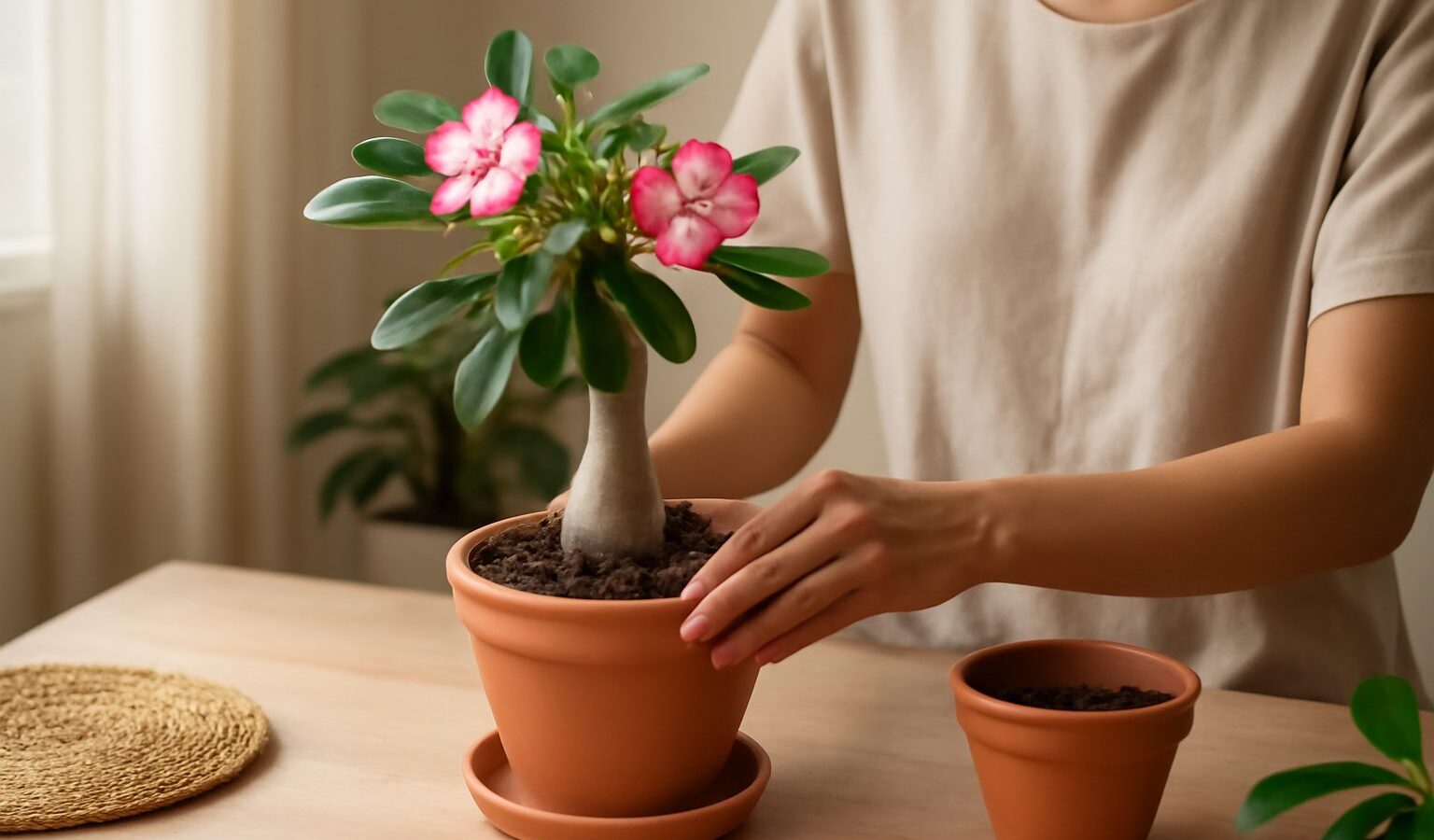
The desert rose adenium is one of those plants that looks like a small sculpture and rewards you with waxy, trumpet-shaped blooms in pink, red, white or striped shades. Its swollen, bottle-like base, called a caudex, stores water and gives each plant real character. Best of all, this is a sun-loving succulent that genuinely enjoys Singapore’s heat, so a bright balcony or ledge suits it far better than most flowering plants. This guide walks total beginners through watering, sun, potting and safe pruning, with an honest note on the sap, which is toxic and needs sensible handling.
Why the Desert Rose Suits Singapore
Most flowering plants sulk in relentless tropical heat, but the desert rose adenium comes from hot, dry regions and treats our year-round sun as a gift. The one thing it does not love is being constantly wet, and that is the single most common mistake here. Our heavy monsoon downpours and humid air can keep roots soggy, and a soggy caudex rots quickly.
The trick is to work with the plant’s nature. Give it the brightest, most exposed spot you have, ideally a west or south-facing balcony or a sunny corridor ledge that follows your town council rules. Aim for at least six hours of direct sun a day. Less light means weak, floppy growth and few flowers. In full sun with sharp drainage, an adenium is one of the most forgiving flowering plants a black thumb can keep.
If your outdoor space is shady, be honest with yourself. This plant will survive indoors by a blazing window but rarely thrives or blooms well. It is an outdoor sun-worshipper at heart.
Watering, Soil and the Swollen Caudex
The caudex is a built-in water tank, which is why overwatering is the fastest way to kill a desert rose. Think of it as a succulent, not a leafy houseplant.
Use a gritty, fast-draining mix. A cactus and succulent soil works well, and you can improve any mix by stirring in coarse sand, perlite or fine gravel so water rushes through rather than sitting. Always plant in a pot with a drainage hole. Terracotta is ideal because it breathes and dries the rootball faster.
Follow the soak and dry rhythm:
- Water thoroughly until it runs from the base.
- Then wait. Let the top few centimetres, and ideally most of the pot, dry out before watering again.
- In our hot dry spells you might water every few days, but during a wet monsoon week you may not need to water at all.
- Poke a finger or a wooden chopstick into the soil. If it comes out damp, hold off.
Never let the pot stand in a saucer of water. Empty any saucer after rain or watering, both to protect the roots and to avoid leaving standing water where mosquitoes breed. A little balanced fertiliser during active growth encourages flowering, but go easy. This is a plant that does more with less.
Handle With Care: the Toxic Sap
Here is the honest safety note. Desert rose adenium sap is toxic. The milky sap that seeps from cut stems can irritate skin and eyes, and the plant is poisonous if any part is eaten, to both people and pets. This does not make it a plant to fear, but it does mean you should treat it with respect.
A few sensible habits cover it:
- Keep the plant out of reach of young children, cats, dogs and curious nibblers. A high ledge or a spot behind a barrier works well.
- Wear gloves when pruning or repotting, and wash your hands well afterwards.
- Keep the sap away from your eyes and mouth, and do not handle food while working with cut stems.
- If a person or animal swallows any part, or the sap gets in an eye, seek medical or vet help promptly.
If you have toddlers or pets that chew everything, you might prefer a non-toxic flowering choice such as hibiscus or bougainvillea for accessible spots, and reserve the adenium for a high, out-of-reach position. This is general home-gardening information, not medical or veterinary advice.
Pruning, Repotting and Getting More Blooms
Adeniums flower on new growth, so light pruning actually encourages more blooms and a fuller, branching shape. After a flush of flowers, or when growth gets leggy, trim back the stem tips with clean, sharp secateurs, cutting just above a node (the small bump where leaves and new shoots emerge). The plant will usually push out two or more new branches from below the cut. Always wear gloves for this because of the sap.
Repot young plants every year or two into a slightly larger pot to let the caudex fatten up. Many growers gradually lift the caudex a little higher each time they repot, exposing more of that sculptural base for display. Do this in a warm, active growth period so the plant recovers quickly, and keep it on the dry side for a week or so after repotting.
For more flowers overall, the recipe is simple: maximum sun, restrained watering, sharp drainage and a light hand with a bloom-friendly fertiliser. If your plant is healthy but stubbornly refuses to bloom, our guide on how to get your plants to flower covers the usual culprits, and more often than not the answer is simply more direct sun.
Common Problems and Simple Fixes
Most adenium troubles trace back to too much water or too little light. Use this quick reference to diagnose the usual issues.
| Symptom | Likely cause | What to do |
|---|---|---|
| Soft, mushy caudex or base | Overwatering, root rot | Stop watering, unpot, cut away rot, replant in dry gritty mix |
| Yellowing leaves that drop | Soggy soil or sudden change | Let soil dry fully, improve drainage, ease off watering |
| Leggy, weak stems, few flowers | Not enough direct sun | Move to the brightest outdoor spot, prune to encourage branching |
| Wrinkled, deflating caudex | Underwatered or root damage | Water thoroughly once, then resume soak and dry rhythm |
| Sticky leaves or tiny pests | Mealybugs or aphids | Wipe off, treat gently, isolate from other plants |
Seasonal leaf drop can also be normal. During a cooler, wetter stretch some adeniums shed leaves and rest, then flush again when the sun returns. Do not panic and drown a resting plant.
The desert rose asks for little: strong sun, a gritty pot that drains fast, water only when dry, and careful handling because of its toxic sap. Get those right and this quirky succulent will reward a sunny Singapore balcony with sculptural form and repeat flushes of bloom for years. If you catch the flowering bug, pairing it with sun-loving bougainvillea makes for a low-fuss, high-colour balcony display.