
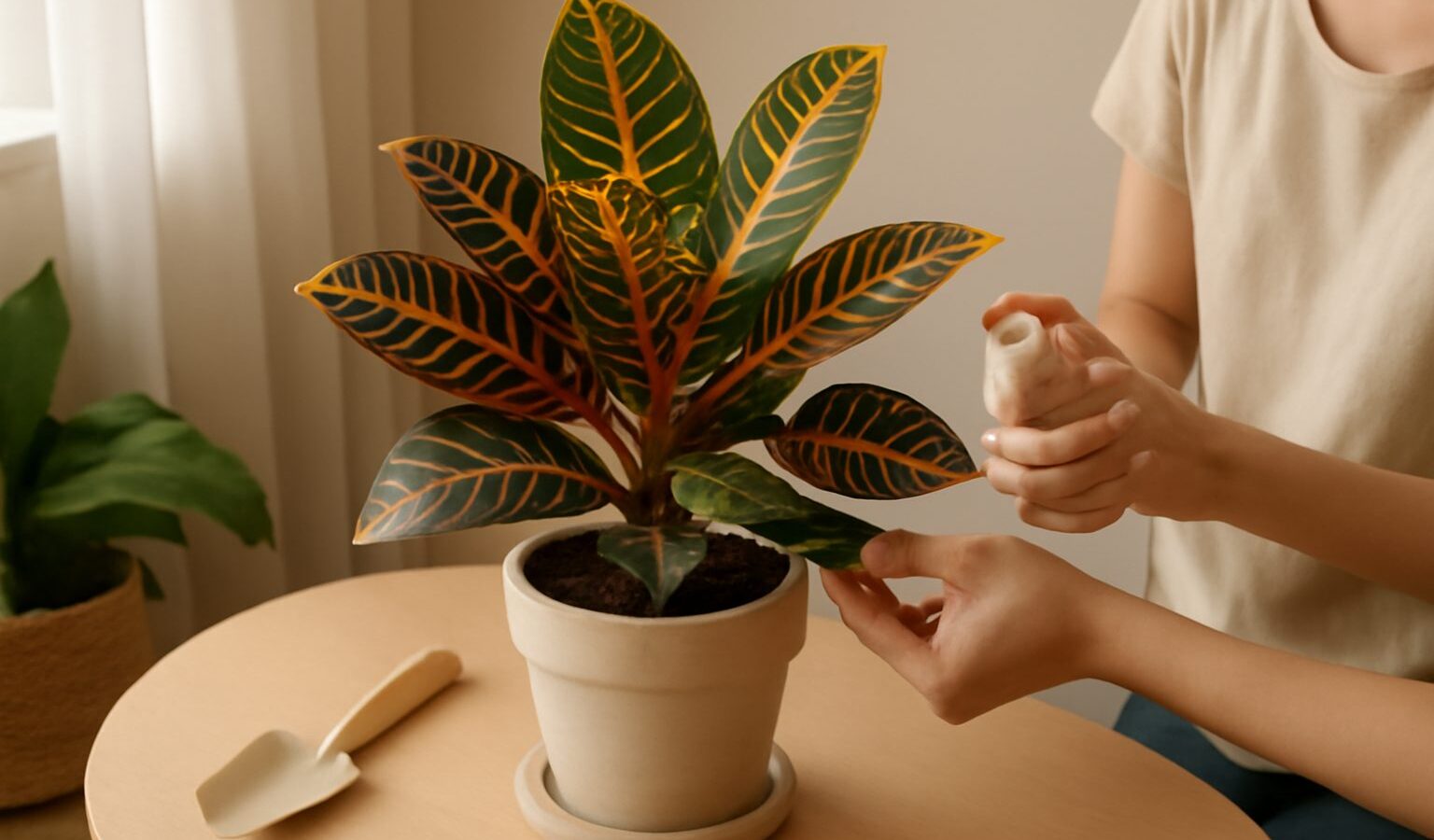
If you want a plant that looks like it has been painted, croton plants are hard to beat. Their thick, glossy leaves come streaked and speckled in yellow, orange, red, purple and green, sometimes all on one plant, and the colours only deepen in good light. Crotons are true tropical shrubs, so Singapore’s steady heat and bright skies suit them far better than most temperate homes ever could. They do have a couple of quirks, including a sap that irritates skin, and a habit of dropping leaves when unsettled. Get the basics right and you will have a living splash of colour for years.
This is general information for home gardeners, not professional horticultural, medical or veterinary advice.
Why Crotons Love Singapore
Crotons come from the warm tropics, and they crave exactly what our island offers: long, bright days, warmth that never dips into a cold season, and humid air. Outdoors on a sunny balcony or in a landscaped condo bed, a croton can grow into a dense, waist-high shrub with intense colouring. Indoors by a bright window it stays more compact but still earns its keep as a living feature.
The single biggest factor in croton colour is light. In low light the flashy reds and oranges fade towards plain green, and growth turns leggy. Give a croton several hours of bright light, including some gentle direct sun, and the pigments come alive. This makes them one of the best choices for a hot, well-lit spot where fussier plants would sulk.
Because they reward brightness, crotons pair naturally with other sun-loving foliage. If you enjoy leafy colour, you might also like growing coleus for colourful foliage, which offers a similar painted look with far softer leaves.
Handling the Sap Safely
Before the fun part, a quick safety note. Croton sap is toxic and irritant. The milky sap that seeps from cut stems can irritate the skin, and the plant is poisonous if any part is eaten, for people and for cats and dogs alike. As with many bold tropicals, this is a manageable quirk rather than a dealbreaker.
- Keep crotons out of reach of young children and pets that like to chew leaves. If nibbling is a risk in your home, place the plant high or choose a gentler species.
- Wear gloves when you prune, take cuttings or repot, and wash your hands and tools afterwards. Keep the sap away from your eyes and mouth.
- If someone or a pet swallows part of a croton, rinse the mouth and seek medical or veterinary advice promptly. Mention the plant name so the clinic knows what it is dealing with.
Households that would rather skip toxic plants altogether can still enjoy bold foliage with safer picks, so do not feel forced into a croton if it does not fit your family.
Light, Water and Feeding
The care routine for crotons rewards consistency more than effort. Nail down these basics and the plant mostly looks after itself.
- Light: as much bright light as you can give, including a few hours of gentle morning sun. Shield it from the harshest midday glare, which can scorch, but do not banish it to a dim corner or the colours will drain away.
- Water: keep the mix lightly and evenly moist, never waterlogged and never bone dry. In our heat that often means watering when the top centimetre or two has dried. Use a pot with drainage holes so roots never sit in water.
- Humidity: crotons love the muggy air outdoors. Indoors, aircon dries the room and can crisp leaf edges, so group plants together or stand the pot on a tray of damp pebbles to lift humidity.
- Feeding: during active growth, feed with a balanced liquid fertiliser at the strength stated on the label, roughly monthly. Ease off if growth slows.
A croton that is happy will hold its leaves and keep colouring up. A croton that is stressed, by a sudden move, a cold draught from the aircon, or a swing between soggy and parched soil, will often protest by dropping leaves. That leads neatly to the most common worry owners have.
Fixing Common Croton Problems
Crotons have a reputation for being dramatic, and the usual complaint is leaf drop. The good news is that most problems trace back to a handful of causes you can read and correct. The table below lines them up.
| Symptom | Likely cause | What to do |
|---|---|---|
| Sudden leaf drop | Shock from moving, draught or temperature swing | Settle it in one bright spot, keep conditions steady |
| Colours fading to green | Not enough light | Move to a brighter position with some direct sun |
| Brown, crispy leaf edges | Dry aircon air or under-watering | Raise humidity, keep the mix evenly moist |
| Yellowing lower leaves | Overwatering or poor drainage | Let the mix dry a little more, check the pot drains |
| Fine webbing under leaves | Spider mites in dry air | Rinse the foliage, raise humidity, treat gently |
Two habits prevent most trouble. First, resist moving the plant around; crotons dislike change, so pick a good bright spot and leave it there. Second, water by feel rather than by the calendar. If you propagate a croton from a stem cutting, wear gloves for the cut, and stand the cutting in a warm, humid, bright place to root. Empty any water that collects in the pot saucer rather than letting it stand, since stagnant water at home can breed Aedes mosquitoes; following the NEA Mozzie Wipeout habits is sensible for every plant you keep.
A Bold Splash of Living Colour
Croton plants ask for three simple things: plenty of bright light, steady watering that keeps the mix evenly moist, and a stable spot free of cold draughts. Handle the irritant sap with gloves, keep the plant away from small children and pets, and forgive the odd dropped leaf while it settles in. In return you get some of the most vivid foliage any Singapore home can grow, glowing with colour right through the year.
Explore more: growing coleus for colourful foliage, caring for a Chinese evergreen and how to get your plants to flower.